Site items in: Content by Author Stephen H. Crolius

New Ammonia-Reforming Catalyst System
Article

On April 27 the on-line journal Science Advances published “Carbon-free H2 production from ammonia triggered at room temperature with an acidic RuO2/γ-Al2O3 catalyst.” The lead author, Katsutoshi Nagaoka, and his six co-authors are associated with the Department of Applied Chemistry at Oita University in Japan. The innovation featured in the paper could prove to be an important enabler of ammonia fuel in automotive applications.

The Hydrogen Consensus
Article

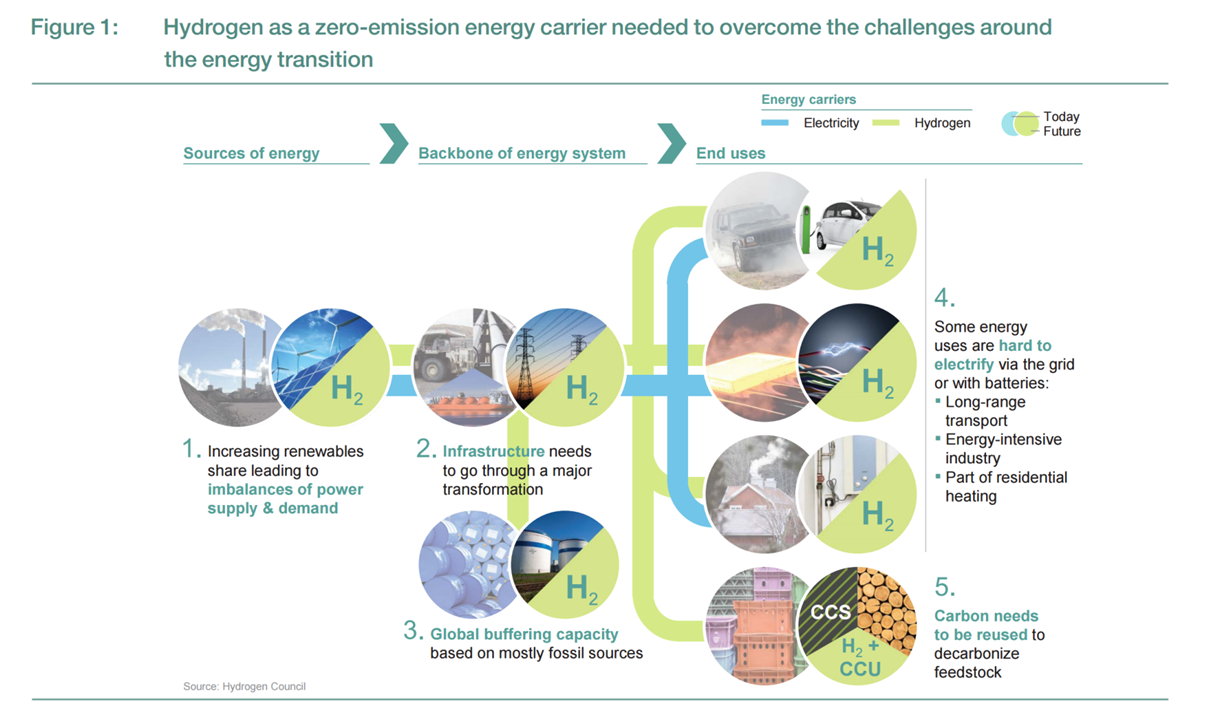
Let’s say there is such a thing as the “hydrogen consensus.” Most fundamentally, the consensus holds that hydrogen will be at the center of the sustainable energy economy of the future. By definition, hydrogen from fossil fuels will be off the table. Hydrogen from biomass will be on the table but the amount that can be derived sustainably will be limited by finite resources like land and water. This will leave a yawning gap (in the U.S., 60-70% of total energy consumption) that will be filled with the major renewables -- wind, solar, and geothermal -- and nuclear energy. This may be as far as the consensus goes today, but more detail is now emerging on the global system of production and use that could animate a hydrogen economy.

Ammonia – and Other Nitrogen-Based Fuels
Article

Next month the print edition of Fuel Processing Technology will feature a paper entitled “Auto-ignition of a carbon-free aqueous ammonia/ammonium nitrate monofuel: a thermal and barometric analysis.” This title is provocative. First, what is this idea of a fuel composed of a mixture of ammonia and ammonium nitrate (AN)? If ammonia is a good fuel, is it made better with the addition of ammonium nitrate? Second, why is it aqueous? Is the presence of water a feature or a bug? Third, what is a monofuel and why is this term used when the fuel is a mixture of two molecular species? And finally, why is the paper ultimately about auto-ignition?

On the Ground in Japan: LH2 and MCH Hydrogen Fueling Stations
Article

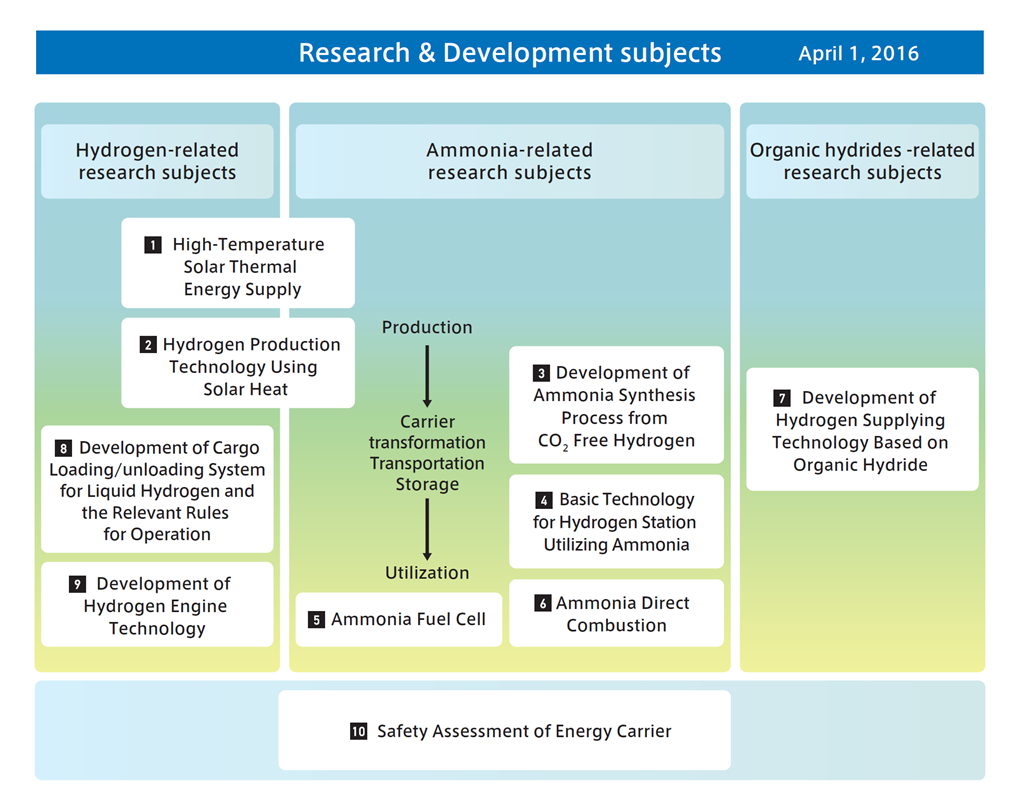
While Japan’s Cross-Ministerial Strategic Innovation Promotion Program (SIP) continues to evaluate liquid hydrogen (LH2), methylcyclohexane (MCH), and ammonia as hydrogen energy carriers, Japanese press reports show that the backers of liquid hydrogen and MCH are building an early lead over ammonia with hydrogen fueling stations based on their favored commodities.

NH3 Energy+: Topical Conference at AIChE Annual Meeting
Article

“Ammonia Energy Arrives on World Stage.” This could have been the headline for today's story about the 2017 NH3 Fuel Conference that will be staged in conjunction with the American Institute of Chemical Engineers (AIChE). But that would be hyperbolic and would also single out just one step of ammonia energy's rise to global prominence. Nonetheless, the full-day event, officially entitled, “NH3 Energy+: Enabling Optimized, Sustainable Energy and Agriculture,” is unquestionably a milestone on the journey.

New Technology for Generating Hydrogen from Ammonia
Article

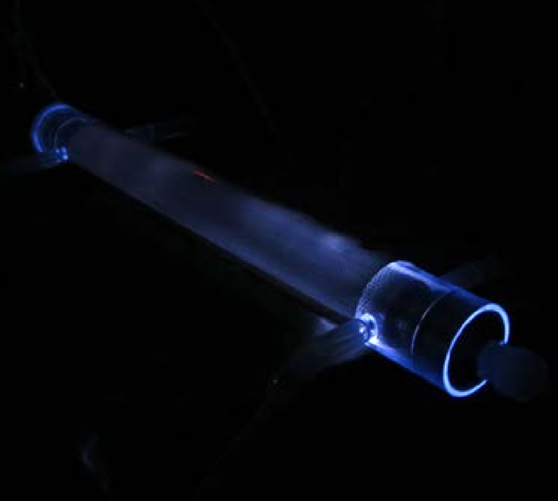
On March 21, Gifu University in Japan announced a breakthrough in technology for generating hydrogen from ammonia. A press release from the Gifu Prefectural Association Press Club stated that Professor Shinji Kambara, Director of the Next Generation Research Center within the Environmental Energy Systems Department at the Gifu University Graduate School of Engineering, has developed a "plasma membrane reactor" that is capable of evolving hydrogen with a purity of 99.999 percent from an ammonia feedstock. This surpasses the 99.97 percent purity announced last July by a research group centered at Hiroshima University with a hydrogen generation device based on a different technology.

ACS
Article

The deadline for abstracts for the Ammonia Economy session at the American Chemical Society (ACS) National Meeting in August has been extended to April 3. This was reported in an interview yesterday with Martin Owen Jones, Energy Materials Coordinator for the ISIS neutron spallation facility at the Rutherford Appleton Laboratory in the United Kingdom. Jones is the co-organizer of the session along with Michael Mock, a Catalysis Scientist at Pacific Northwest National Laboratory (PNNL) in the U.S. The session will be the most prominent treatment of ammonia energy to date at a scientific conference held by an organization of global stature.

Terrestrial Energy and the Production of Carbon-Free Ammonia
Article

On January 24, the nuclear energy company Terrestrial Energy USA informed the United States Nuclear Regulatory Commission of its plans “to license a small modular, advanced nuclear reactor in the United States.” Many steps later – sometime in the 2020s – the American subsidiary of the Canadian company Terrestrial Energy, Inc., hopes to bring its IMSR technology to market. IMSR stands for integral molten salt reactor. The IMSR stands apart from conventional nuclear technology on several dimensions. On the dimension of operating temperature, the IMSR is hot enough that it can be beneficially integrated with high-temperature industrial processes. According to the company’s research, ammonia production could be a candidate for such integration.

Progress in Ammonia Combustion Catalysts
Article

On February 14 the Journal of Physical Chemistry published a paper entitled “Local Structures and Catalytic Ammonia Combustion Properties of Copper Oxides and Silver Supported on Aluminum Oxides.” The paper, by Satoshi Hinokuma of Kumamoto University in Kumamoto, Japan and four co-authors, reports on a catalyst system that is well adapted for use in ammonia energy applications.