Site items in: Content by Author Stephen H. Crolius

On the Ground in Japan
Article

Two talks delivered in December show the tiny steps that allow a country to transition to a sustainable energy economy. The country is Japan. The events hosting the talks were short-format symposia whose evident objective was to draw in business and technical people who might become practically involved in the new energy economy. Both talks highlighted the role to be played by ammonia while also describing competing and complementary technologies.

Hydrogen Fueling Station Development in Japan
Article

Two announcements – focused on very different approaches for supplying hydrogen as a transportation fuel – shine a light on Japan’s approach to creating a national hydrogen energy economy. On January 24, the American company Air Products and Chemicals, Inc. issued a press release about the launch of the Shikaoi Hydrogen Farm fueling station in Hokkaido, Japan. The station will be supplied by hydrogen derived from agricultural wastes via anaerobic digestion and Air Products’ biogas purification and steam methane reforming (SMR) technologies. The project was undertaken by a consortium that includes the Japanese companies Nippon Steel and Sumikin Pipeline & Engineering, Air Water, Inc., and Kajima Corporation. Six months earlier, on July 19, 2016, the Japan Science and Technology Agency (JST) announced that another consortium – this one led by Hiroshima University and including Showa Denko, Taiyo Nichi Company, and Toyota Industries – had succeeded in developing “viable technology to produce high-purity hydrogen [from an] ammonia hydrogen station.”
Methane to Ammonia via Pyrolysis
Article

Eric McFarland, Professor of Chemical Engineering at the University of California Santa Barbara, likes fossil fuels and nuclear energy and is unimpressed by the menu of renewable energy technologies.  But he is worried about climate change and he has an original view on how to modify our current energy system so that we don’t overload the atmosphere with CO2.  He believes the key will be to separate fossil hydrocarbons into gaseous hydrogen and solid carbon.  The chemistry he is developing in this area involves transferring “electrochemical potential” from hydrocarbons to alternative energy carriers.  Ammonia is an energy carrier that McFarland believes is especially promising.

U.S. EPA's Toxicological Review of Ammonia
Article

On September 20 last year, the U.S. Environmental Protection Agency (EPA) announced the release of the IRIS Toxicological Review of Ammonia - Noncancer Inhalation (Final Report). The Interagency Science Discussion Draft of the Ammonia IRIS Assessment and accompanying comments were also released. The report was the culmination of almost five years of work by the EPA and a specially convened Scientific Advisory Board. September 20 also happened to be the day of the Storage and Safety Session at the 2016 NH3 Fuel Conference. This is a striking coincidence because safety is seen as a key barrier to the adoption of ammonia as a sustainable energy carrier, and the report is a substantial contribution to the literature of ammonia safety.

TU Delft’s Battery-Electrolyzer Technology
Article

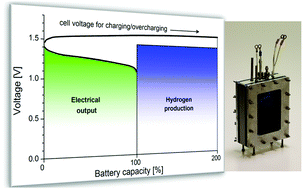
On December 14, the journal Energy & Environmental Science published an article on a new technology, “Efficient electricity storage with a battolyser, an integrated Ni–Fe battery and electrolyser.” The lead author is Fokko Mulder, Professor of Materials for Energy Conversion & Storage at the Delft University of Technology (TU Delft) in the Netherlands. The system developed by Mulder and his collaborators accepts electricity from an external source and stores it in the conventional manner of all batteries. The twist is that when the battery is fully charged, any additional incoming electricity is used to generate hydrogen and oxygen via electrolysis. The technology may prove to be a valuable element in a grid-scale ammonia-based energy system.

Carbon Pricing and the Economics of Green Ammonia
Article

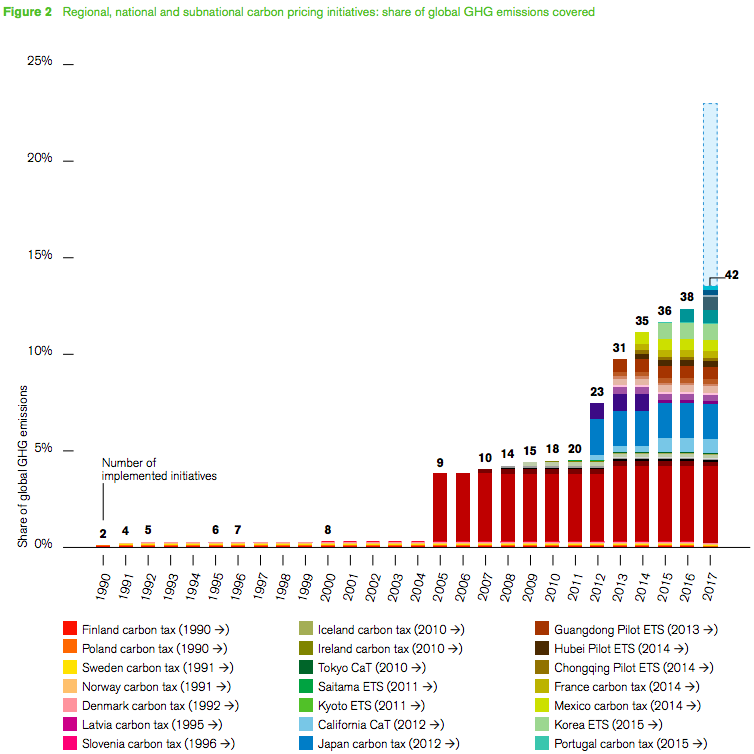
The United States Senate is expected to open confirmation hearings for Secretary of State nominee Rex Tillerson on January 11. Tillerson, newly retired from Exxon Mobil, became the chief executive officer of that company in 2006. He has attracted many labels since his nomination was announced, but “climate denier” is not among them.

REFUEL Ammonia Use-Side Funding Awards
Article

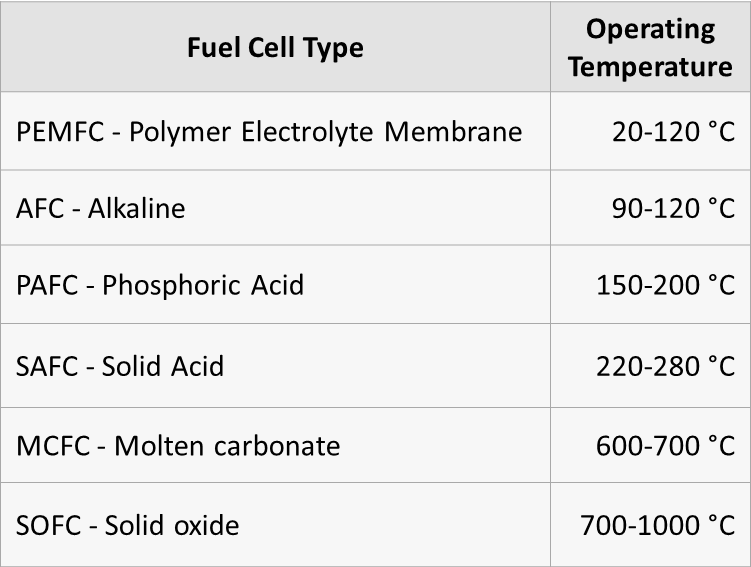
Six of the projects designated for funding by the ARPA-E REFUEL announcement on December 15 involve technologies on the use side of the ammonia energy space. Three focus on generating hydrogen from ammonia. Two focus on fuel cells that convert ammonia to electricity. One project involves both ammonia synthesis and use.

University of Minnesota's Ammonia Program
Article

The American Institute of Chemical Engineers (AIChE) will present a Webinar on December 21 on "Distributed Ammonia Synthesis." The presenter will be Edward L. Cussler, Distinguished Institute Professor at the Chemical Engineering and Materials Science Department of the University of Minnesota. Distributed ammonia synthesis is one focus related to ammonia energy at the University of Minnesota - but just one. In fact, UMinn is the locus of a unique and globally significant collection of research efforts that promise to have significant impacts in the ammonia industry and the broader energy sector.

Integrating Ammonia Production with Nuclear Power
Article

In an interview today, Dr. Yaoli Zhang from Xiamen University discussed the case for integrating ammonia production with nuclear power. Dr. Zhang is currently a Visiting Professor at the Massachusetts Institute of Technology in Boston. The idea would be to harness both unused generating capacity and waste heat to produce ammonia with a near-zero carbon footprint.

NH3 Fuel Association President Presents at AIChE Annual Meeting
Article

NH3 Fuel Association President Norm Olson presented his paper “NH3 – the Optimal Liquid Transportation Fuel” on November 9 at the annual meeting of the American Institute of Chemical Engineers (AIChE). The AIChE meeting, held over six days in San Francisco, provided a wide-ranging perspective on the sustainable energy landscape that ammonia energy must compete within.