Site items in: Renewable Hydrogen

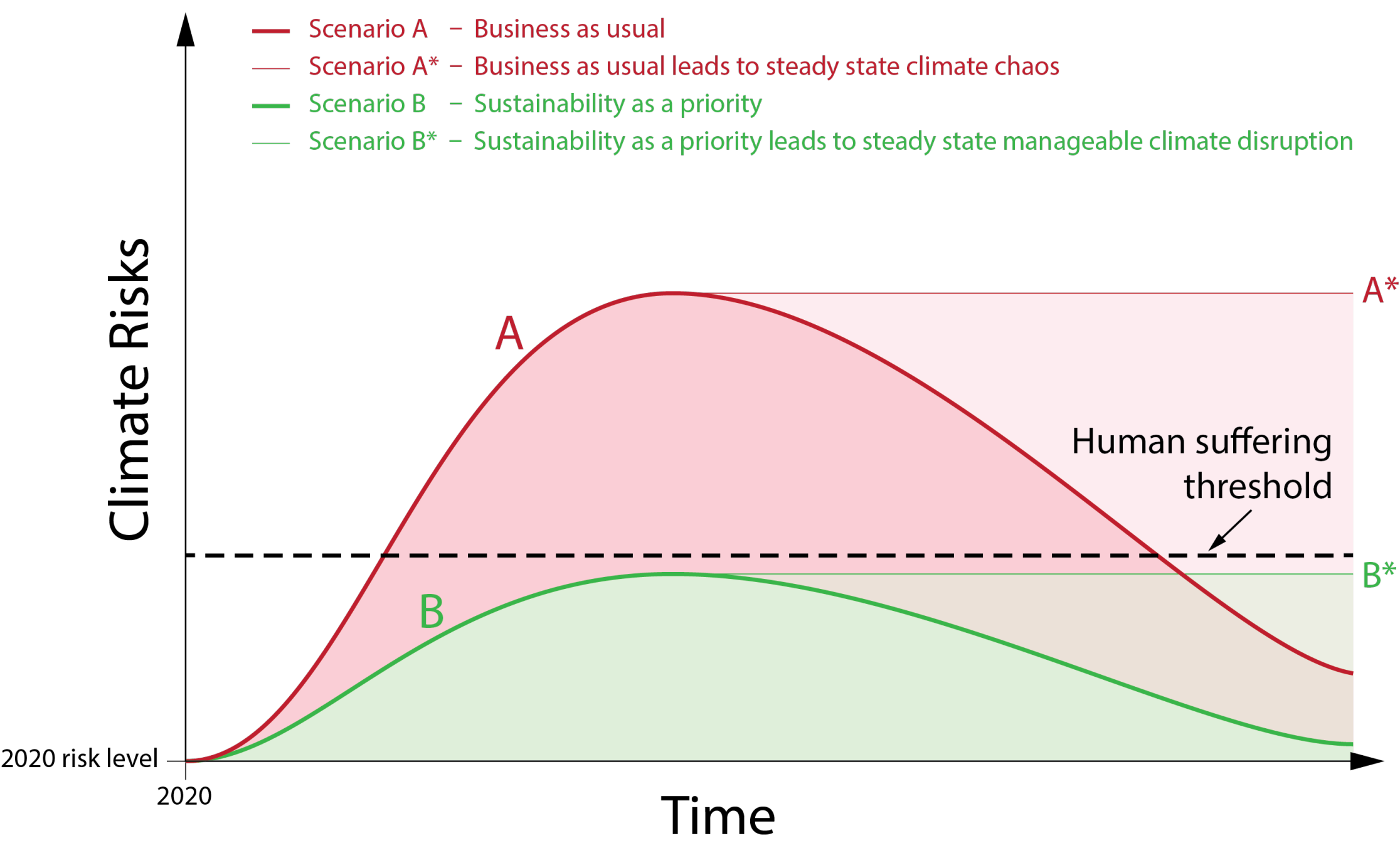
Flattening the climate risks curve
Article

The COVID-19 pandemic is a human tragedy of epic proportions. It directly affects the life and livelihoods of people all around the world as an unprecedented healthcare and economic crisis. It is clear by now that COVID-19 marks an inflection point or “black swan” event in history that will have a shaping influence on society and the economy for many years to come; a post COVID-19 era will begin. In the same way that the developing renewable energy industry significantly benefited from the economic stimulus packages to address the financial crisis of 2008/2009, we now have the opportunity to kick-start the next important phase of global CO2 emissions reduction through support of the developing CO2 Capture, Utilization and Storage (CCUS) & Clean Hydrogen Economy. Many of these clean technologies have been proven at industrial scale and implementation has started. Still, commercial projects will continue to need financial incentives for broad deployment that will enable accelerated technology maturation and reductions in project risk and cost. With the support from COVID-19 stimulus packages, the private sector will be able to execute CCUS & Clean Hydrogen projects in the near-term, secure and create jobs, grow the economy and mitigate the risk of “green swan” climate change events through significant CO2 emissions reduction.

Green ammonia plants win financing in Australia and New Zealand
Article

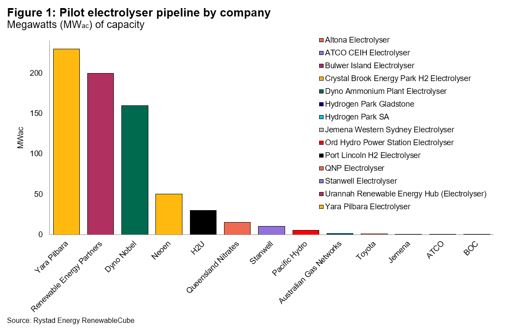
In recent weeks, governments in Australia and New Zealand have announced major financial awards to accelerate development of local green ammonia plants. In Australia, ARENA awarded AU $995,000 (US $0.6 million) to Yara and ENGIE for their solar ammonia pilot at Yara Pilbara. In New Zealand, the Provincial Growth Fund gave NZ $19.9 million (US $11.3 million) to Ballance-Agri Nutrients and Hiringa Energy for their wind-fed ammonia plant at Kapuni. Both projects will demonstrate that an existing fossil ammonia plant can be decarbonized in increments. Renewable hydrogen can be introduced in small amounts, displacing only a fraction of the plant's natural gas consumption but demonstrating and de-risking the technologies. Then, the renewable energy farms and electrolyzers can be scaled-up in stages, eventually replacing all the natural gas requirements and completing the conversion of a fossil asset to a renewable asset.

Ammonia as a unicorn technology and the UK's opportunity for COP26
Article

The Guardian newspaper in the UK this week published a comment piece on ammonia's potential as a "unicorn technology," which the authors define as a technology that can "deliver a reduction of at least a billion tonnes of CO2 a year." The article focused on the UK's opportunity, as host of the upcoming COP26 meeting in Glasgow this November, to take a leadership position in solving climate change. The authors, all based at the University of Oxford, outline a strategy by which the UK government could leverage existing British business and academic expertise to build global coalitions, to develop, demonstrate, and roll out "the 'hydrammonia' economy."

H2U moves forward with 3 GW green ammonia export plant
Article

According to a statement released by the Queensland government last week, the clean infrastructure development firm Hydrogen Utility (H2U) has purchased a 171-hectare site in Gladstone, Queensland, where it intends to build a green ammonia export plant with initial operations beginning in 2025. This "H2-Hub" will be built in stages, scaling up over time to reach up to 3 GW electrolyzer capacity for green hydrogen production, and up to 5,000 tons per day of green ammonia. This is at least twice the size of a conventional natural gas-based world-scale ammonia plant.

Gigastack Phase 2 Receives Funding in the UK
Article

Earlier this week the United Kingdom’s Department for Business, Energy & Industrial Strategy (BEIS) announced that a group led by ITM Power has been awarded GBP 7.5 million (USD $9.7 million) for the second phase of a renewable hydrogen project dubbed “Gigastack.” According to the BEIS announcement, “Gigastack will demonstrate the delivery of bulk, low-cost and zero-carbon hydrogen through ITM Power’s gigawatt scale polymer electrolyte membrane (PEM) electrolysers . . .” with the goal of “dramatically reduc[ing] the cost of electrolytic hydrogen.” The hydrogen produced will be used for petroleum refining, although the project partners have their eyes on opportunities that go well beyond desulfurization of oil.

Australian Company Advances Low-Carbon Hydrogen from Methane
Article

Hazer Group, an Australian company with technology in development for the production of low-carbon hydrogen, had a busy 2019. In April the company announced that it had received its first Australian patent. In September, the Australian Renewable Energy Agency (ARENA) announced the approval of “up to [AUD]$9.41 million in funding to Hazer … for the construction and operation of a groundbreaking hydrogen production facility in Munster, Western Australia.” In December Hazer announced that it was negotiating an agreement with industrial gas distributor BOC related to its Munster project. Last week the company announced that it had secured up to AUD$250,000 in grant funding from the Government of Western Australia for “a feasibility study on the creation of a renewable hydrogen transport hub." in the City of Mandurah.

Australia Issues National Hydrogen Strategy
Article

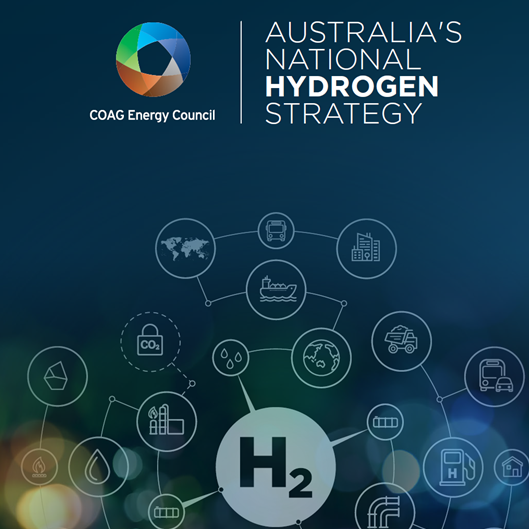
Last month the Council of Australian Governments Energy Council – “a Ministerial forum for the Commonwealth [of Australia], states and territories and New Zealand, to work together in the pursuit of national energy reforms” – issued a 137-page report entitled Australia’s National Hydrogen Strategy. For those focused on how ammonia energy will go from promising idea to practical reality, this is what the next step – the one after the discovery of ammonia's virtues as a hydrogen carrier – could look like. The Strategy is detailed, comprehensive, and concerned with both practical measures in the near term and the arc of progress over the long term. And embedded within it are three ideas that are likely to have on-going relevance for ammonia energy implementation.