Site items in: Maritime Fuel

Cracking Ammonia: panel wrap-up from the Ammonia Energy Conference
Article

When should we be cracking ammonia? How much should we be cracking? How could better cracking technologies open up new end uses? What are the critical challenges still to be overcome for cracking ammonia? On November 17, 2020, the Ammonia Energy Association (AEA) hosted a panel discussion moderated by Bill David from Science and Technology Facilities Council (STFC), as well as panel members Josh Makepeace from the University of Birmingham, Joe Beach from Starfire Energy, Gennadi Finkelshtain from GenCell Energy, Camel Makhloufi from ENGIE, and Michael Dolan from Fortescue as part of the recent Ammonia Energy Conference. All panelists agreed that cracking technology as it stands has a number of key areas to be optimised, particularly catalyst improvements and energy efficiency. But, successful demonstrations of modular, targeted cracking solutions are accelerating the conversation forward.
Ammonia infrastructure: panel wrap-up from the 2020 Ammonia Energy Conference
Article

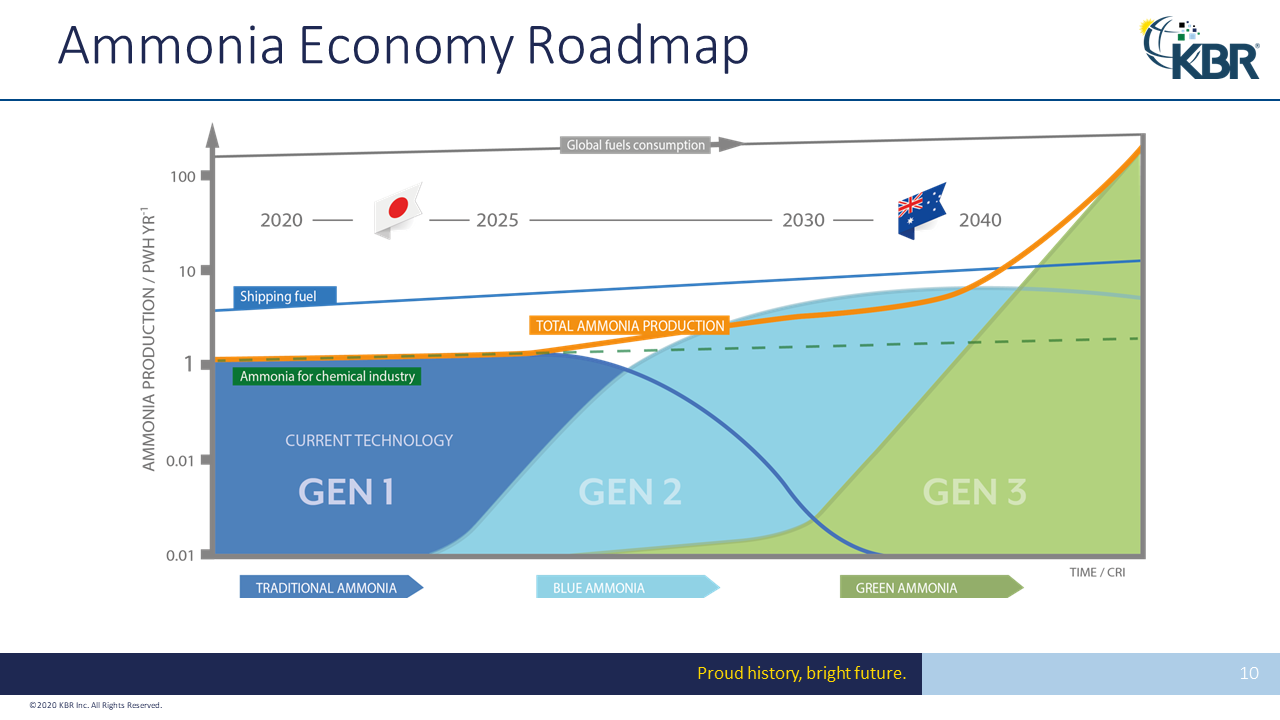
Infrastructure is key to realising the full potential of ammonia energy, enabling new markets and expanding the existing ones. By 2050 the hydrogen (and by extension, ammonia) market could be 20 times larger than it is today. What future possibilities are there to expand global ammonia production (currently 180 million tonnes per year) or trade volumes across the world’s oceans (currently 18 million tonnes per year)? On November 18, 2020, the Ammonia Energy Association (AEA) hosted a panel discussion moderated by Daniel Morris from KBR, as well as panel members Anthony Teo from DNV GL, Oliver Hatfield from Argus Media, and Michael Goff from Black & Veatch as part of the recent Ammonia Energy Conference. The panel’s insights from a number of different perspectives - market analytics, ship building and operating, as well as pipeline engineering - demonstrated ammonia's potential to become a low- or zero-carbon fuel of choice for the future. Current infrastructure can be adapted, new infrastructure can be built and operated cheaply, and lessons from previous fuel transitions can be taken on board to make the uptake of ammonia energy as smooth as possible.

Grieg Maritime and Wärtsilä to Build Ammonia-Fueled Ammonia Tanker
Article

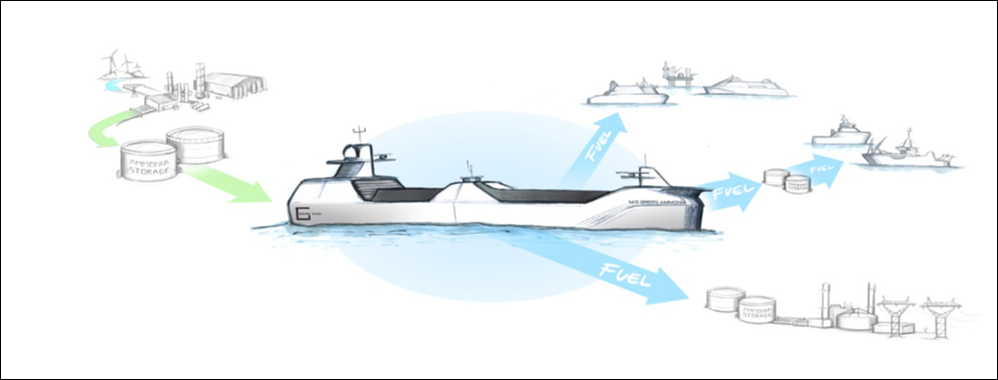
Last month Norwegian shipping company Grieg Maritime Group and Finnish engine and energy equipment manufacturer Wärtsilä announced plans to build an ammonia-fueled tanker that will be ready for service in 2024. The MS Green Ammonia will transport low-carbon ammonia along the Norwegian coast from a factory that will be built in the far-north municipality of Berlevåg.

Marine Ammonia: panel wrap-up from the 2020 Ammonia Energy Conference
Article

What action is needed to unlock the enormous potential of green ammonia as a marine fuel and get the new generation of ammonia-powered vessels on the water? On November 18, 2020, the Ammonia Energy Association (AEA) hosted a panel discussion moderated by Sofia Fürstenberg Stott from Fürstenberg Maritime Advisory, as well as panel members Tue Johannessen from the Center for Zero Carbon Shipping, Katharine Palmer from Lloyd’s Register, Rob Stevens from Yara International, and Kazumasa Taruishi from NYK Energy Transport.

A Fuel Standard for Ammonia: panel wrap-up from the Ammonia Energy Conference 2020
Article

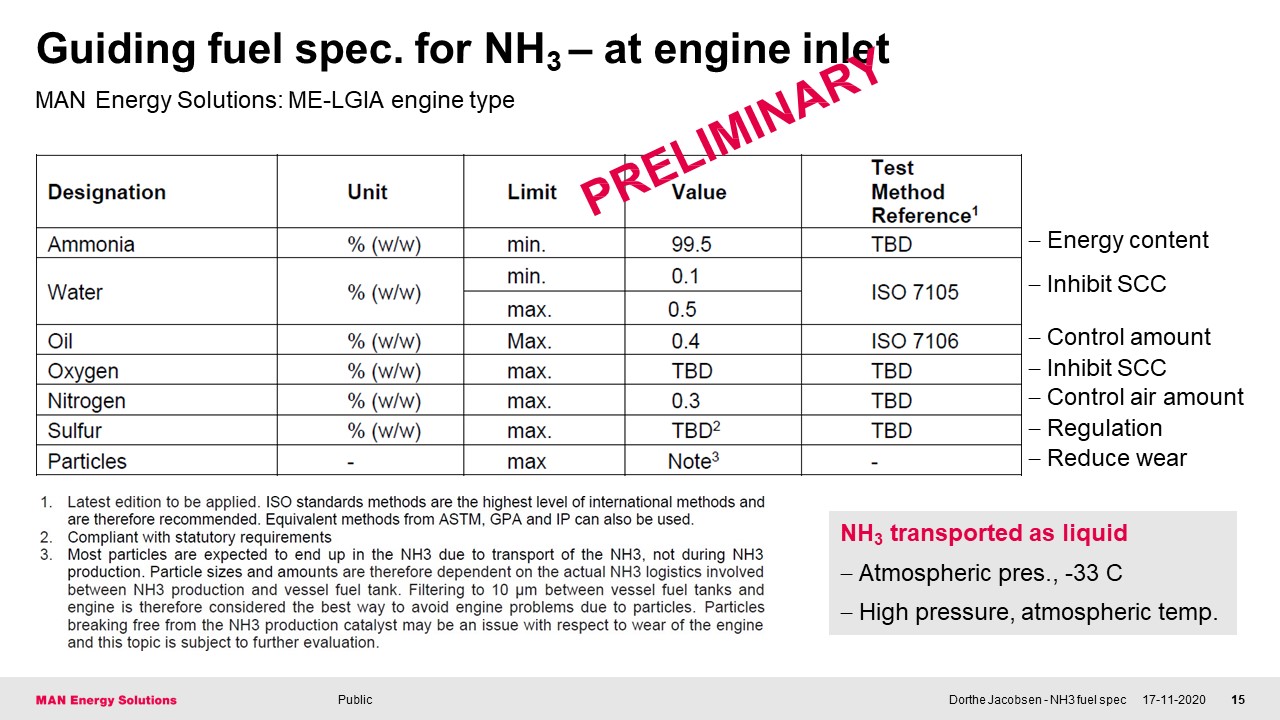
What are the key considerations for a future Ammonia Fuel Standard? On November 17, 2020, the Ammonia Energy Association (AEA) hosted a panel discussion moderated by Ron Stanis from GTI (Gas Technology Institute), as well as panel members David Richardson from Airgas, Rob Steele from EPRI (Electric Power Research Institute), Eric Smith from IIAR (International Institute of Ammonia Refrigeration), and Dorthe Jacobsen from MAN Energy Solutions at the recent Ammonia Energy Conference. The AEA Fuel Standard Committee has been developing a draft product specification that will facilitate the acceptance of ammonia as a fuel. The overall message from panelists came through loud and clear: the draft standard is ready for stakeholder comments, and the Fuel Standard Committee welcomes your input.

De-carbonization of Ocean-going Vessels
Presentation

Most of world trade is supported by ships. In fact, nearly 200 times cargos are carried by ships than air. And, about 800 million tons of CO2 are emitted in the world ocean by whole shipping industry every year. NYK Group as one of the world’s leading marine transportation company is committed to our efforts for GHG emission reduction. We are operating over 700 ocean-going vessels.

Ammonia Energy Scale-up challenge
Presentation

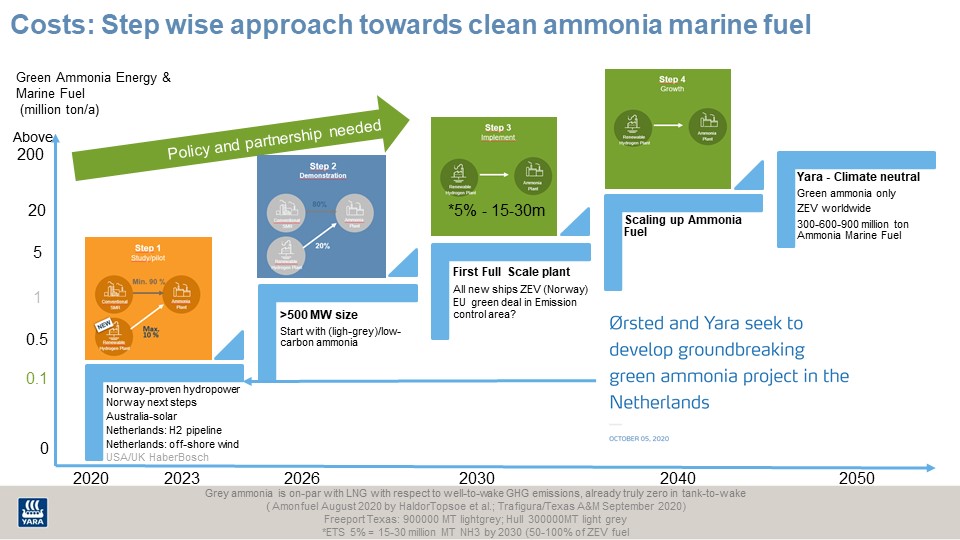
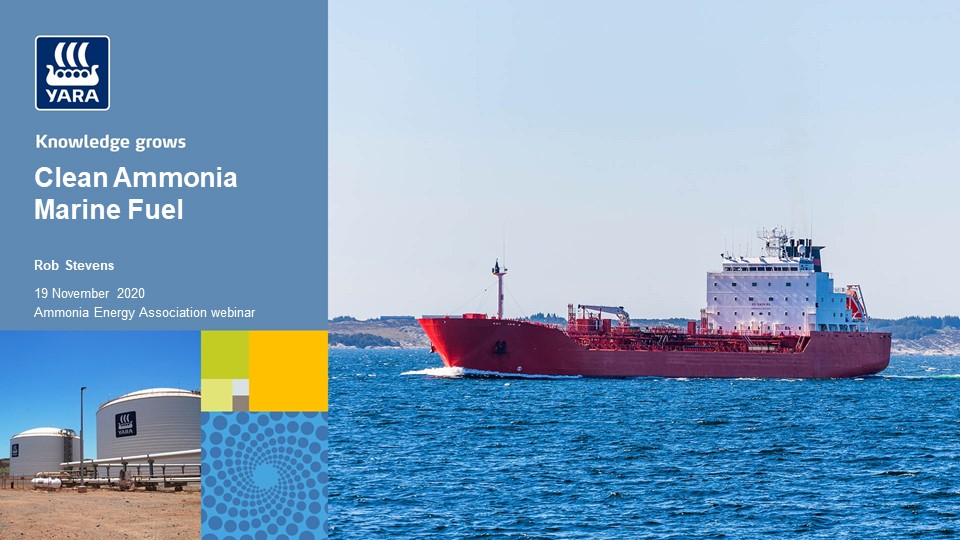
Yara was founded in 1905 to solve famine in Europe, through the production of mineral fertiliser from renewable energy. Today’s challenges have not changed and Yara’s mission is to responsibly feed the world and protect the planet. Producing renewable ammonia has been done before, and the transitional cost and CO2 gap can be closed in public-private partnership. Yara recognizes that collaboration and innovation along the value chain is essential to move into the future, reducing emissions in agriculture (digital farming, circular economy and nitrate-based products). Being one of the largest ammonia producers and the truly global leader in ammonia supply…

Ammonia as a fuel – building the business case
Presentation

The successful substitution of current fossil-based fuels by zero-carbon energy sources is dependent on a combination of policy / regulation, investment and commercial business model development and fuel / technology development that will evolve over the coming years. The evolution of both the energy system and the shipping system that is needed, and associated timescales of development, investment and asset life, means that there are steps that need to be initiated now, and work carried out throughout this decade, even though the transition may not be completed for a couple of decades. This presentation looks at the Technology readiness, investment…