Webinar
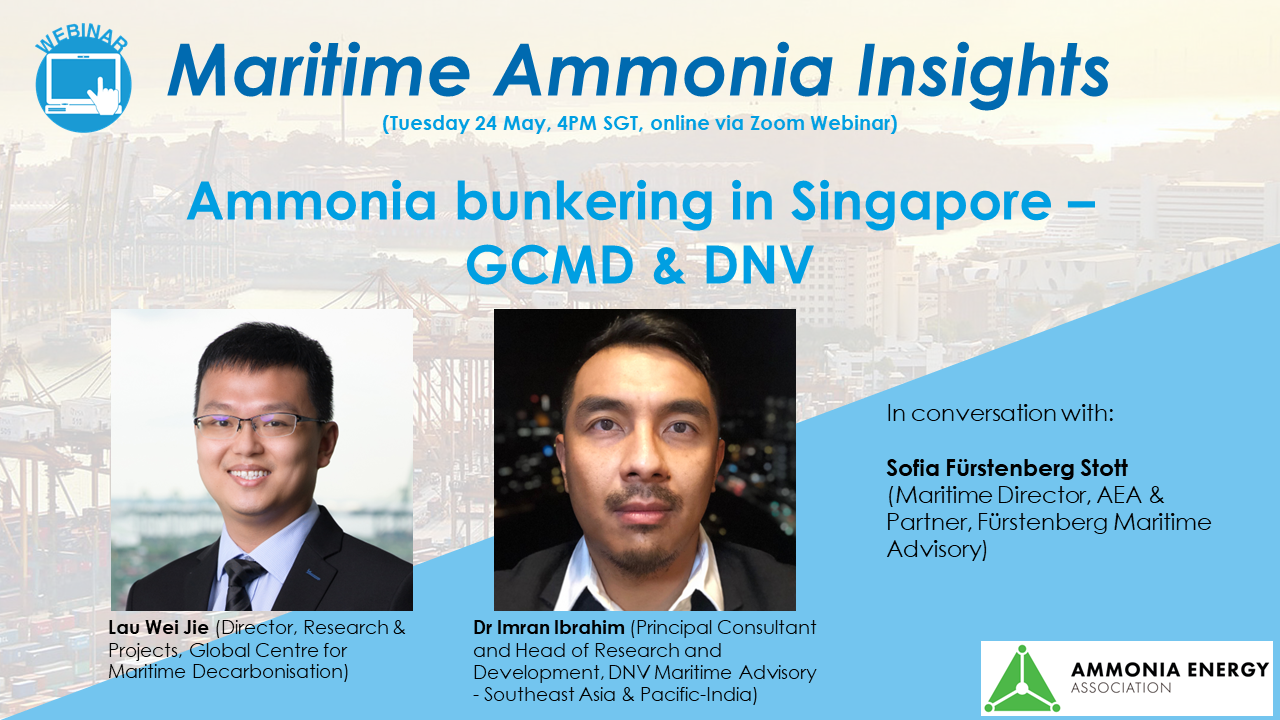
Singapore's ammonia bunkering safety study
Meet the Global Centre for Maritime Decarbonisation and DNV, two partners in an ammonia bunkering study that will pave the way forward for the deployment of ammonia bunker fuel in Singapore.
Meet the Global Centre for Maritime Decarbonisation and DNV, two partners in an ammonia bunkering study that will pave the way forward for the deployment of ammonia bunker fuel in Singapore.
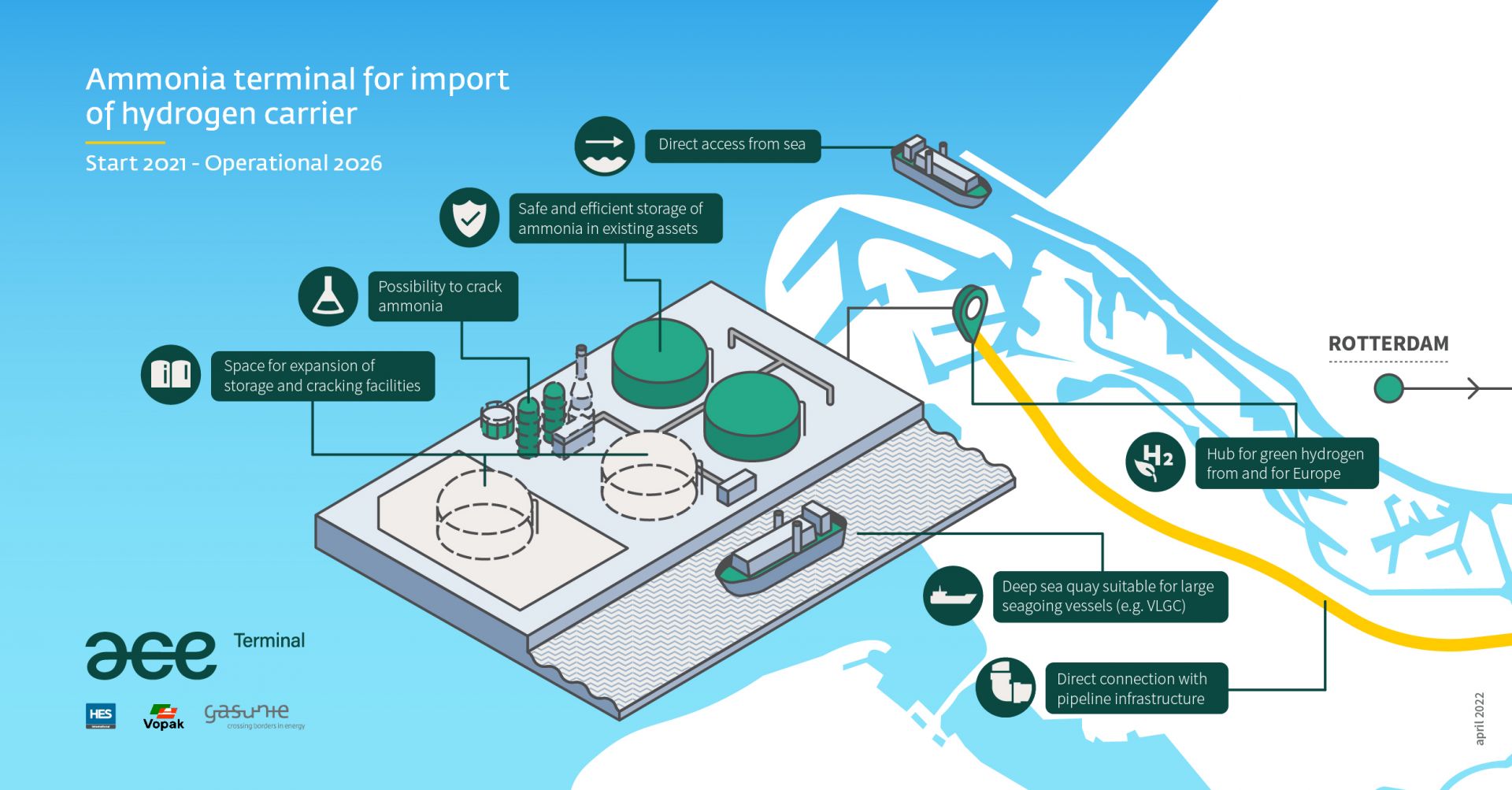
Gasunie, HES International and Vopak will develop an import terminal for ammonia on Rotterdam’s Maasvlakte, with operations to begin in 2026 under the name ACE Terminal. While green imports are the long-term focus, blue ammonia imports are possible in the initial phase. The design will leverage existing ammonia infrastructure on Maasvlakte. New build features include a deep-sea berth for large vessels and possibly an ammonia cracker.
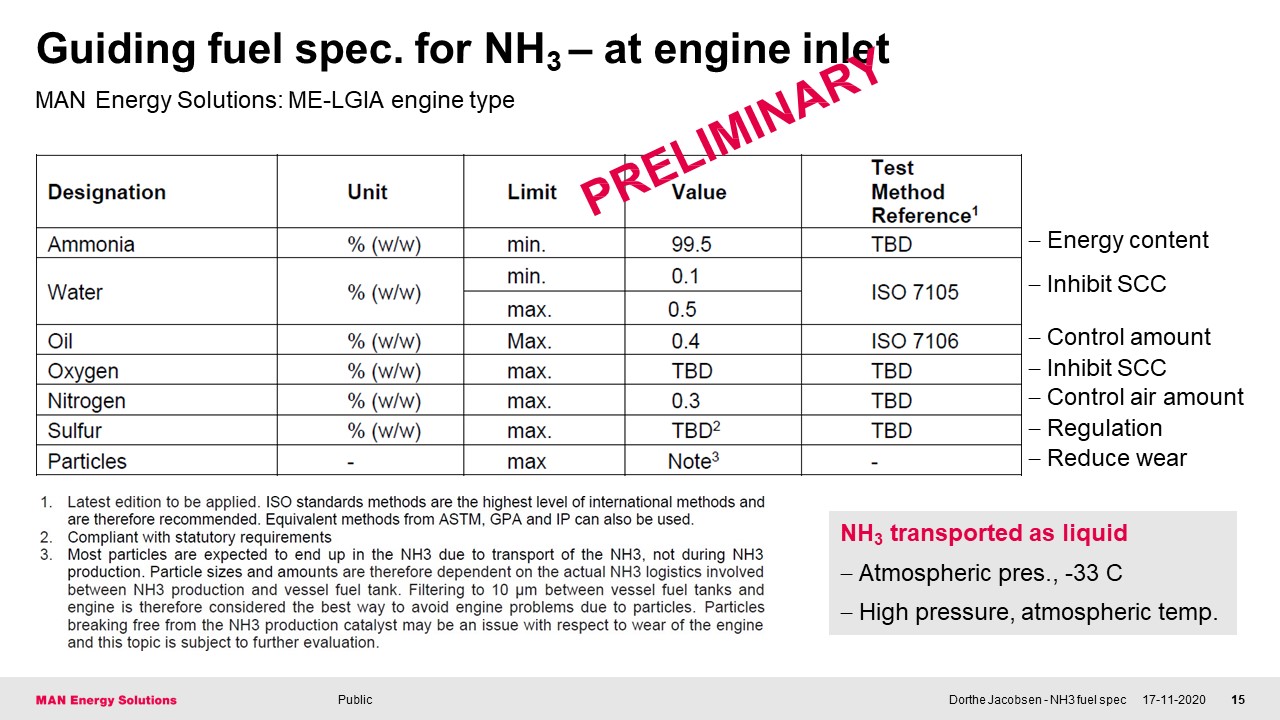
What are the key considerations for a future Ammonia Fuel Standard? On November 17, 2020, the Ammonia Energy Association (AEA) hosted a panel discussion moderated by Ron Stanis from GTI (Gas Technology Institute), as well as panel members David Richardson from Airgas, Rob Steele from EPRI (Electric Power Research Institute), Eric Smith from IIAR (International Institute of Ammonia Refrigeration), and Dorthe Jacobsen from MAN Energy Solutions at the recent Ammonia Energy Conference. The AEA Fuel Standard Committee has been developing a draft product specification that will facilitate the acceptance of ammonia as a fuel. The overall message from panelists came through loud and clear: the draft standard is ready for stakeholder comments, and the Fuel Standard Committee welcomes your input.
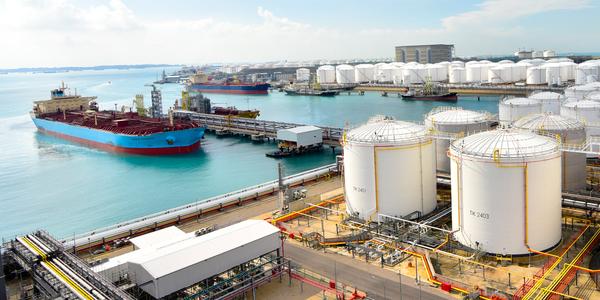
Last week, Itochu Corporation announced an agreement with Vopak, the oil and chemical storage tank and terminal operator, "to jointly study the feasibility of developing an infrastructure" at Vopak's Banyan Terminal, leading to the "establishment of supply chain of ammonia marine fuel in Singapore."