Site items in: Europe

Pilot project: an ammonia tanker fueled by its own cargo
Article

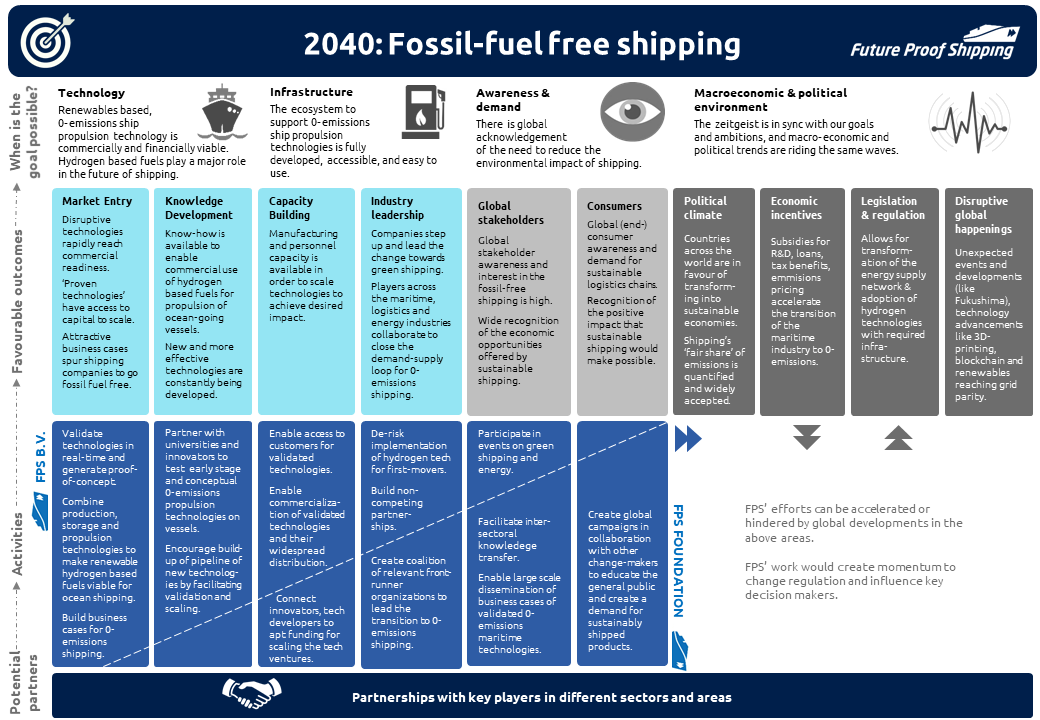
Last month, an important new consortium in the Netherlands announced its intention to research and demonstrate "the technical feasibility and cost effectiveness of an ammonia tanker fuelled by its own cargo." This two-year project will begin with theoretical and laboratory studies, and it will conclude with a pilot-scale demonstration of zero-emission marine propulsion using ammonia fuel in either an internal combustion engine or a fuel cell.
Full program announced for the 2018 NH3 Event Europe
Article

The second annual European Conference on Sustainable Ammonia Solutions has announced its full program, spread over two days, May 17 and 18, 2018, at Rotterdam Zoo in the Netherlands. The international cadre of speakers, representing a dozen countries from across Europe as well as the US, Canada, Israel, and Japan, will describe global developments in ammonia energy from the perspectives of industry, academia, and government agencies.

The capital intensity of small-scale ammonia plants
Article

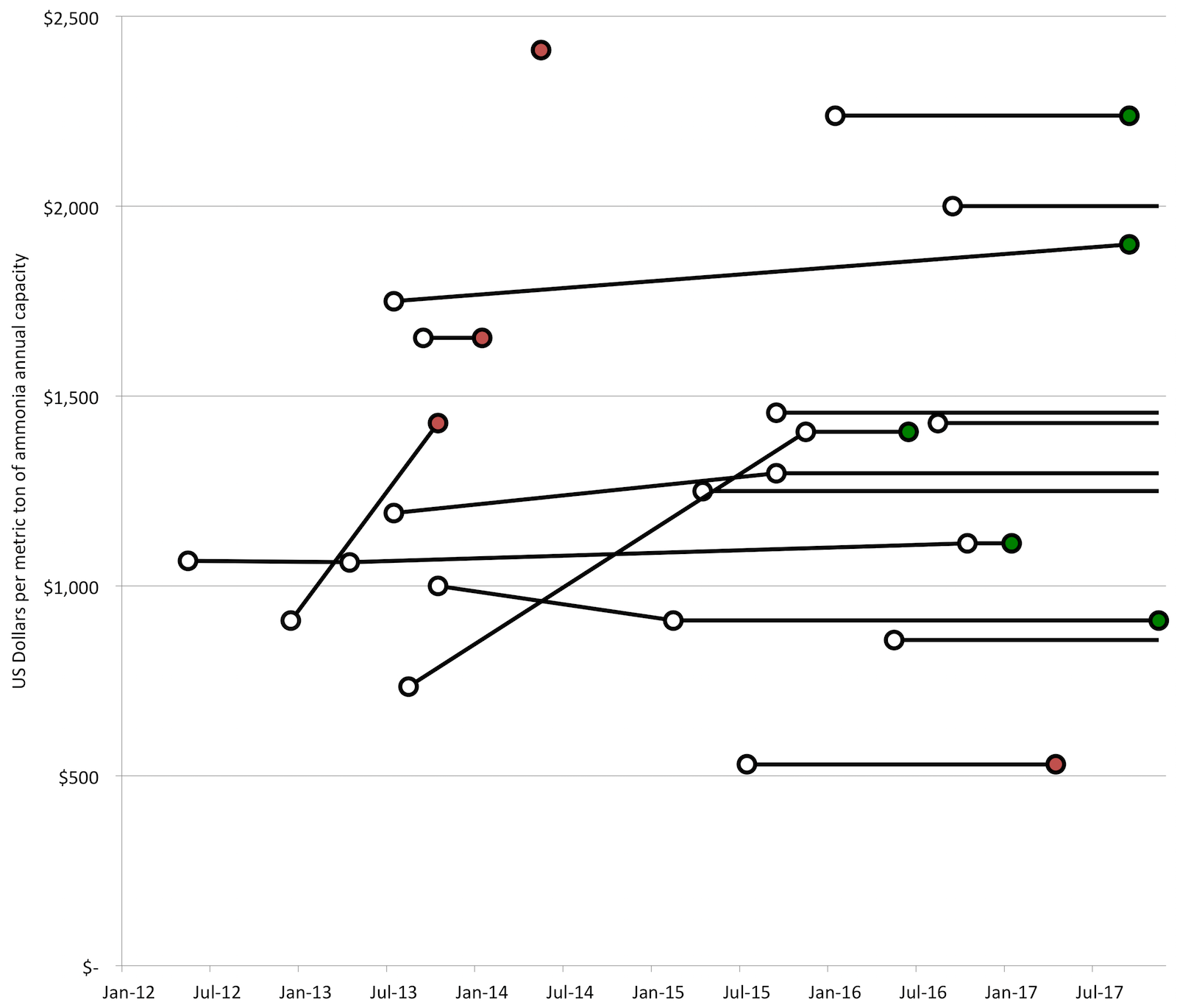
The list of investment drivers for building new ammonia plants in the US over the last few years was short, beginning and ending with cheap natural gas. Markets change, however, and the investment drivers for the next generation of new ammonia plants might include low cost electrolyzers, low cost renewable power, carbon taxes, and global demand for ammonia as a carbon-free energy vector. For this to make sense, however, ammonia needs to be produced without fossil fuel inputs. This is perfectly possible using Haber-Bosch technology with electrolyzers, but today's wind and solar power plants exist on a smaller scale than could support a standard (very big) Haber-Bosch plant. So, to produce renewable ammonia, small-scale ammonia production is essential. This time series chart shows the capital intensity of today’s ammonia plants. Together, the data illustrate competitive advantages of alternative investment strategies, and demonstrate a shift away from the prior trend toward (and received wisdom of) monolithic mega-plants that rely on a natural gas feedstock.

Sustainable Energy for Wales: Tidal and Wind with Ammonia Storage
Article

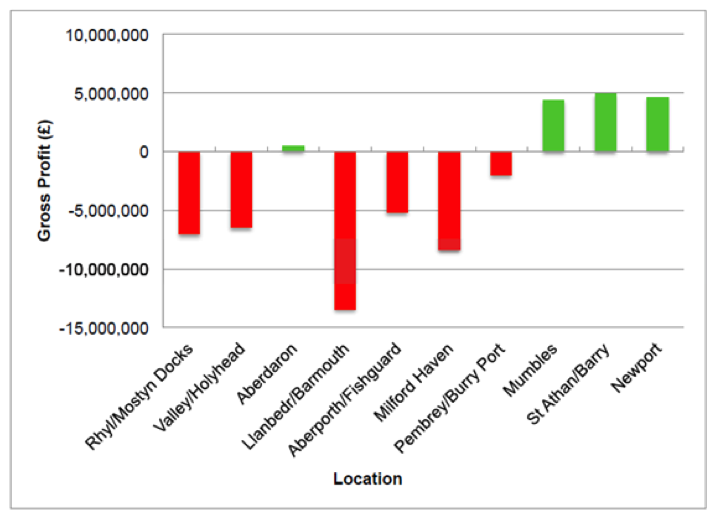
As part of the sustainable agenda of the UK, the government, research institutions and various enterprises have looked for options to reduce the carbon footprint of the country while ensuring energy independence for several years. As a response, one of the alternatives has been to introduce the use of marine energy via the implementation of a barrage in the Severn Estuary or the development and implementation of Tidal Lagoons located around the Welsh coast. From these alternatives, the tidal lagoon concept seems to be most feasible. Hybrid tidal and wind energy systems will produce vast amounts of energy during off-peak hours that will require the use of energy storage technologies - the size of each proposed tidal lagoon ranges close to ~1.5 GW. Currently, companies involved in the development of these complexes are thinking of batteries, pumped hydro, and ammonia as the potential candidates to provide storage for these vast amounts of energy.

Green ammonia demonstration plant in The Netherlands
Article

Last month, a heavyweight consortium of local and global companies announced plans to collaborate on a project to design, build, operate, and evaluate a demonstration plant to produce "green ammonia" from water, air, and renewable energy in The Netherlands. This is one practical outcome of last year's Power-to-Ammonia study, which examined the economic and technical feasibility of using tidal power off the island of Goeree-Overflakkee in Zuid-Holland to power a 25 MWe electrolyzer unit, and feed renewable hydrogen to a 20,000 ton per year green ammonia plant. This new demonstration plant phase of the project will still be led by the original developer, Dutch mini-ammonia plant developer Proton Ventures. However, its partners in the venture now include Yara and Siemens, as well as speciality fertilizer producer Van Iperen, and local sustainable agricultural producer, the Van Peperstraten Groep.

Bunker Ammonia: new report quantifies ammonia as
Article

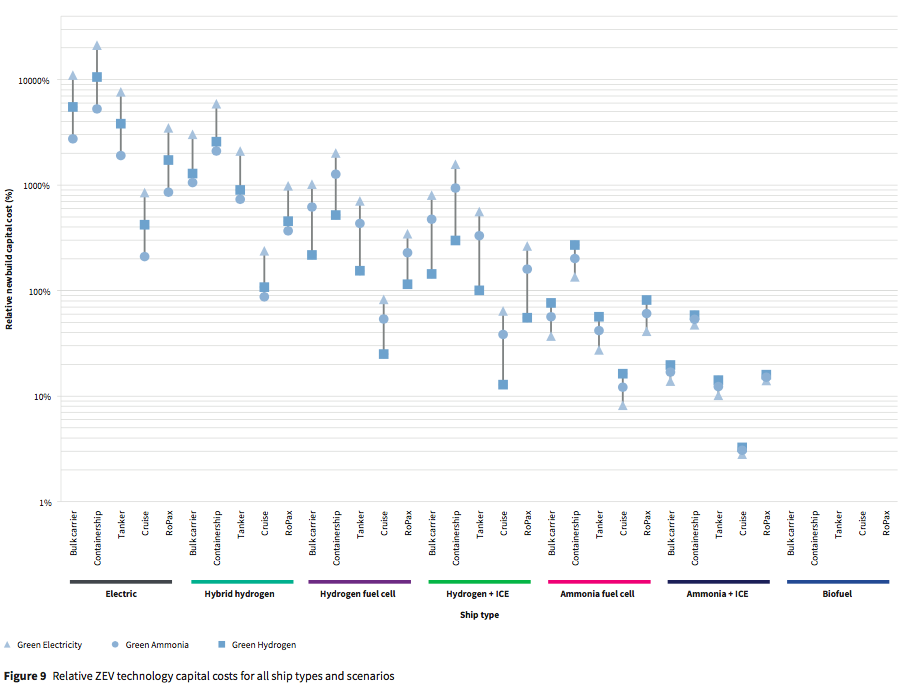
This week, Lloyd's Register published the most significant comparative assessment so far of ammonia's potential as a zero-emission maritime fuel. The new report compares ammonia, used in either internal combustion engines (ICE) or fuel cells, to other low-carbon technologies, including hydrogen, batteries, and biofuels, estimating costs for 2030. It concludes that, of all the sustainable, available options, ammonia "appears the most competitive."

Renewable Energy for Industry: IEA's vision for green ammonia as feedstock, fuel, and energy trade
Article

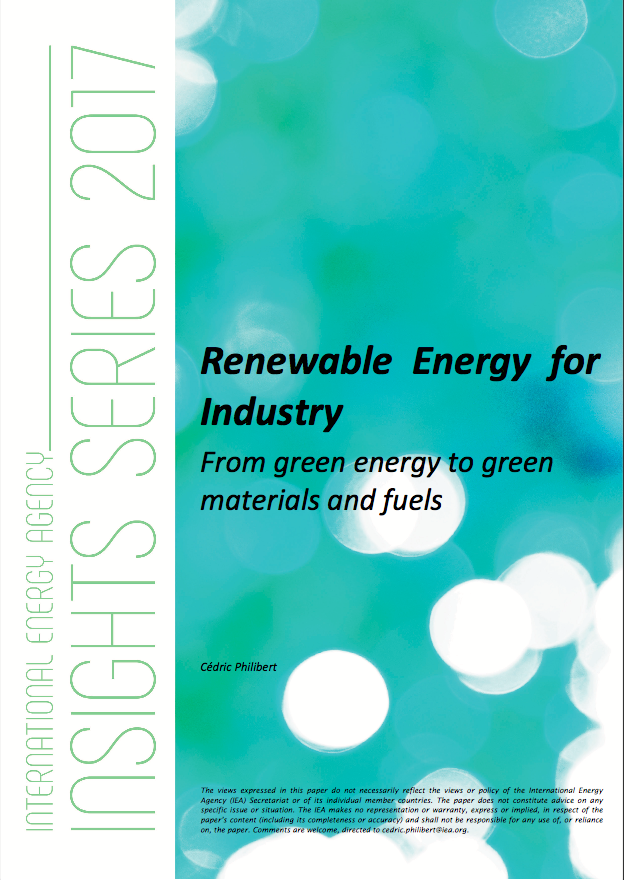
This morning in Beijing, China, the International Energy Agency (IEA) launched a major new report with a compelling vision for ammonia's role as a "hydrogen-rich chemical" in a low-carbon economy. Green ammonia would be used by industry "as feedstock, process agent, and fuel," and its production from electrolytic hydrogen would spur the commercial deployment of "several terawatts" of new renewable power. These terawatts would be for industrial markets, additional to all prior estimates of renewable deployment required to serve electricity markets. At this scale, renewable ammonia would, by merit of its ease of storage and transport, enable renewable energy trading across continents. The IEA's report, Renewable Energy for Industry, will be highlighted later this month at the COP23 in Bonn, Germany, and is available now from the IEA's website.

2nd European Sustainable Ammonia Conference Announced
Article

Last month the NH3 event Europe Foundation released a “call for papers” for the 2nd European Conference on Sustainable Ammonia Solutions.  The conference will take place in Rotterdam on May 17 and 18, 2018, almost exactly a year after the 1st Conference. This is further fulfillment of a vision articulated by Hans Vrijenhoef, Managing Director of Proton Ventures in the Netherlands, during the formation of the NH3 Fuel Association’s Global Ammonia Energy Federation (GAEF) in 2016.  In Vrijenhoef’s view, the rising level of activity and interest in ammonia energy created a compelling opportunity and need for a European conference.

254th ACS Meeting, Energy and Fuels Symposium “The Ammonia Economy” — Oxidation, Catalytic Cracking & Storage
Article

In August of 2017 a symposium on the Ammonia Economy was held in Washington DC as part of the Energy and Fuels Division of the American Chemical Society (ACS) conference. The symposium was devised to explore the latest results from ammonia related research, including but not limited to; advances in the generation of ammonia, advances in the catalytic cracking of ammonia to nitrogen and hydrogen, ammonia storage and utilisation, detectors and sensors for ammonia, ammonia fuel cells and hydrogen from ammonia, ammonia combustion and ammonia safety.

254th ACS Meeting, Energy and Fuels Symposium “The Ammonia Economy” — Synthesis, Utilization & Nitrogen Reduction
Article

In late August, the day before the exciting solar eclipse, the Ammonia Economy symposium was held as part of the Energy and Fuels Division of the American Chemical Society (ACS) National Meeting in Washington DC. This marks the third gathering of Ammonia related research since 2015 at the national level ACS conference. This year, in addition to the important focus on chemistries for the utilization of ammonia, the rapidly developing field of homogeneous catalysts and biological processes for nitrogen fixation was included as a major theme.