Site items in: Asia

Fossil Energy Companies Turn to Ammonia
Article

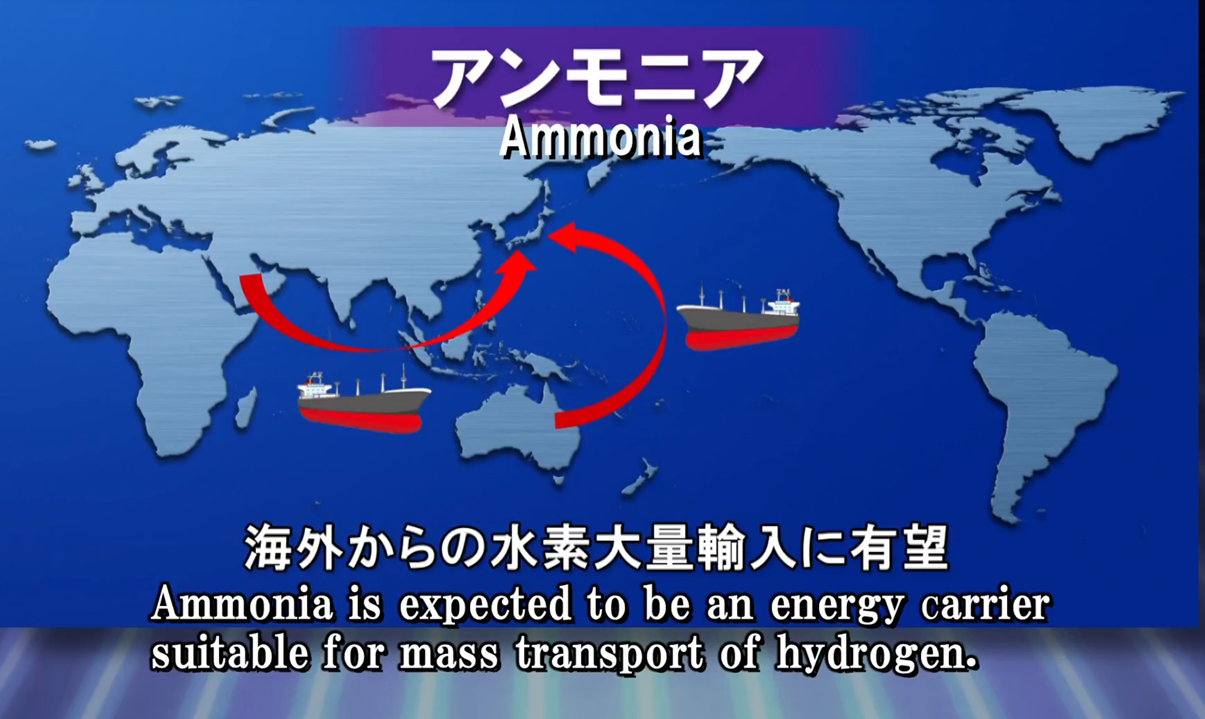
In the last 12 months ... National oil companies in Europe and the Middle East are looking to satisfy East Asian demand for clean hydrogen by exporting carbon-free ammonia. One of the biggest global LNG exporters is investigating ammonia for the same market, as it considers Australia's future as a renewable energy exporter. Oil majors are assessing ammonia's role in implementing an affordable hydrogen economy, looking toward fuel markets in California and Europe. And the biggest coal producer in China is funding the development of "the world’s first practical ammonia-powered vehicle."

Affiliated NH3 Groups Become a Force for Advocacy
Article

In the last 12 months ... The vision of a worldwide network of affiliated ammonia energy advocacy groups drew closer to reality.  This a step toward fulfillment of a goal that was conceived in 2016 when the NH3 Fuel Association convened a Global Advisory Board.  The idea was to launch a body that “could help ammonia energy proponents in different countries organize nationally or regionally focused ammonia energy advocacy bodies.”  Over the last year, all four of the Advisory Board’s 'Ambassadors' played leadership roles on behalf of ammonia energy in their respective countries.

Ammonia for Fuel Cells: AFC, SOFC, and PEM
Article

In the last 12 months ... IHI Corporation tested its 1 kW ammonia-fueled solid oxide fuel cell (SOFC) in Japan; Project Alkammonia concluded its work on cracked-ammonia-fed alkaline fuel cells (AFC) in the EU; the University of Delaware's project for low-temperature direct ammonia fuel cells (DAFC) continues with funding from the US Department of Energy's ARPA-E; and, in Israel, GenCell launched its commercial 4 kW ammonia-fed AFC with field demonstrations at up to 800 locations across Kenya.

Ammonia as a Hydrogen Carrier for Hydrogen Fuel Cells
Article

In the last 12 months ... Consider the attributes that characterize a good hydrogen carrier: liquid state at ambient conditions; high volumetric and gravimetric energy density; low propensity to create lethal hazards when transported, stored, and used.  Now consider that ammonia is superior to hydrogen itself in every one of these areas.  Given this, it stands to reason that proponents of hydrogen fuel cells should embrace ammonia as a valuable enabling technology that can elevate the feasibility and improve the economics of fuel-cell-based systems.  And indeed this embrace became evident over the last year.

Targets, Limits, Pledges, Bans: Enforcing the Transition to Sustainable Energy
Article

In the last 12 months ... California passed a law mandating 100% carbon-free electricity by 2045; then its governor announced that the state's entire energy system - not just its electricity - would be carbon-neutral by 2045. The Hydrogen Council announced its "goal of decarbonizing 100% of hydrogen fuel used in transport by 2030." The International Maritime Organization set targets for the global shipping sector to “reduce the total annual GHG emissions by at least 50% by 2050,” and completely “phase them out, as soon as possible in this century,” and these targets were swiftly endorsed by the International Chamber of Shipping. Regulators and self-regulating organizations around the world are enforcing systemic decarbonization and accelerating the transition to a hydrogen economy.

Ammonia for Power: a literature review
Article

"Ammonia for Power" is an open-access literature review that includes over 300 citations for recent and ongoing research in the use of ammonia in engines, fuel cells, and turbines, as well as providing references to decades of historical case studies and publications. The review, written by a consortium of ammonia energy experts from the University of Cardiff, University of Oxford, the UK's Science and Technology Facilities Council, and Tsinghua University in China, can be found in the November 2018 edition of Progress in Energy and Combustion Science.

This Week in Hydrogen
Article

September 10–14 gave us five remarkable events both evidencing and advancing the rise of hydrogen in transportation and energy. Any one of them would have made it a significant week; together they make a sea change.

ITM Power, Sumitomo Enter Strategic Partnership
Article

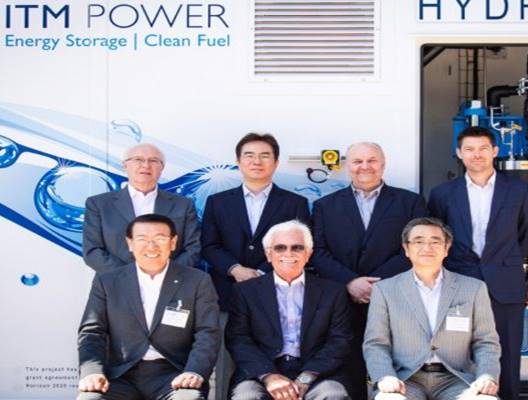
ITM Power and Sumitomo Corporation have entered into a strategic partnership “for the development of multi-megawatt projects in Japan based exclusively on ITM Power’s electrolyser products.”  The two companies will also look for collaborative opportunities outside Japan.  In a July 9 press release, ITM refers to the two companies’ shared vision for “the use of hydrogen to decarbonise heat, transport and industrial processes” as the foundation for the arrangement.

NH3 Energy+ Topical Conference schedule published
Article

This week, the NH3 Fuel Association published the full technical schedule for the NH3 Energy+ Topical Conference, which will be hosted within the AIChE Annual Meeting, on October 31, 2018, in Pittsburgh, PA. Featuring more than 50 oral presentations, this year's event will be our busiest yet. Speakers and co-authors from 16 countries, and 18 states across the USA, will present research and development from 68 separate companies and research institutions. Registration for the AIChE Annual Meeting is now open, with reduced rates until September 17. Full details are at the NH3 Fuel Association website.

South Korea to Launch Major Fuel Cell Vehicle Initiative
Article

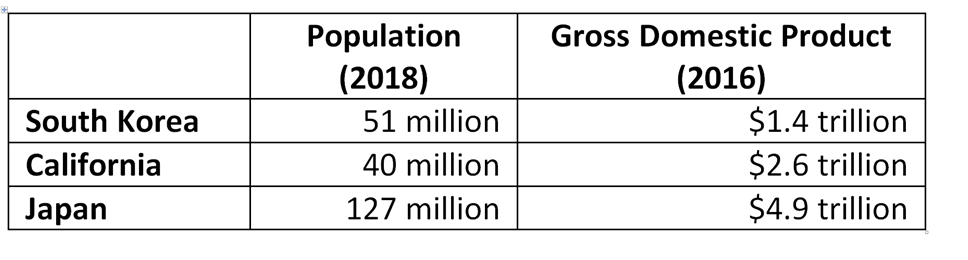
Where will fuel cell vehicles (FCVs) first achieve critical mass?  Japan and California spring to mind as likely jurisdictions.  South Korea not so much.  That situation could change, though, with recent announcements from the Ministry of Trade, Industry, and Energy (MTIE) in Seoul.  In fact, planned public and private sector investments could push South Korea to the front of the FCV pack. But while hydrogen-related activity of this nature can create opportunities for ammonia energy, the question always looms: are the key players in the implementing jurisdiction aware of the enabling roles ammonia can play?  Hyundai is unquestionably a key player in South Korea’s FCV landscape, and, courtesy of its support for the Australian ammonia-to-hydrogen fueling demonstration that will kick off in August, Hyundai is certainly aware, and could even become a champion, of ammonia-based FCV fueling.