
Asia

Article
IHI Breaks Ground on Hydrogen Research Facility
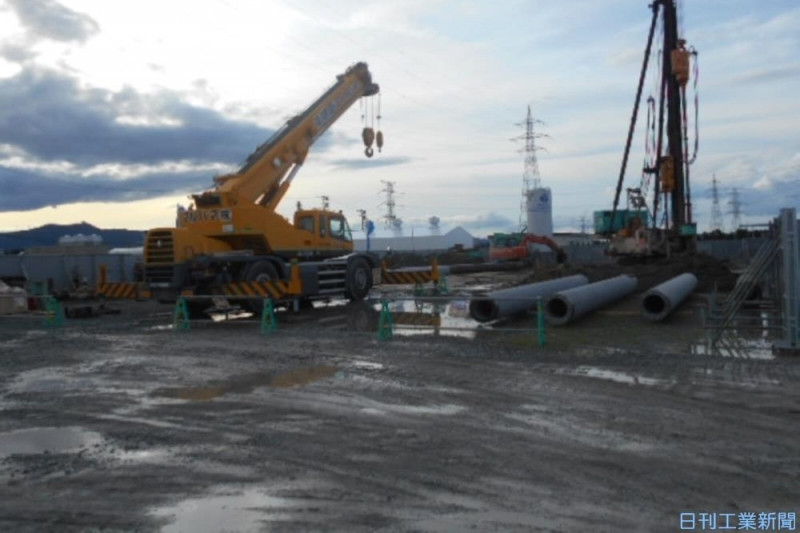
Japanese capital goods manufacturer IHI Corporation announced last month that it has started construction of a 1,000 square-meter hydrogen research facility in Fukushima Prefecture. The facility will be an addition to IHI’s Green Energy Center in Soma City which was launched in 2018. One of the Center’s original focuses is the production steps of the green hydrogen supply chain using solar electricity to power developmental electrolyzers. The new facility will focus on hydrogen carriers, including ammonia and methane (via “methanation” of carbon dioxide), that can be used in the logistics steps of the supply chain.
Article
Bunker Ammonia: Rapid Cross-Sector Progress from Industry, Government, Finance, and Class Societies
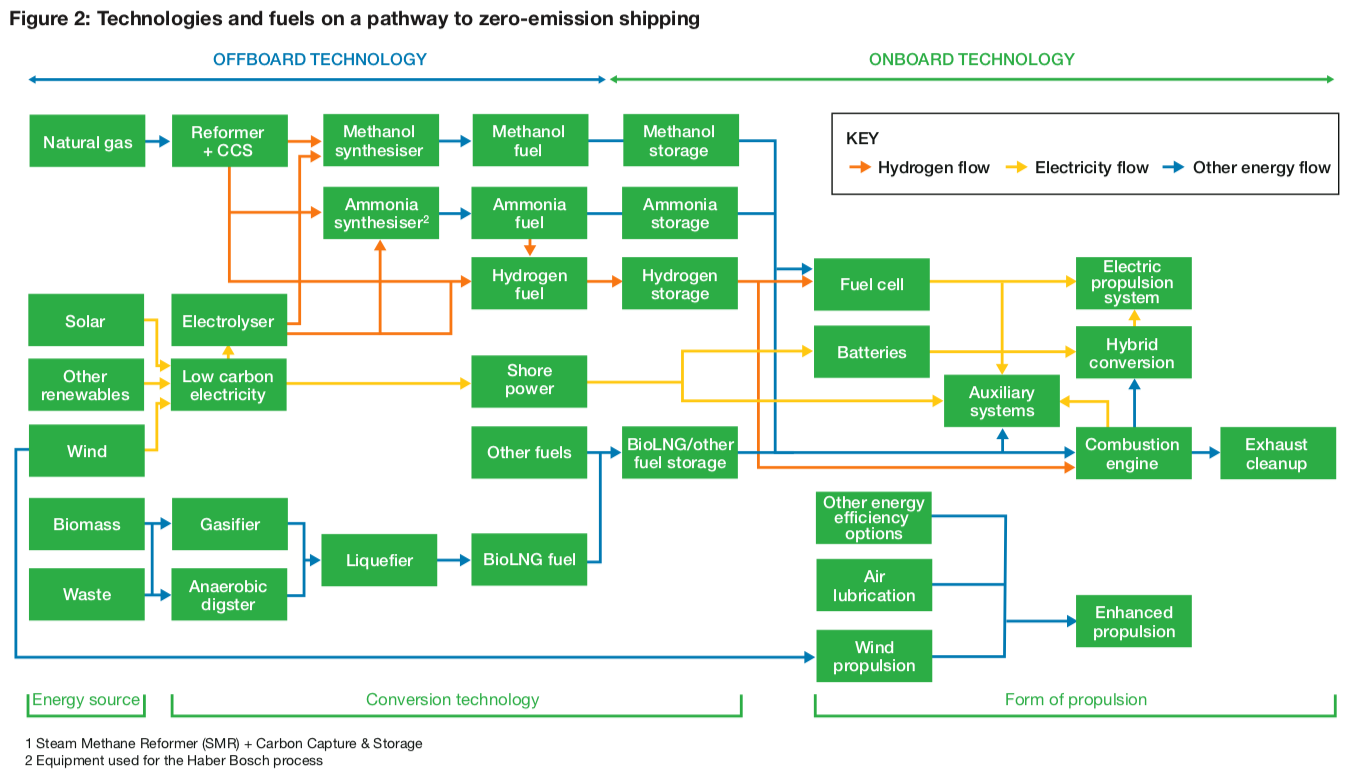
The maritime industry has been engaged in a frenzy of research since April 2018, when the International Maritime Organization (IMO) announced its Initial GHG Strategy mandating a 50% reduction in shipping's emissions by 2050. Three recent announcements illustrate the speed and depth of progress across a range of maritime stakeholders. In the government sector, the UK has launched its Clean Maritime Plan, which identifies ammonia as one of its strategic "clean growth opportunities." In finance, a coalition of 11 banks representing a shipping portfolio of around $100 billion has launched the Poseidon Principles to "redefine the role of banks in the maritime shipping sector." And class society ABS launched its Global Sustainability Center in Singapore to analyse, certify, and validate alternative fuels and new technologies; its Director of Global Sustainability will speak at the inaugural conference of the Ammonia Energy Association--Australia, held in Clayton, VIC, on August 22-23. His subject will be "Green ammonia as marine bunker fuel."
Article
Japan, U.S., E.U. Agree to Cooperate on Hydrogen
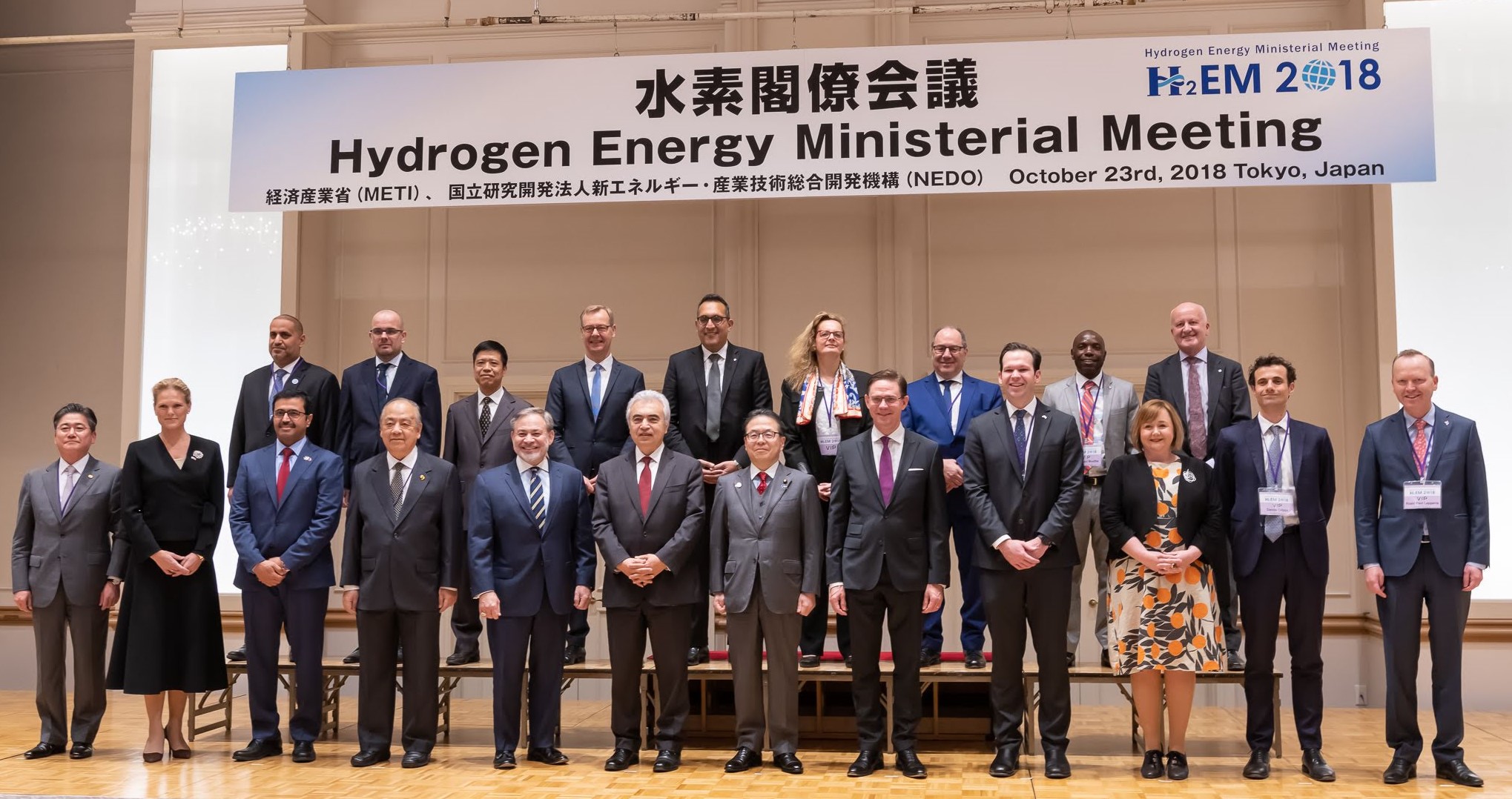
On June 18, Japan, the United States, and the European Union released a joint statement on “future cooperation in hydrogen and fuel cell technologies.” Represented, respectively, by the Ministry of Energy, Trade, and Industry (METI), the Department of Energy (DoE), and the Directorate-General for Energy (ENER), the jurisdictions pledged “to accelerate the development of sustainable hydrogen and fuel cell technologies in the world.” A central point of agreement in the statement is “the importance of reducing the cost of hydrogen.”

Article
Fuel Economy Standards, and the Roles of Ammonia
In the news this week, California and four automakers (BMW, Ford, Honda and VW) signed an agreement on fuel economy standards, rising 3.7% per year to about 50 MPG in 2026. This agreement, as well as previous California and Federal standards, give automakers flexibility to meet the standards with incentives and credits for new technology such as electric, hybrid, and alternative fuel vehicles.
Article
The Evolving Context of Ammonia-Coal Co-Firing
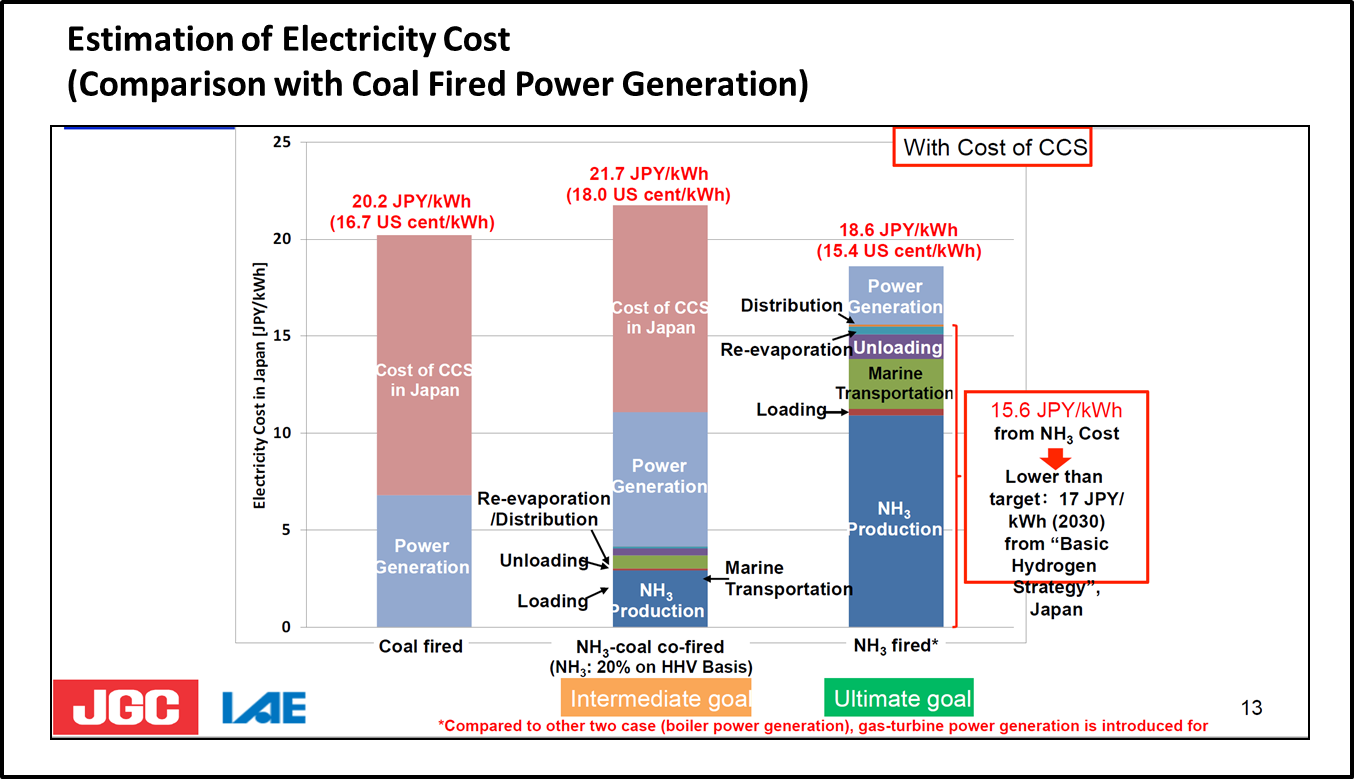
Co-firing ammonia in a coal-fueled boiler, a concept under active development in Japan, received positive notice in the International Energy Agency’s recently published report, The Future of Hydrogen. So far serious scrutiny of the co-firing concept is limited to Japan. In the fullness of time, the demand side of the concept may take root in other countries. The supply side, however, could have near-term global relevance.
Article
The global quest to decarbonize ammonia production
NEWS BRIEF: The industrial process for ammonia production is increasingly being recognized as a target for decarbonization - by researchers, investors, regulators, and the producers themselves. Demonstrating this shift in awareness, Chemical and Engineering News (C&EN), one of the flagship publications of the American Chemical Society (ACS), this week published an in-depth review of global research and development efforts and demonstration plants for sustainable ammonia synthesis. Its review is all-encompassing, from near-term feasible renewable Haber-Bosch plants, to long-term research areas of electrochemistry, photocatalysis, and bioengineering.
Article
Advances Reported for MCH and LH2
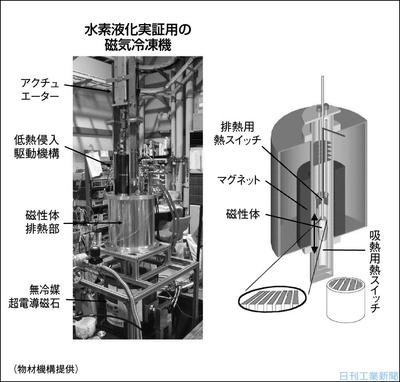
Two recent announcements show that the race is still very much on among the energy carriers that until recently were a focus of the Japanese Cabinet Office’s Cross-Ministerial Strategic Innovation Promotion Program (SIP). During its five-year career, the SIP Energy Carriers initiative promoted the development of liquid hydrogen (LH2), liquid organic hydrides (LOH), and ammonia as technologies that could animate a hydrogen supply chain spanning continents and oceans. The announcements regarding LH2 and methyl cyclohexane (MCH -- the main Energy Carriers focus in the LOH area) show that the conclusion of the Energy Carriers work at the end March does not mean the conclusion of work on these two rivals to ammonia energy.
Article
NH3 vs. MCH: Energy Efficiency of Hydrogen Carriers Compared
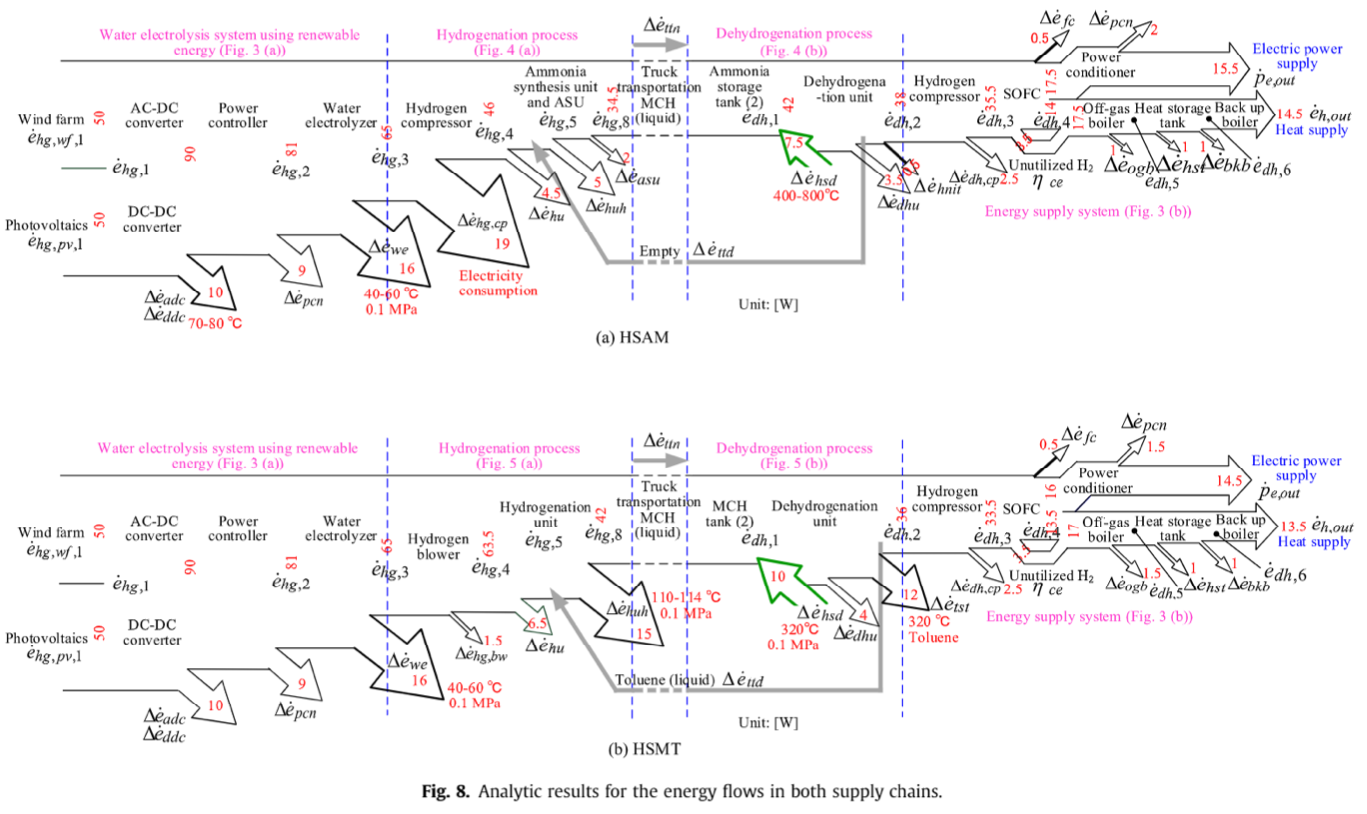
Volume 174 of the journal Energy, published on May 1, 2019, includes a paper by Shin’ya Obara, Professor in the Department of Electrical and Electronic Engineering at the Kitami Institute of Technology in Japan, that should be of interest to hydrogen advocates everywhere. The paper, "Energy and exergy flows of a hydrogen supply chain with truck transportation of ammonia or methyl cyclohexane," concludes that a hydrogen supply chain based on ammonia has better energy efficiency than one based on methyl cyclohexane (MCH).