Site items in: Content by Author Trevor Brown

Future Ammonia Technologies: Electrochemical (part 2)
Article

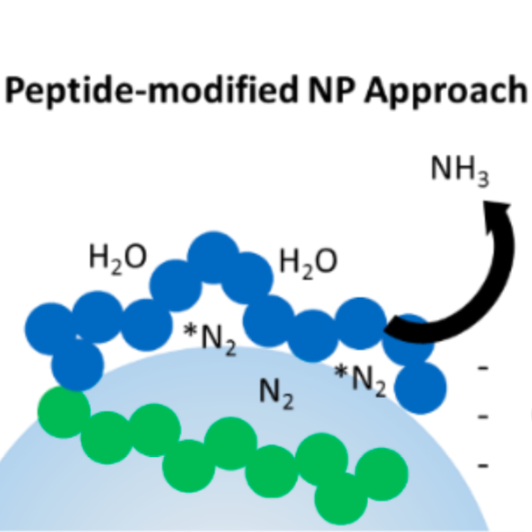
Last week, in Part 1 of this series on electrochemical ammonia synthesis technologies, I quoted a recent article by researchers at MIT that identified avenues for future research and development. One option was a biomimicry approach, learning from "enzymatic catalysts, such as nitrogenases," which can "either be incorporated into or provide inspiration for the design of electrocatalytic processes." The nitrogenase enzyme, nature's ammonia synthesis technology, was developed in an iterative innovation process, otherwise known as evolution, that took hundreds of millions of years to reach this level of efficiency. According to one group of electrochemists, who presented their results at the recent NH3 Energy+ conference, nitrogenase produces ammonia in nature with an enviable 75% process efficiency - so it's no surprise that they are basing their industrial technology on it.
Future Ammonia Technologies: Electrochemical (part 1)
Article

Last month's NH3 Energy+ conference featured presentations on a great range of novel ammonia synthesis technologies, including improvements to Haber-Bosch, and plasmas, membranes, and redox cycles. But, in a mark of a conference approaching maturity, members of the audience had at least as much to contribute as the presenters. This was the case for electrochemical synthesis technologies: while the presentations included updates from an influential industry-academia-government collaboration, led by Nel Hydrogen's US subsidiary, the audience members represented, among others, the new electrochemical ammonia synthesis research lab at Massachusetts Institute of Technology (MIT), and a team from Monash University in Australia. The very next week, Monash published its latest results, reporting an electrochemical process that synthesized ammonia with 60% faradaic efficiency, an unprecedented rate of current conversion at ambient pressure and temperature.

Bunker Ammonia: new report quantifies ammonia as
Article

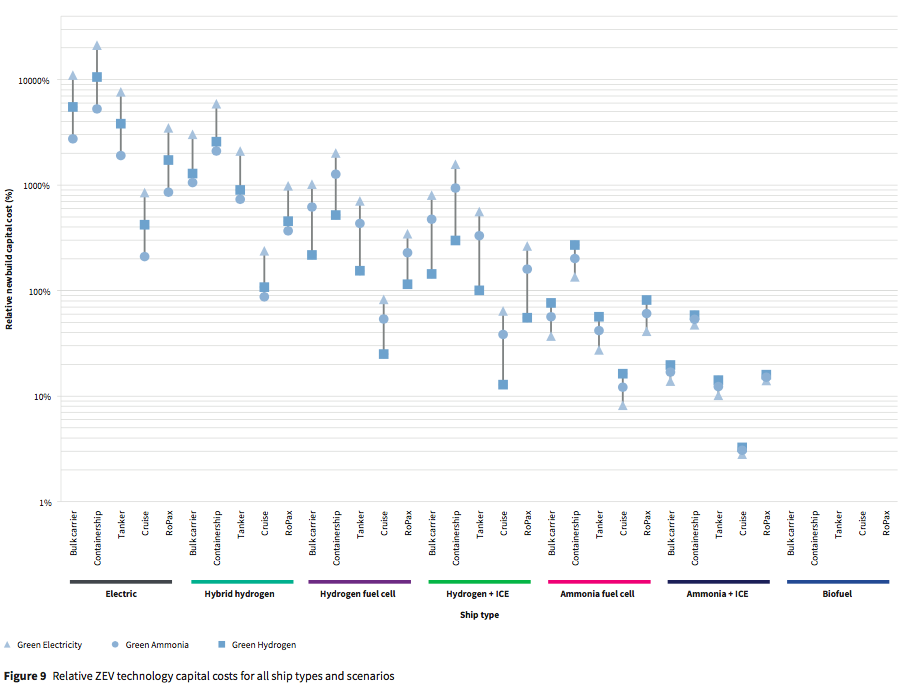
This week, Lloyd's Register published the most significant comparative assessment so far of ammonia's potential as a zero-emission maritime fuel. The new report compares ammonia, used in either internal combustion engines (ICE) or fuel cells, to other low-carbon technologies, including hydrogen, batteries, and biofuels, estimating costs for 2030. It concludes that, of all the sustainable, available options, ammonia "appears the most competitive."

Future Ammonia Technologies: Plasma, Membrane, Redox
Article

I wrote recently about two pathways for ammonia production technology development: improvements on Haber-Bosch, or electrochemical synthesis. Last week, I covered some of these Haber-Bosch improvements; next week, I'll write about electrochemical processes. This week, I want to write about some innovations that don't fit this two-way categorization: they don't use electrochemistry and they don't build upon the Haber-Bosch process, and that might be the only thing that links them.

Improvement of Haber-Bosch: Adsorption vs. Absorption
Article

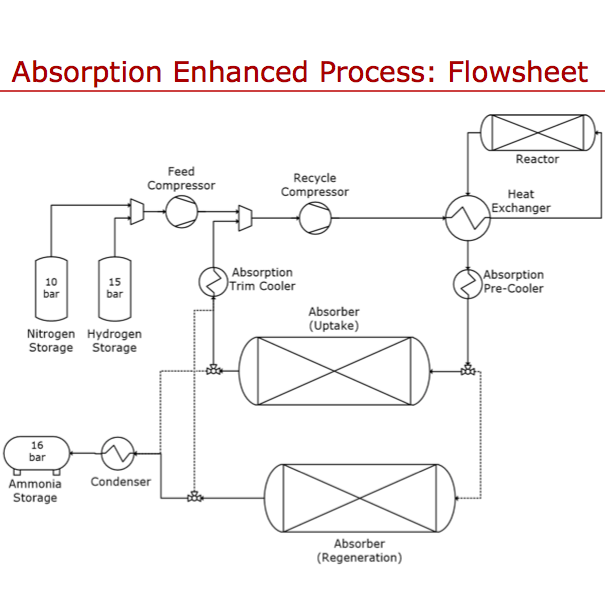
At the recent NH3 Energy+ Topical Conference, Grigorii Soloveichik described the future of ammonia synthesis technologies as a two-way choice: Improvement of Haber-Bosch or Electrochemical Synthesis. Two such Haber-Bosch improvement projects, which received ARPA-E-funding under Soloveichik's program direction, also presented papers at the conference. They each take different approaches to the same problem: how to adapt the high-pressure, high-temperature, constant-state Haber-Bosch process to small-scale, intermittent renewable power inputs. One uses adsorption, the other uses absorption, but both remove ammonia from the synthesis loop, avoiding one of Haber-Bosch's major limiting factors: separation of the product ammonia.

The Future of Ammonia: Improvement of Haber-Bosch ... or Electrochemical Synthesis?
Article

During our NH3 Energy+ Topical Conference, hosted within AIChE's Annual Meeting earlier this month, an entire day of presentations was devoted to new technologies to make industrial ammonia production more sustainable. One speaker perfectly articulated the broad investment drivers, technology trends, and recent R&D achievements in this area: the US Department of Energy's ARPA-E Program Director, Grigorii Soloveichik, who posed this question regarding the future of ammonia production: "Improvement of Haber-Bosch Process or Electrochemical Synthesis?"

Renewable Energy for Industry: IEA's vision for green ammonia as feedstock, fuel, and energy trade
Article

This morning in Beijing, China, the International Energy Agency (IEA) launched a major new report with a compelling vision for ammonia's role as a "hydrogen-rich chemical" in a low-carbon economy. Green ammonia would be used by industry "as feedstock, process agent, and fuel," and its production from electrolytic hydrogen would spur the commercial deployment of "several terawatts" of new renewable power. These terawatts would be for industrial markets, additional to all prior estimates of renewable deployment required to serve electricity markets. At this scale, renewable ammonia would, by merit of its ease of storage and transport, enable renewable energy trading across continents. The IEA's report, Renewable Energy for Industry, will be highlighted later this month at the COP23 in Bonn, Germany, and is available now from the IEA's website.

Ammonia Fuel Safety
Presentation

This paper introduces the existing literature on the safety of using ammonia as a fuel, which provides comparative data for a range of traditional and alternative fuels and energy carriers. The studies reviewed conclude that risk levels associated with using ammonia as a fuel are “similar to those of gasoline,” or “similar, if not lower than for the other fuels,” also including hydrogen, methanol, LPG, and CNG. Ammonia as a fuel can meet all “acceptable” risk levels in even the most stringent regulatory jurisdictions. Addressing popular misconceptions and fears by providing robust sources for quantitative data on the dangers of…

China and Australia collaborate on ammonia as a clean transport fuel
Article

The University of Western Australia has entered the increasingly competitive field of ammonia energy research in Australia, announcing a collaborative agreement to develop "the world's first practical ammonia-powered vehicle" as well as an "ammonia-based hydrogen production plant." These goals are supported by funding from the R&D arm of Shenhua Group, formerly a coal company but now "China's largest hydrogen producer with a production capacity to power 40 million fuel cell passenger cars."