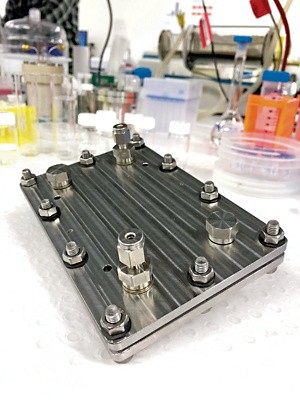
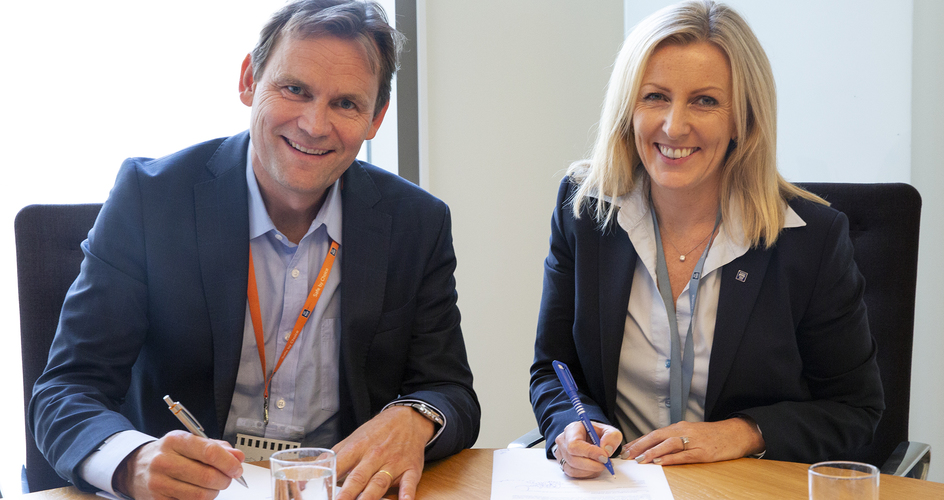
This week, two Norwegian companies, fertilizer producer Yara and electrolyzer manufacturer Nel, announced an agreement to test Nel's "next generation" alkaline electrolyzer at an ammonia production site. The parties expect to begin operating a 5 MW prototype in 2022, feeding green hydrogen directly into Yara's 500,000 ton per year ammonia plant at Porsgrunn.
Renewable Ammonia
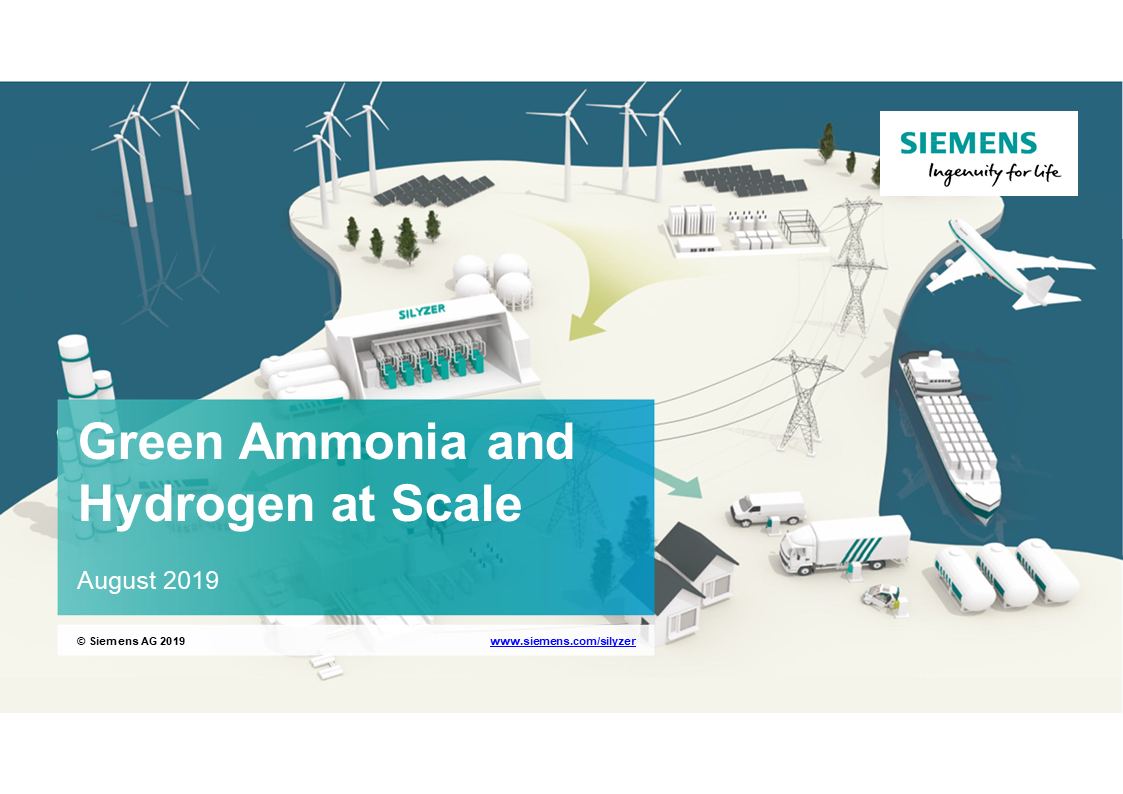
Ammonia’s role in a renewable energy future
Green hydrogen feed for Haber Bosch ammonia synthesis
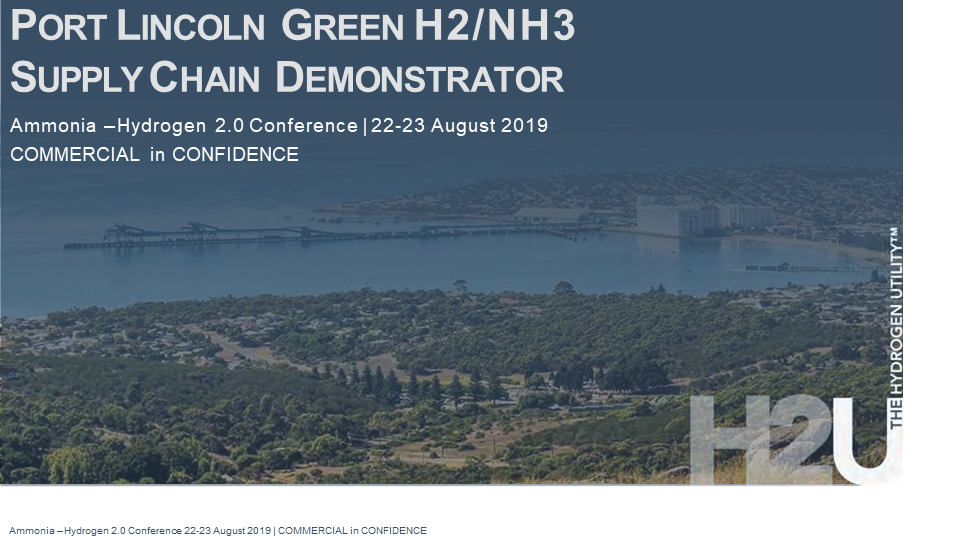
Manufacturing ammonia from renewable energy – demonstrator and scale-up potential
High efficiency ammonia synthesis systems
Green ammonia is key to "making Yara carbon-neutral by 2050"
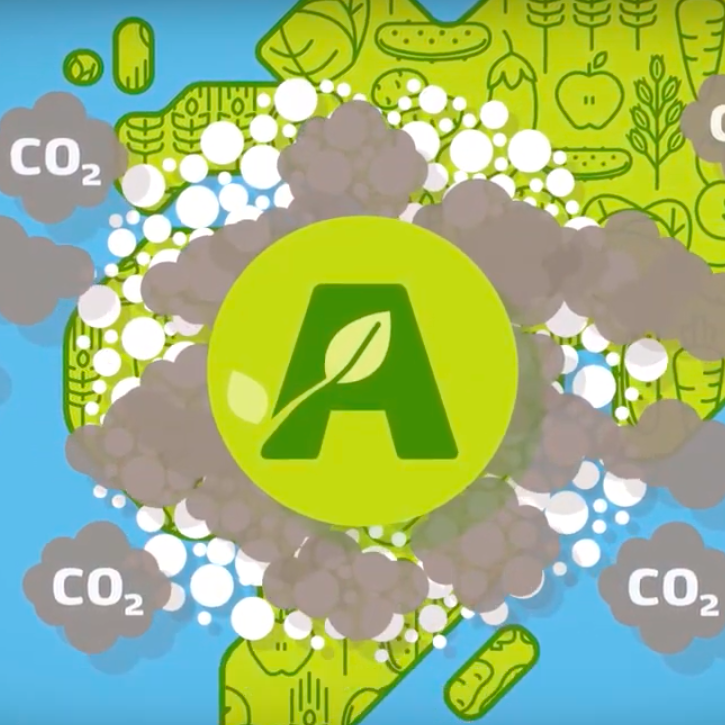
Yara International today published a video promoting Green Ammonia, which it states will be key to meeting its new corporate target of "making Yara carbon-neutral by 2050." The timing of this publication is highly appropriate because, also today, we announce the full program for our 16th annual Ammonia Energy Conference, which features a Keynote Speech from Rob Stevens of Yara's Decarbonize division.
The global quest to decarbonize ammonia production
NEWS BRIEF: The industrial process for ammonia production is increasingly being recognized as a target for decarbonization - by researchers, investors, regulators, and the producers themselves. Demonstrating this shift in awareness, Chemical and Engineering News (C&EN), one of the flagship publications of the American Chemical Society (ACS), this week published an in-depth review of global research and development efforts and demonstration plants for sustainable ammonia synthesis. Its review is all-encompassing, from near-term feasible renewable Haber-Bosch plants, to long-term research areas of electrochemistry, photocatalysis, and bioengineering.
Feeding Life 2030: the vision of Fertilizers Europe
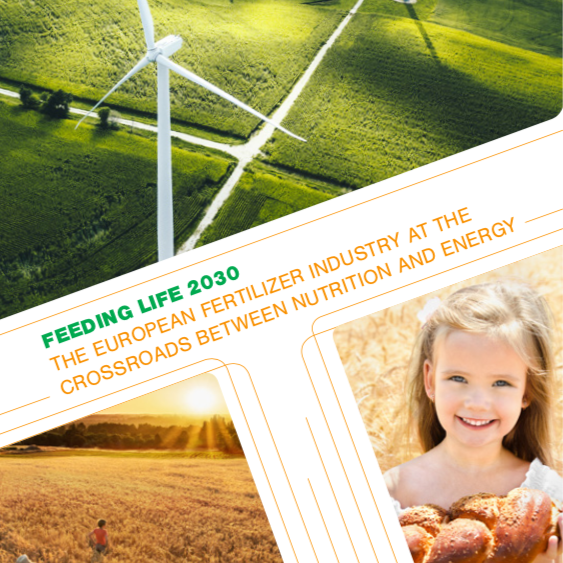
Fertilizers Europe published an important report in late 2018 that examines key drivers for the fertilizer industry and describes the "likely developments expected between now and 2030." These developments include producing "perhaps 10%" of European ammonia from renewable electricity by using electrolyzers to generate renewable hydrogen feedstock. This would require scaling up green ammonia production capacity to more than a million tons per year, within ten years. The report, Feeding Life 2030, also describes the policy framework required "to sustain the Vision." In this vision, ammonia sits at "the crossroads of nutrition and energy" and is recognized as "the ‘missing link’ in the coming energy transformation."
If green ammonia, whence urea? Stamicarbon's Innovation Agenda
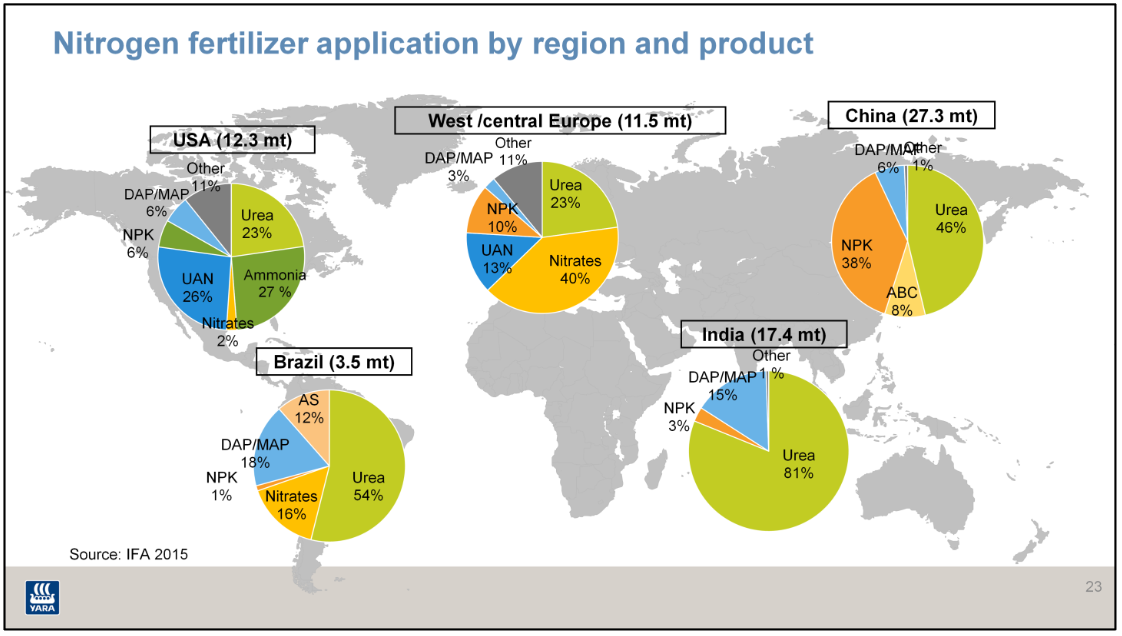
One of the most interesting unanswered questions surrounding green ammonia is this: what about urea? Last month, a major announcement by Stamicarbon ("the world market leader in design, licensing and development of urea plants") implies an answer: in the long-term context of climate change, urea as a fertilizer may simply need to be phased out. Stamicarbon announced its new Innovation Agenda at the company's "Future Day" event in Utrecht in April. Its Innovation Agenda covers three areas: speciality fertilizers, digitalization, and "Renewable production of fertilizer (using wind or solar energy to produce fertilizer)."