Site items in: Maritime Fuel

Ammonia for Green Shipping Corridors
Presentation

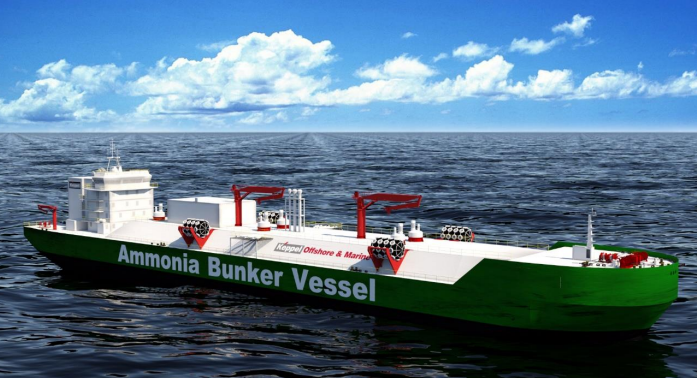
Decarbonization of shipping (responsible for 3% of global greenhouse gas (GHG) emissions) is a complex task due to the scale and complexity of the industry. However, it will not be possible to scale from day one and we need to start somewhere, and this is where Green shipping corridors play and important role. Yara, as the world’s largest ammonia distributor today, is partnering with several players to make this happen. In Scandinavia we have partnered with several players to build a network of ammonia bunkering barges and this summer we also signed a Collaboration Agreement with Pilbara Ports Authority (PPA)…

Maritime actors push on with overcoming ammonia fuel safety concerns
Article

Two recent reports (one from Bureau Veritas & Total, the other from the Together in Safety consortium) illustrate just how seriously the maritime industry is pursuing low carbon ammonia fuel. While progress in the maritime ammonia space is impressive, safety risks are widely-acknowledged and work remains to be done.

Both reports identify key hazards facing adoption of ammonia as a maritime fuel, and echo points heard before in the development of methanol & LNG as maritime fuels: high-risk hazards currently exist that must be eliminated, mitigated or controlled. But Together in Safety concludes the way forward will be via collaboration & shared responsibility - something we’re already seeing in the multiple high-profile safety studies and consortia working around the globe. Thankfully, the willingness of significant maritime players to engage on ammonia and the momentum for change are both high.

AmmoniaDrive
Article

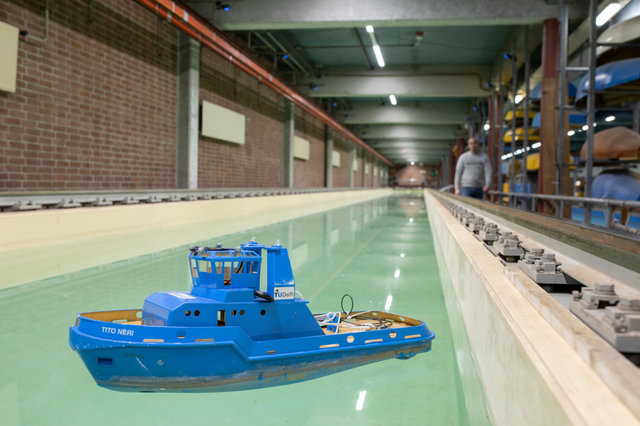
The University of Amsterdam and TU Delft will lead an academic-industry consortium that will determine the feasibility of combining ammonia-fed solid-oxide fuel cells with internal combustion engines for maritime propulsion. The AmmoniaDrive project just received over €2 million in support from the Dutch government, and is the latest in a series of hybrid and fuel cell-based propulsion projects using ammonia as an onboard fuel.

New roadmap for ammonia imports into Germany
Article

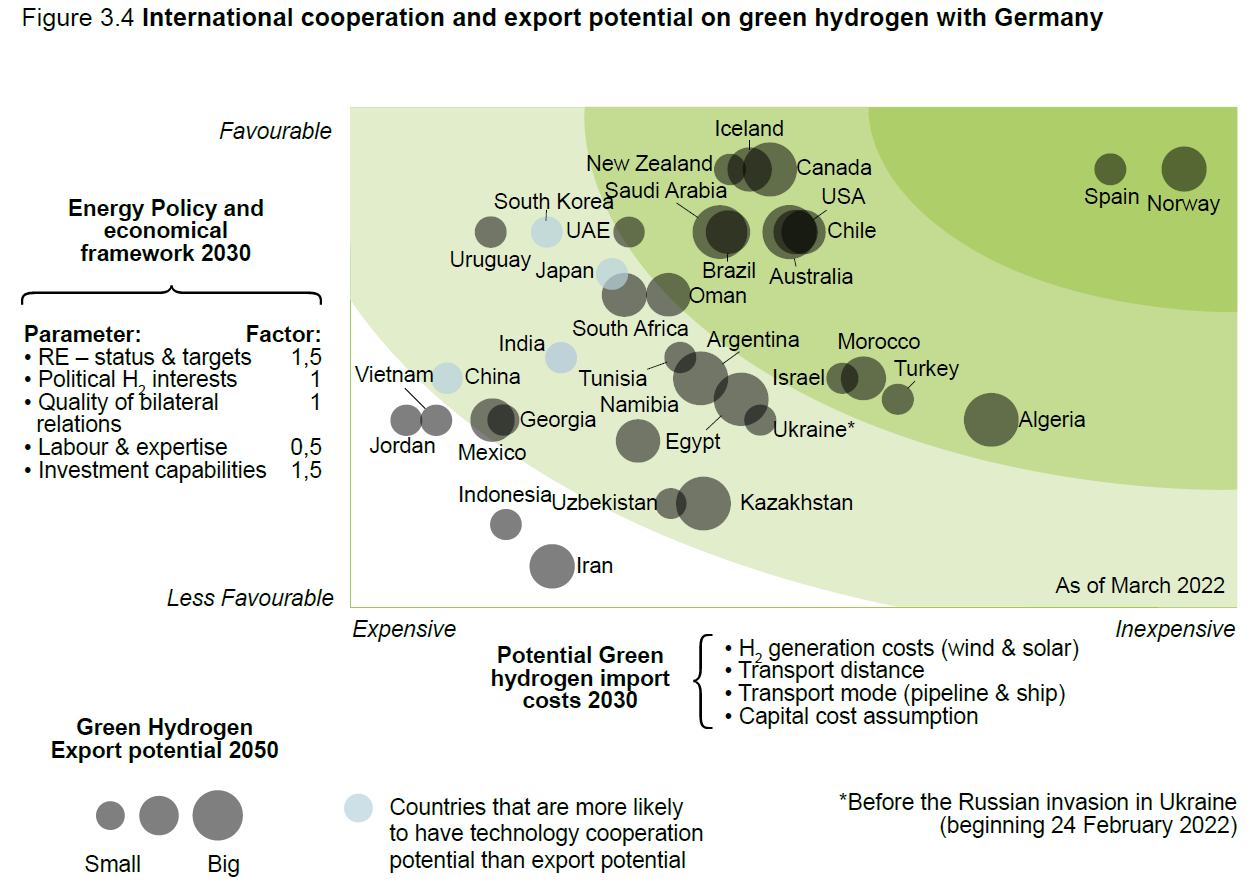
A Fortescue-led Australian-German business coalition has released a roadmap and ten-point action plan to meet ambitious ammonia import targets for Germany. Policy recommendations on the EU and Australian side of the emerging supply chain include financial support to address the first-mover disadvantage. Guidehouse have laid out recommendations of their own in a new report, which finds maritime shipping of ammonia over long distance is the best import option, and that - ideally - hydrogen derivatives should be shipped into Germany in the form required by end users, saving on reconversion costs.

Meanwhile in Copenhagen, EU Commission Executive Vice-President Frans Timmermans has backed the shipping industry to make the transition faster than expected, with ammonia to be the “future fuel”.

ExxonMobil’s Slagen terminal to become a low-emissions hub
Article

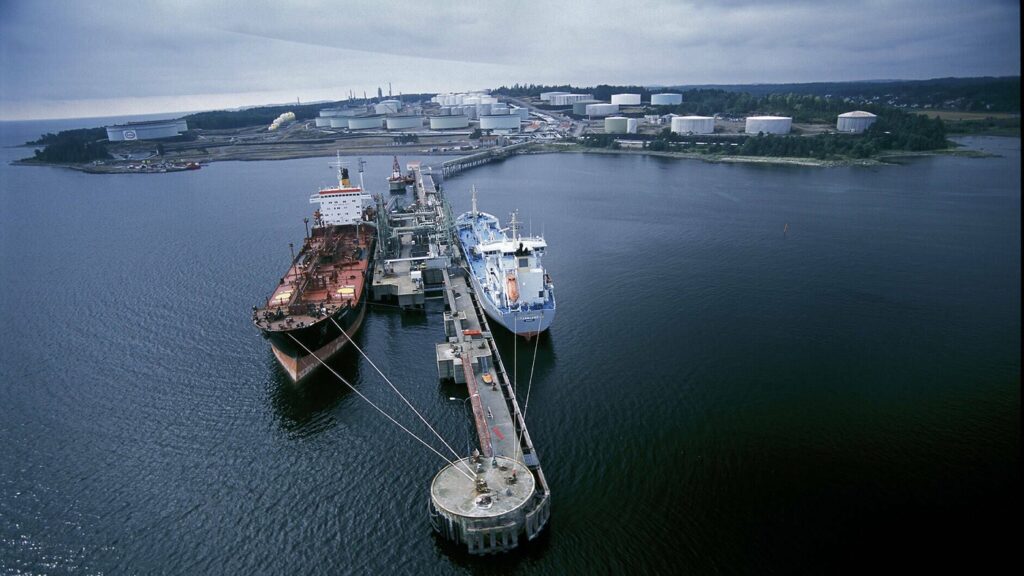
ExxonMobil, Grieg Edge, North Ammonia, and GreenH will explore options to transform Exxon’s existing Slagen terminal into a production & distribution hub for renewable ammonia and hydrogen maritime fuels. The group has identified the potential to produce 200,000 tonnes of electrolytic hydrogen production per year at the site, as well as distributing 100,000 tonnes per year of renewable ammonia. Exxon’s wider plans for low-carbon ammonia also include two large-scale production hubs (one each in the US and the UK).