Webinar
The feasibility of renewable ammonia fuel for Baltic Sea Cruise Liners
We explore the GreenBalticCruising project, investigating the potential of a cruise ship route across the Baltic Sea, powered by ammonia fuel.
We explore the GreenBalticCruising project, investigating the potential of a cruise ship route across the Baltic Sea, powered by ammonia fuel.
Peak industry body Hydrogen Europe has released a new report on the potential of clean ammonia production & utilisation in Europe. Although the introduction of renewable hydrogen feedstock presents an obvious opportunity to decarbonise the ammonia industry in Europe, the potential downstream applications of ammonia energy are being neglected by policymakers - particularly power generation and maritime fuel.
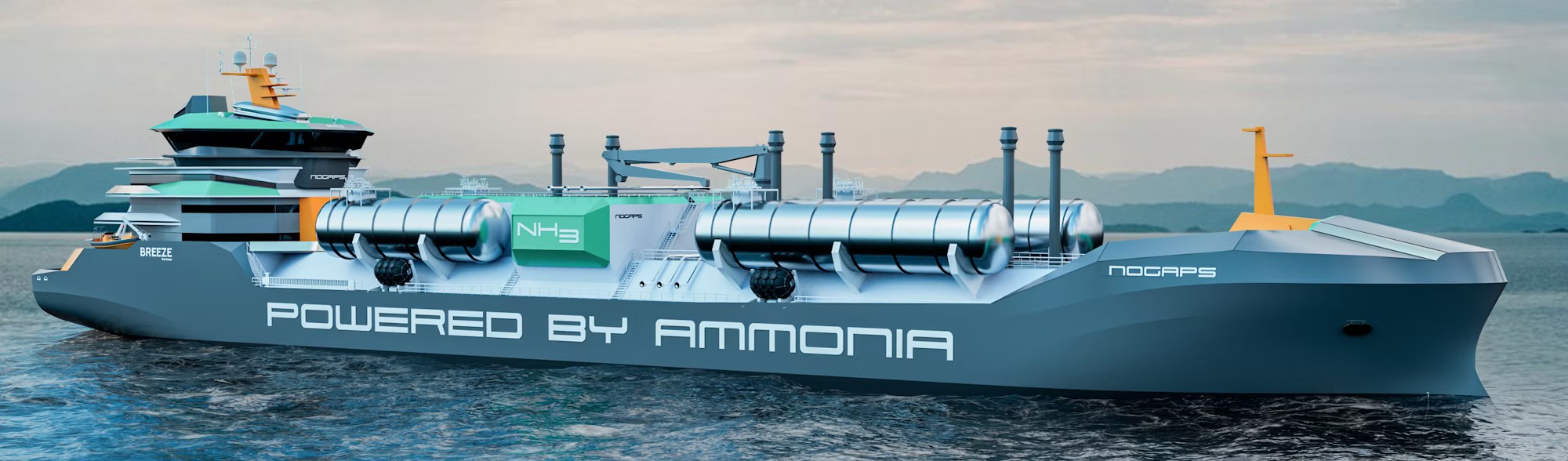
The second phase of the NoGAPS project is well underway. Led by the Maersk Mc-Kinney Møller Center for Zero Carbon Shipping, a detailed plan for the design, operation and business case for the future MS NoGAPS vessel will be developed. Construction and delivery is expected in 2024-25. Also in Scandinavia, Viridis Bulk Carriers has been awarded AiP from Bureau Veritas for its ammonia-fueled, short-sea, bulk carrier design.
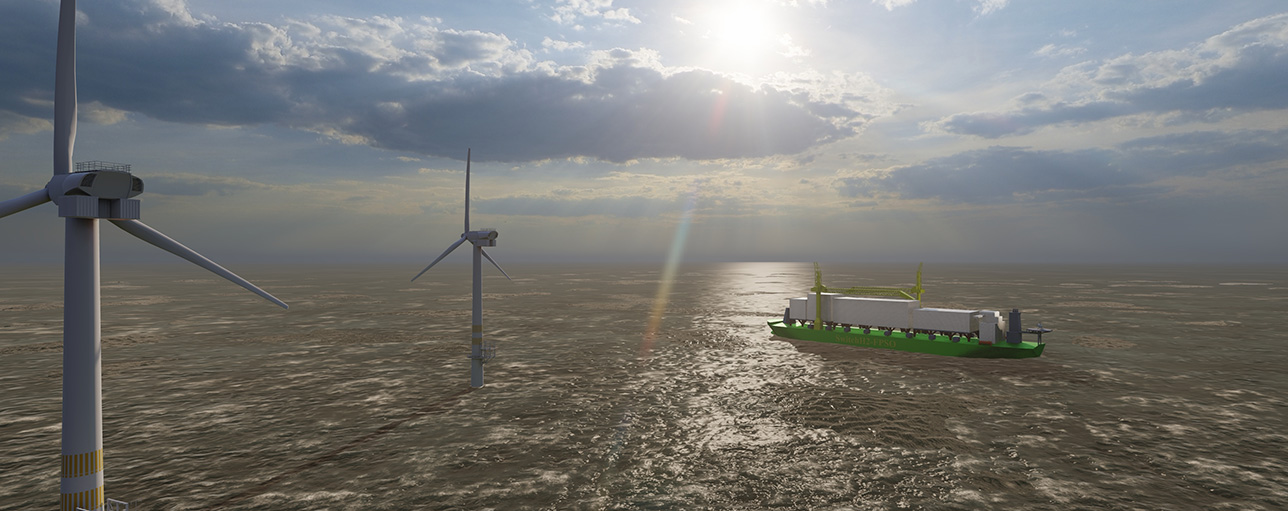
Through its ammonia FPSO vessel project, SwitcH2 expects to start producing ammonia offshore 2028, while Louis Dreyfus Ports and Logistics’s “FRESH” mobile ammonia terminal concept is expected to become commercial by 2025. Recently awarded AiPs affirm the technical feasibility of both designs.

Masdar joint venture Infinity Power, Germany-based Conjuncta and the government of Mauritania have agreed to develop an export mega-project. Up to 8 million tonnes per year of renewable fuels of non-biological origin will be produced for export to Germany. In Egypt, Masdar’s two million tonne per year ammonia fuel project on the Suez Canal has been fast-tracked via a “golden license”.
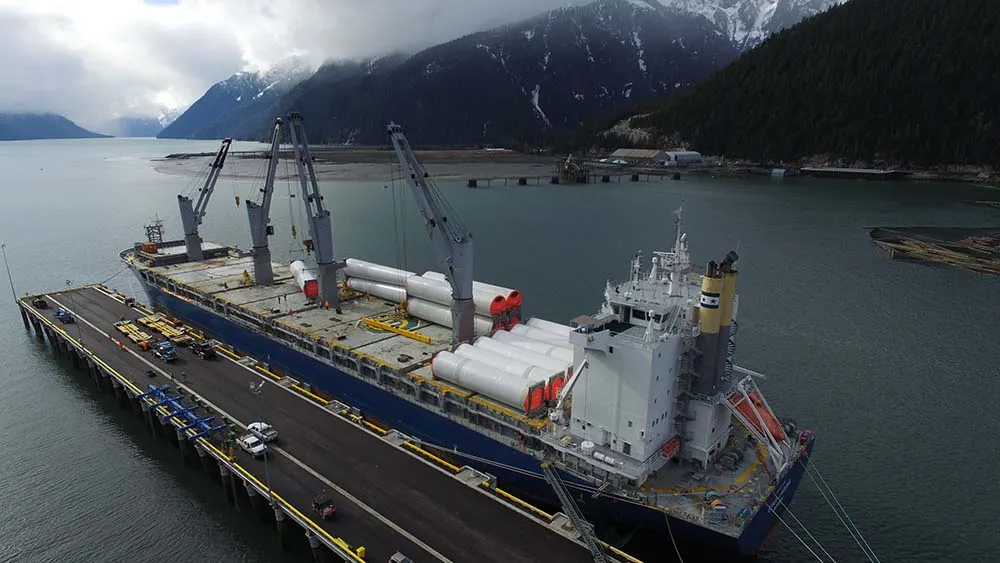
Grieg Star and a series of high-profile maritime consortium partners have assessed the full feasibility for retrofitting a Grieg Star L-Class vessel to run on ammonia fuel. The study concludes that technical & regulatory challenges will not be showstoppers in the transition. A combination of high investment costs, uncertainty over ammonia fuel availability & pricing and slow market development remain the biggest barriers, presenting significant risks for first movers.
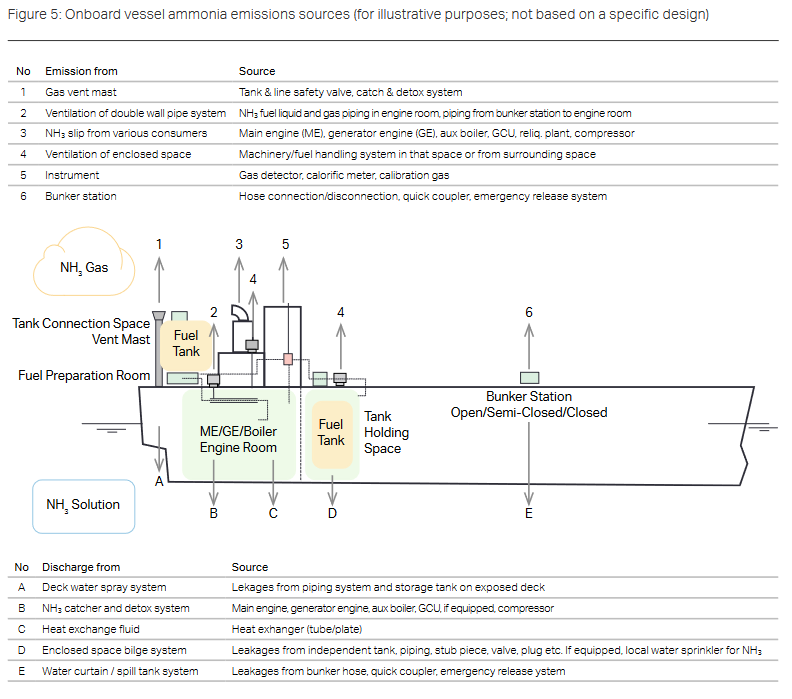
Technology solutions to manage emissions from ammonia-powered internal combustion engines will be commercially available on a similar timeline to the engines themselves, a new report from the Mærsk Mc-Kinney Møller Center concludes. Although the authors are confident ammonia combustion emissions (including the potent greenhouse molecule N2O) will be successfully minimised, key gaps include a lack of industry-wide emissions thresholds and a poor understanding of the well-to-tank emissions of ammonia fuel, particularly CCS-based ammonia.
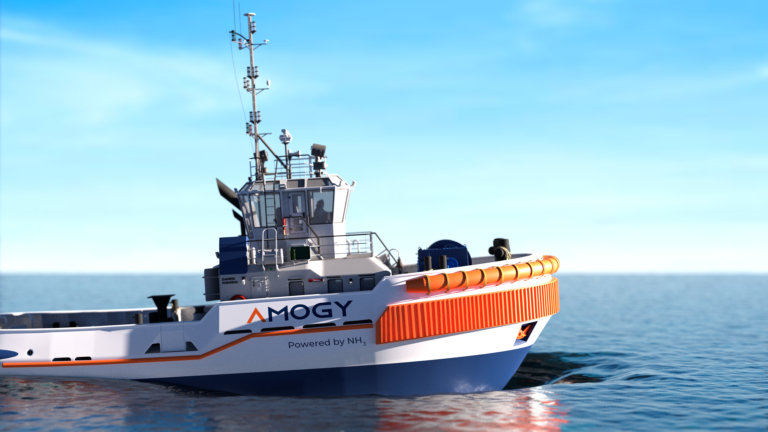
The upcoming tugboat experiment scheduled for later this year will be the company’s first MW scale deployment of their ammonia-to-power system. The tugboat’s initial voyage in a New York waterway will also be the first deployment Amogy’s ammonia-to-power system in the maritime industry.
In our latest episode of Maritime Ammonia Insights, we explored the findings of a new, landmark environmental study: Ammonia at Sea. Speakers representing the report’s co-authors joined us to discuss the results, what further work is required and how the report is being incorporated into policy discussions at the IMO.
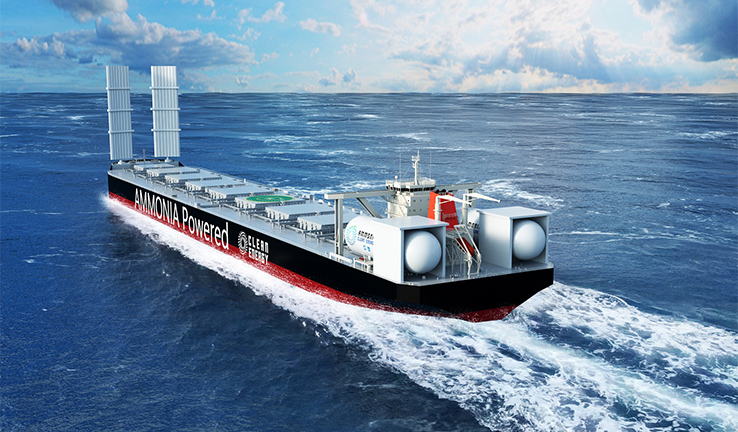
Three new ammonia-powered, bulk carrier designs have recently been awarded Approval in Principle. In China, SDTR Marine & SDARI’s Kamsarmax dual-fuel design received AiP from the China Classification Society. In Japan, another Kamsarmax-sized vessel developed by Sumitomo and Oshima Shipping was approved, and ClassNK has signed off on a Capemax vessel designed by MOL and Mitsui & Co., which includes an ammonia-powered main engine and hard sails to improve energy efficiency.