Site items in: CCS Ammonia

Industry consortium announces feasibility study for co-firing ammonia in thermal power plants
Article

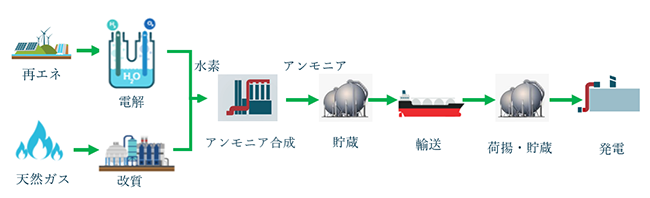
In March 2020, IHI Corporation, JERA Co., and Marubeni Corporation announced a feasibility study "to evaluate possible applications for the co-firing of ammonia in thermal power plants." The Japanese companies have contracted with NEDO to deliver detailed technical and economic analysis on the use of ammonia as a direct fuel for power generation. In addition, with support from Woodside Energy in Australia, they "will examine the construction and operation of world-scale ammonia facilities and the optimisation of supply chain costs" to support "large-scale export of hydrogen as ammonia."
Australian Company Advances Low-Carbon Hydrogen from Methane
Article

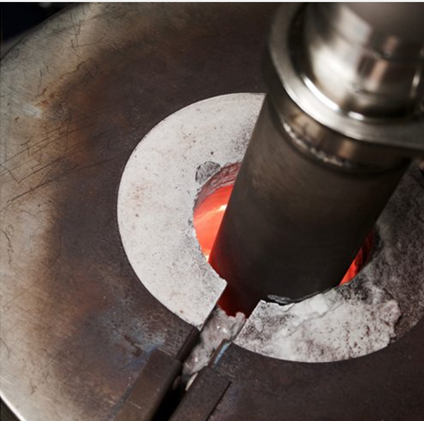
Hazer Group, an Australian company with technology in development for the production of low-carbon hydrogen, had a busy 2019. In April the company announced that it had received its first Australian patent. In September, the Australian Renewable Energy Agency (ARENA) announced the approval of “up to [AUD]$9.41 million in funding to Hazer … for the construction and operation of a groundbreaking hydrogen production facility in Munster, Western Australia.” In December Hazer announced that it was negotiating an agreement with industrial gas distributor BOC related to its Munster project. Last week the company announced that it had secured up to AUD$250,000 in grant funding from the Government of Western Australia for “a feasibility study on the creation of a renewable hydrogen transport hub." in the City of Mandurah.

The Role of Carbon Capture and Storage Incentives in Ammonia Fuel Production
Presentation

While the current cost of ammonia produced from hydrogen via steam methane reforming (SMR) of natural gas with carbon capture & storage (CCS) is challenging on an energy basis compared to the price of gasoline, the Clean Air Task Force projects that production of ammonia at optimized, world-scale SMR+CCS facilities could be price-competitive with gasoline in the near future, especially in the right policy environment. Two government programs in the United States—a federal tax incentive known as 45Q and California’s Low Carbon Fuel Standard (LCFS)—provide immediate and unprecedented opportunities to mitigate the cost premium associated with certain hydrogen production systems.…

Technology Advances for Blue Hydrogen and Blue Ammonia
Article

ANNUAL REVIEW 2019: Blue hydrogen – defined as the version of the element whose production involves carbon capture and sequestration (CCS) – represents an alluring prospect for the energy transition.  The primary “blue” feedstocks, natural gas and coal, currently set the low-cost benchmarks for storable energy commodities.  With the addition of CCS, they are expected to set the low-cost benchmarks for low-carbon storable energy commodities.  Blue ammonia is very much included in this frame of reference since CCS could be applied to the CO2 waste stream from the Haber-Bosch process.  But neither blue hydrogen nor blue ammonia are sure things; a variety of technical, financial, regulatory, and social issues could stand in the way of their widespread adoption. But work on new technologies that have the potential to ease the way for blue products has come increasingly into view over the last twelve months.

NH3 vs. MCH: Energy Efficiency of Hydrogen Carriers Compared
Article

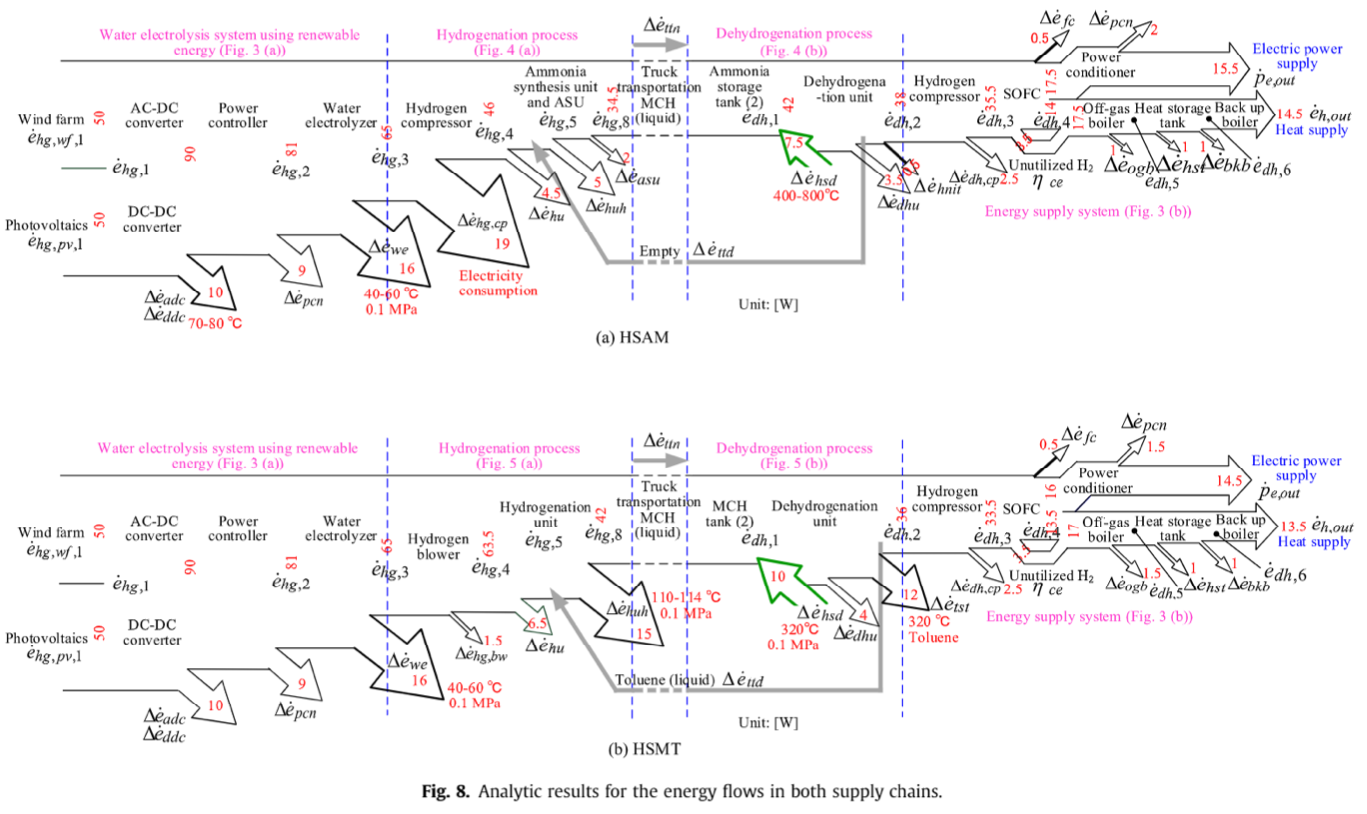
Volume 174 of the journal Energy, published on May 1, 2019, includes a paper by Shin’ya Obara, Professor in the Department of Electrical and Electronic Engineering at the Kitami Institute of Technology in Japan, that should be of interest to hydrogen advocates everywhere.  The paper, "Energy and exergy flows of a hydrogen supply chain with truck transportation of ammonia or methyl cyclohexane," concludes that a hydrogen supply chain based on ammonia has better energy efficiency than one based on methyl cyclohexane (MCH).

The Allam Cycle's Nexus with Ammonia
Article

8 Rivers Capital, the developer of “the Allam Cycle, the only technology that will enable the world to meet all of its climate targets without having to pay more for electricity,” unveiled plans in November 2018 for a “billion-dollar clean energy production site” in New Zealand whose outputs are slated to include low-carbon ammonia. That is a sentence with a lot of angles, and unpacking it will take some effort. So let’s start right in with the Allam Cycle.

Mission Possible: decarbonizing ammonia
Article

Mission Possible, a major report published at the end of 2018, concludes that decarbonizing ammonia production by 2050 is both technically and economically feasible. Among its 172 pages of assumptions, analysis, and explanation, Mission Possible examines production pathways and markets for green ammonia and its derivative green nitrogen fertilizers. It addresses the relatively straightforward issue of how to replace fossil feedstocks with renewable hydrogen for ammonia synthesis, as well as the more complex question of how to source or supplant the carbon dioxide molecules contained in urea, the most common nitrogen fertilizer. The report's economic conclusions will not surprise anyone involved in ammonia production or politics. Yes, green ammonia is currently more expensive than fossil ammonia, although it won't be for long. And no, "none of the increases in end-consumer prices are sufficiently large to be an argument against forceful policies to drive decarbonization."

Cost Evaluation Study on CO2-Free Ammonia and Coal Co-Fired Power Generation Integrated with Cost of CCS
Presentation

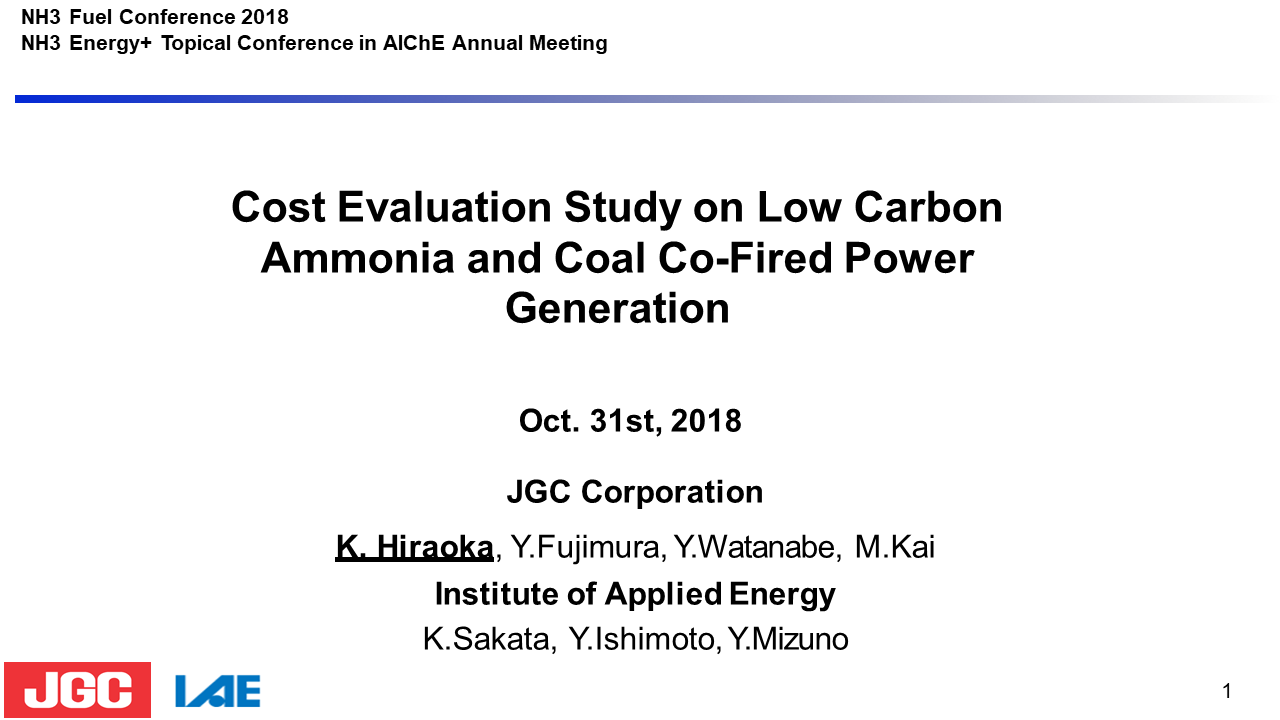
This study presents a cost estimation for electricity generated by CO2-free ammonia and coal co-firing. Regulation of CO2 emissions seems to be gaining pace due to the global warming issue so the introduction of CO2-free energy in power generation has become desirable. Ammonia is one of the potential energy carriers for power generation and development of ammonia combustion technology with low NOx emissions has been conducted in Japan. In order to investigate the feasibility of the introduction of CO2-free ammonia in Japan from both the technical and economic viewpoints, we estimated the ammonia supply chain cost from ammonia production integrated…

McKinsey report on industrial decarbonization examines pathways to green ammonia
Article

McKinsey & Company, the global consulting firm, recently published a report that analyzes the "Decarbonization of industrial sectors," with a focus on the four heaviest emitters: cement, steel, ammonia, and ethylene production. "We conclude that decarbonizing industry is technically possible ... We also identify the drivers of costs associated with decarbonization and the impact it will have on the broader energy system." Of course, "technical and economical hurdles arise," but the report provides valuable analysis of the economic levers that will be required.

Australia's Woodside Petroleum Considers Ammonia as a Hydrogen Carrier
Article

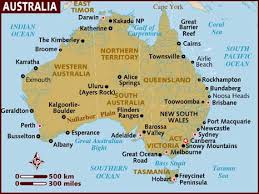
At last week’s Australian Petroleum Production and Exploration Association Conference, Woodside Petroleum’s chief executive officer Peter Coleman spoke about the “huge” opportunity in hydrogen energy that will develop for the company over the next 10-15 years.  Coleman sees the Japanese market for hydrogen as a promising destination for Woodside’s substantial reserves of natural gas, and indicated the company is evaluating alternative methods of hydrogen transport including as liquid H2, a liquid organic hydride, and ammonia.