Site items in: Ammonia Energy Import/Export

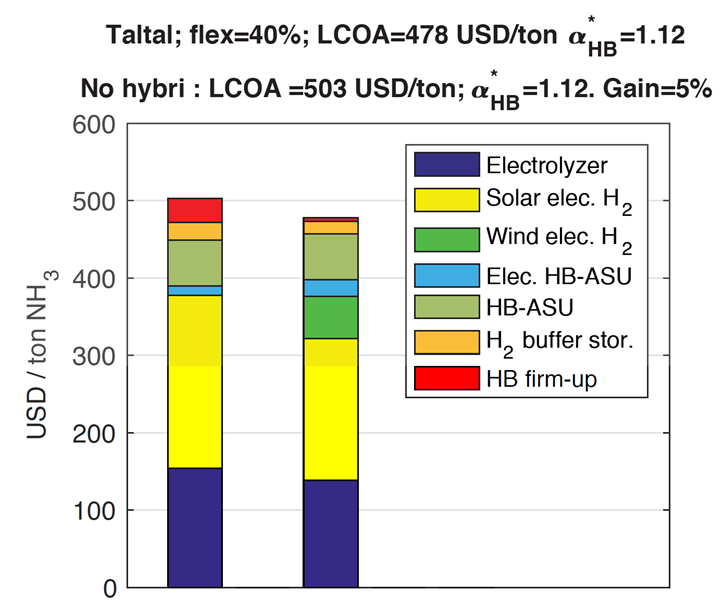
Study Models NH3 Economics from Variable Energy Resources
Article

Last week IEA Consultant Julien Armijo and IEA Senior Analyst Cédric Philibert submitted their study Flexible Production of Green Hydrogen and Ammonia from Variable Solar and Wind Energy:  Case Study of Chile and Argentina to the International Journal of Hydrogen Energy and concurrently posted it on ResearchGate.  The study addresses one of the key questions of the energy transition: what are the economics of producing hydrogen, or a hydrogen carrier such as ammonia, at sites with excellent renewable energy resources?  The answer, framed in terms of the cost-competitiveness in local markets of green ammonia vs. conventionally produced brown ammonia, casts an encouraging light on the eventual prospects for international trade in green ammonia as an energy commodity.

Mission Possible: a roadmap for net-zero emissions in the heavy industry and heavy-duty transport sectors
Article

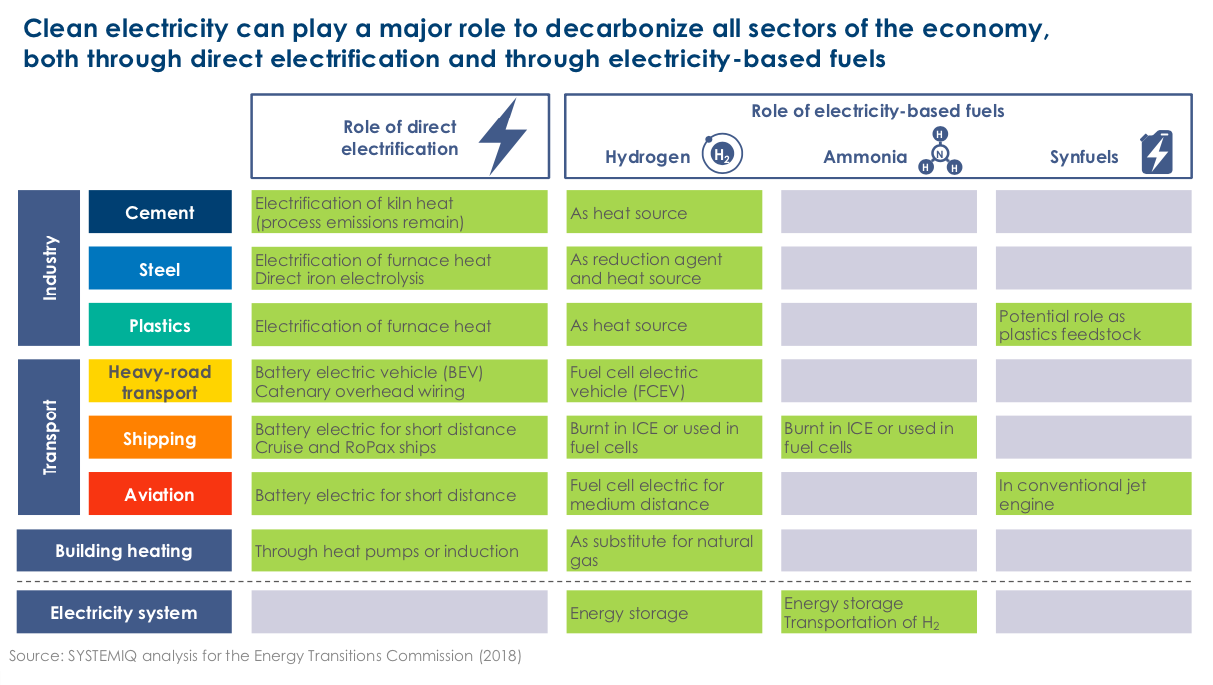
Mission Possible, a recent report published by the Energy Transitions Commission, presents an extremely detailed roadmap for "Reaching net-zero carbon emissions from harder-to-abate sectors by mid-century." The report is designed to support the targets of the Paris Agreement by sending "a clear signal to policymakers, investors and businesses: full decarbonization is possible, making ambitious climate objectives achievable." Ammonia is one of the crucial solutions that make Mission Possible possible. In its 172-pages, the report details the technologies and the economics behind decarbonizing ammonia, the "likely" adoption of ammonia as the carbon-free fuel of choice for long-distance shipping, and the "key role" ammonia will play in enabling international trade in renewable power.

Development of Technologies to Utilize Green Ammonia in the Energy Market - Update on Japan's SIP Energy Carriers
Article

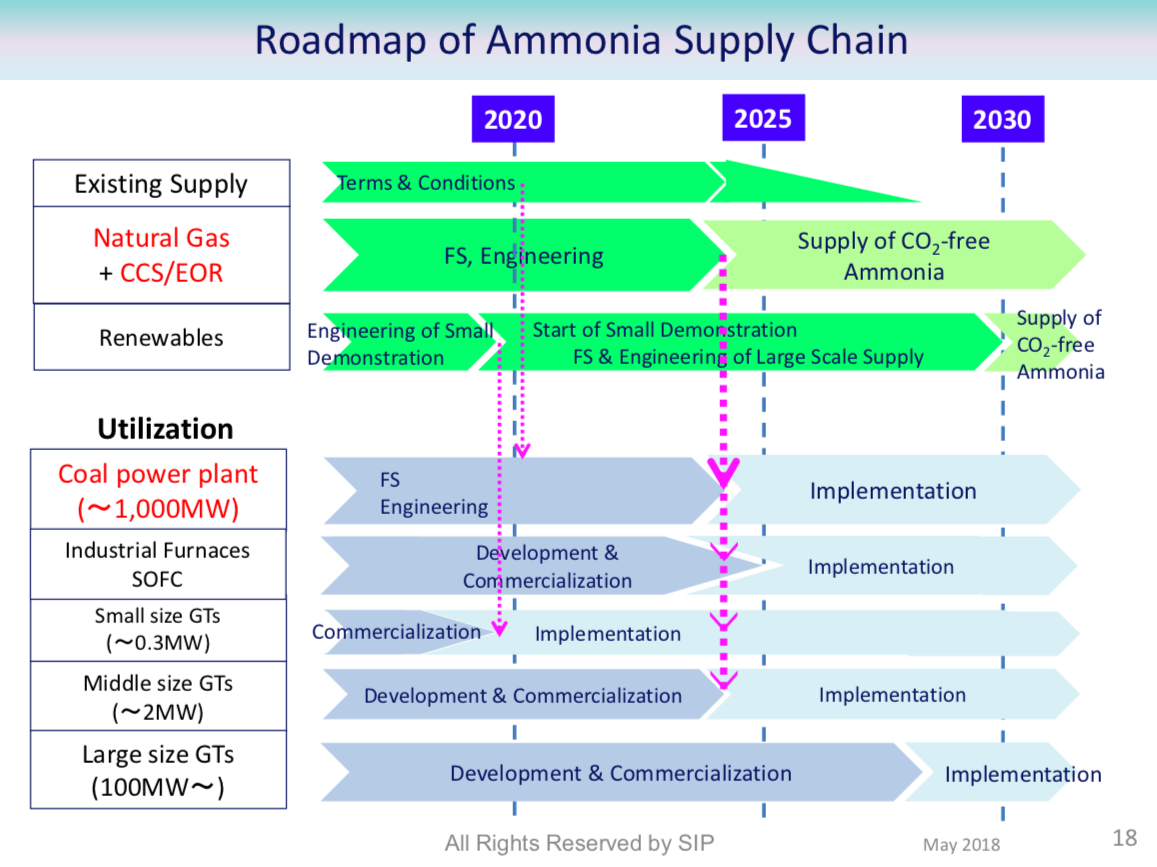
At the recent NH3 Energy Implementation Conference in Pittsburgh, USA, the keynote speech was given by Shigeru Muraki, Program Director of Japanese government's SIP Energy Carriers project. Muraki is also Chairman of the Green Ammonia Consortium, which will assume responsibility for coordinating the development and deployment of ammonia energy technologies in Japan when the SIP concludes in April 2019. Given both these roles, Muraki was well placed to address not only the recent years of intense research and development in Japan, but also the near-term roadmap for commercial deployment of ammonia energy technologies.

Fossil Energy Companies Turn to Ammonia
Article

In the last 12 months ... National oil companies in Europe and the Middle East are looking to satisfy East Asian demand for clean hydrogen by exporting carbon-free ammonia. One of the biggest global LNG exporters is investigating ammonia for the same market, as it considers Australia's future as a renewable energy exporter. Oil majors are assessing ammonia's role in implementing an affordable hydrogen economy, looking toward fuel markets in California and Europe. And the biggest coal producer in China is funding the development of "the world’s first practical ammonia-powered vehicle."

Renewable ammonia demonstration plant announced in South Australia
Article

This week, the government of South Australia announced a "globally-­significant demonstrator project," to be built by the hydrogen infrastructure company Hydrogen Utility (H2U). The renewable hydrogen power plant will cost AUD$117.5 million ($95 million USD), and will be built by ThyssenKrupp Industrial Solutions with construction beginning in 2019. The plant will comprise a 15 MW electrolyzer system, to produce the hydrogen, and two technologies for converting the hydrogen back into electricity: a 10MW gas turbine and 5MW fuel cell. The plant will also include a small but significant ammonia plant, making it "among the first ever commercial facilities to produce distributed ammonia from intermittent renewable resources."

China and Australia collaborate on ammonia as a clean transport fuel
Article

The University of Western Australia has entered the increasingly competitive field of ammonia energy research in Australia, announcing a collaborative agreement to develop "the world's first practical ammonia-powered vehicle" as well as an "ammonia-based hydrogen production plant." These goals are supported by funding from the R&D arm of Shenhua Group, formerly a coal company but now "China's largest hydrogen producer with a production capacity to power 40 million fuel cell passenger cars."

On the Ground in Australia: Two Key Mentions for Ammonia Energy
Article

Ammonia energy is about the development of technology, but it is also about the mobilization of investment.  To be precise, it is about how evolving technology can attract investment and how investment enables technological evolution.  A dynamic of this nature is emerging in Australia, where recent citations of ammonia energy in two mainstream venues signal its arrival as a legitimate target for public- and private-sector investment.

Power to Ammonia: the Eemshaven case
Article

The Institute for Sustainable Process Technology recently published a feasibility study, Power to Ammonia, looking at the possibility of producing and using ammonia in the renewable power sector. This project is based in The Netherlands and is led by a powerful industrial consortium. I wrote about the feasibility study last month, but it deserves closer attention because it examines three entirely separate business cases for integrating ammonia into a renewable energy economy, centered on three site-specific participants in the study: Nuon at Eemshaven, Stedin at Goeree-Overflakkee, and OCI Nitrogen at Geleen. Over the next few years, the group intends to build pilot projects to develop and demonstrate the necessary technologies. Next month, however, these projects will be an important part of the Power-to-Ammonia Conference, in Rotterdam on May 18-19. This article is the first in a series of three that aims to introduce each business case.