
North America





Article
The Case for Giving Direct Ammonia Fuels Cells a Shot
The Center for Catalytic Science and Technology (CCST) at the University of Delaware has made new strides in the development of a direct ammonia fuel cell (DAFC) suitable for use in transportation applications. The progress is reported in “An Efficient Direct Ammonia Fuel Cell for Affordable Carbon-Neutral Transportation,” a paper published last month by Yun Zhao and six coauthors in the journal Joule. The paper gives an impressive account of CCST’s technical advances; and it makes a distinctly compelling case for the relevance of CCST’s work on DAFCs. In the latter regard, the authors find that ammonia has the “lowest source-to-tank energy cost by a significant margin” relative to other fuels that can be derived from renewably generated electricity. It is in society’s interest, they strongly imply, to give DAFC technology a chance to compete with hydrogen-based fuel cells in automotive applications.
Article
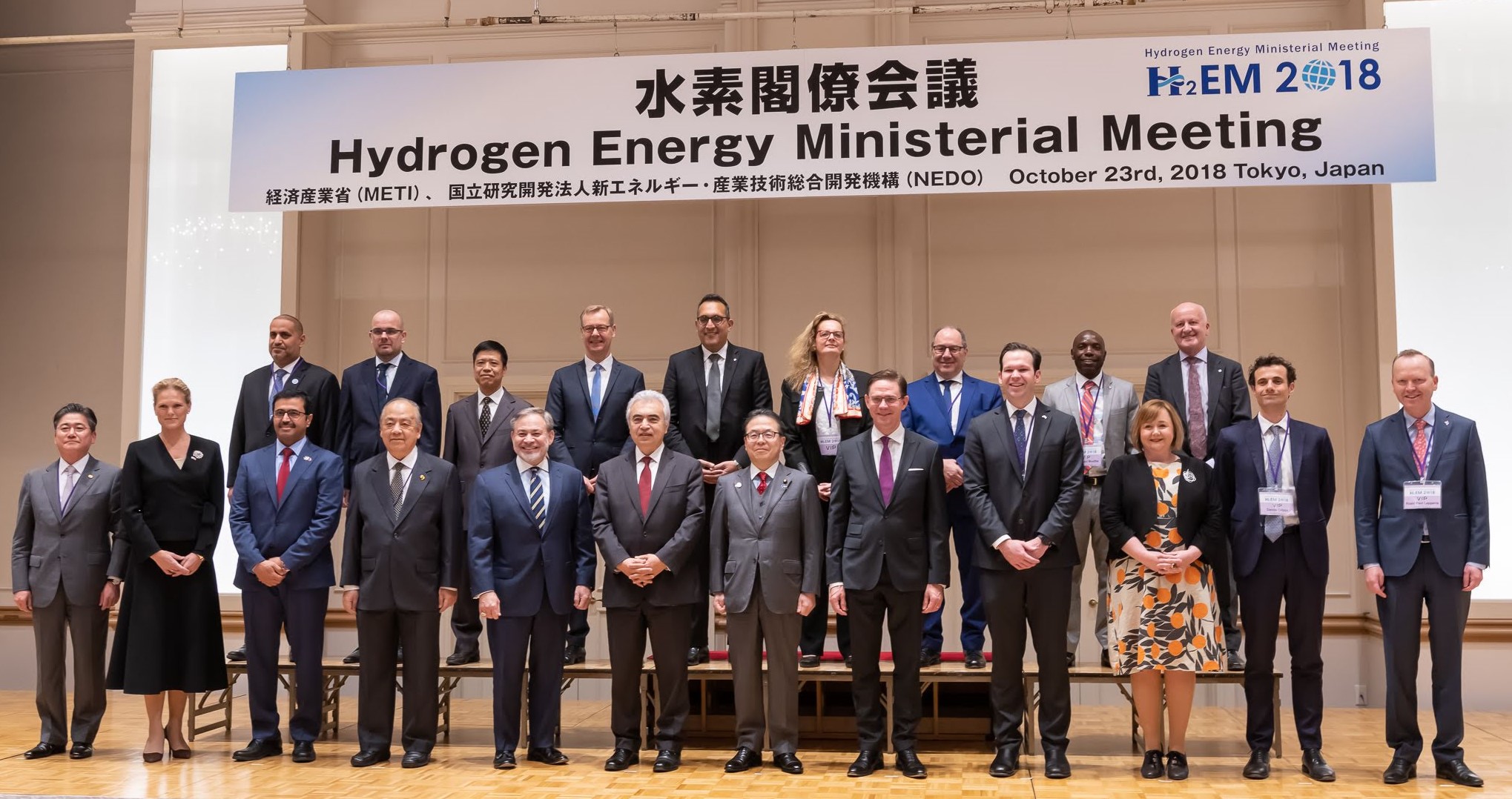
Japan, U.S., E.U. Agree to Cooperate on Hydrogen
On June 18, Japan, the United States, and the European Union released a joint statement on “future cooperation in hydrogen and fuel cell technologies.” Represented, respectively, by the Ministry of Energy, Trade, and Industry (METI), the Department of Energy (DoE), and the Directorate-General for Energy (ENER), the jurisdictions pledged “to accelerate the development of sustainable hydrogen and fuel cell technologies in the world.” A central point of agreement in the statement is “the importance of reducing the cost of hydrogen.”