Site items in: Japan

Hydrogen Council - new global initiative launched at Davos
Article

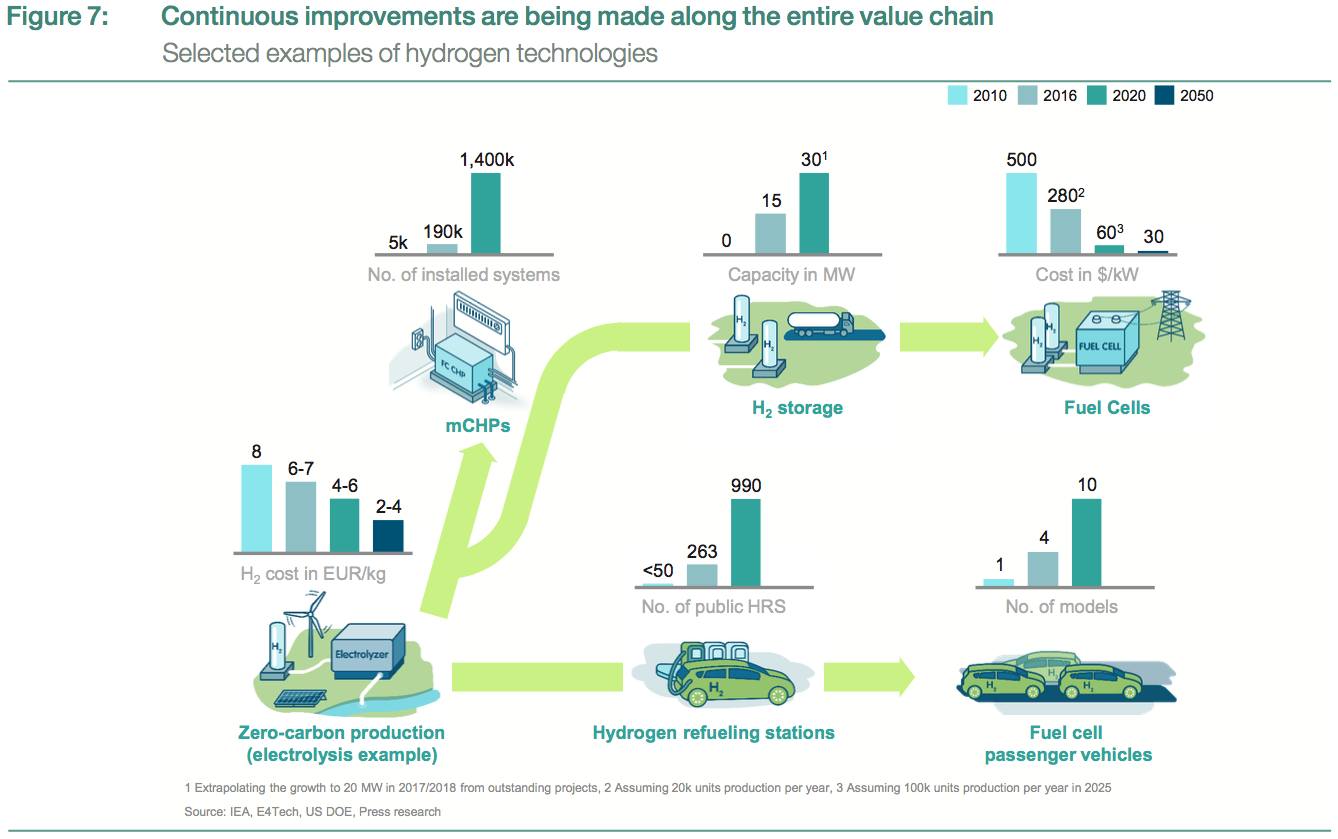
This week, at the World Economic Forum in Davos, the leaders of 13 global companies, representing more than EUR 1 trillion in annual revenues, announced the launch of the Hydrogen Council. This new global initiative is important for obvious reasons: it presents a compelling "united vision and long-term ambition" for hydrogen, it promises global engagement with "key stakeholders such as policy makers, business and hydrogen players, international agencies and civil society," and it pledges financial commitments to RD&D totaling EUR 10 billion over the next five years. It is important for a subtler reason too: it is the first hydrogen industry promotion I've seen that includes ammonia. It includes ammonia both implicitly, encompassing "hydrogen and its compounds," and explicitly, listing ammonia as a "renewable fuel" in its own right.
Low-carbon ammonia synthesis: Japan's 'Energy Carriers'
Article

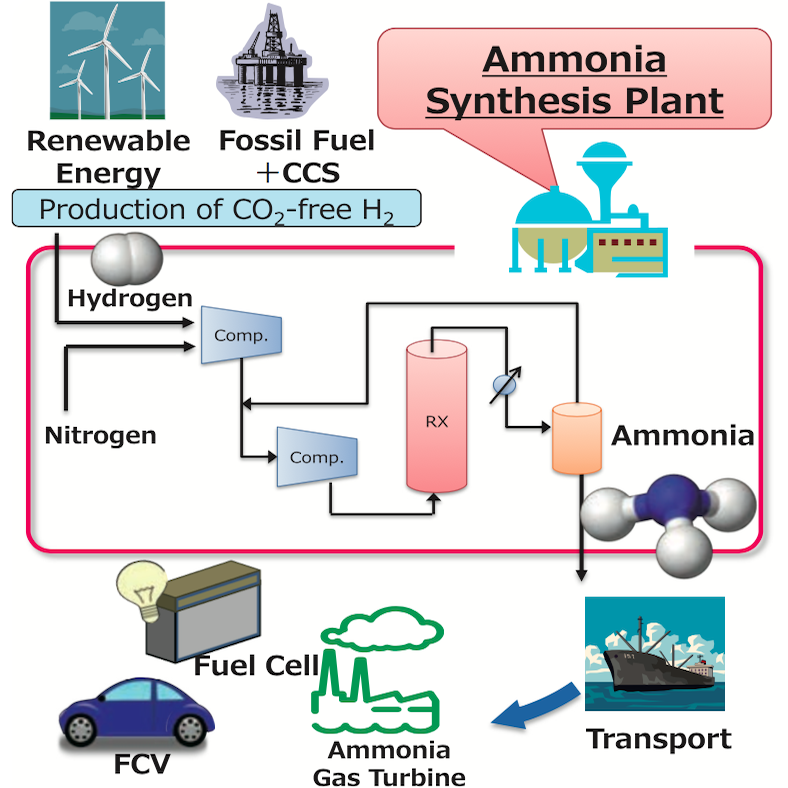
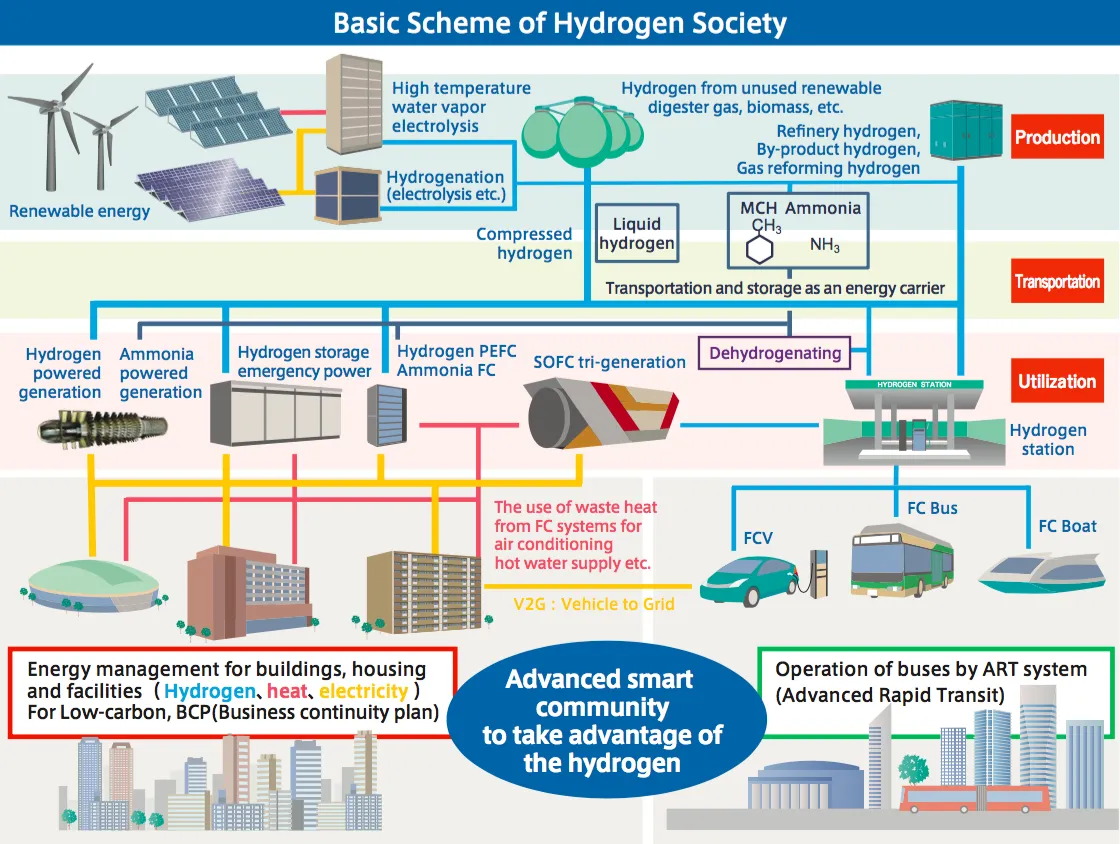
In 2018, a pilot plant in Japan will demonstrate a new way to produce ammonia at industrial-scale, with a low carbon footprint. This is part of Japan's 'Energy Carriers' R&D initiative, which aims to develop technologies to enable the nation's transition to a carbon-free hydrogen economy. The scope of the program covers ten subjects that encompass the full "CO2-free hydrogen value chain." Three of these ten programs describe a technology pathway for making low-carbon ammonia.

How to create a market for low-carbon ammonia: product labeling
Article

I wrote last week about ARPA-E's "transformative" ammonia synthesis technologies, describing three technology pathways under development: low pressure Haber-Bosch, electrochemical processes, and advanced electrolysis. ARPA-E's ambitious R&D program might imply that a meaningful, commercial market for sustainable ammonia is still decades away. It represents, however, only the slow American tip of a fast-moving global iceberg. In Japan, where there's no debate about climate science, the national effort is already well underway, with three programs to develop low-carbon ammonia synthesis under the Cross-ministerial Strategic Innovation Promotion Program (SIP), 'Energy Carriers.'

Australia's Concentrated Solar Fuels Program
Article

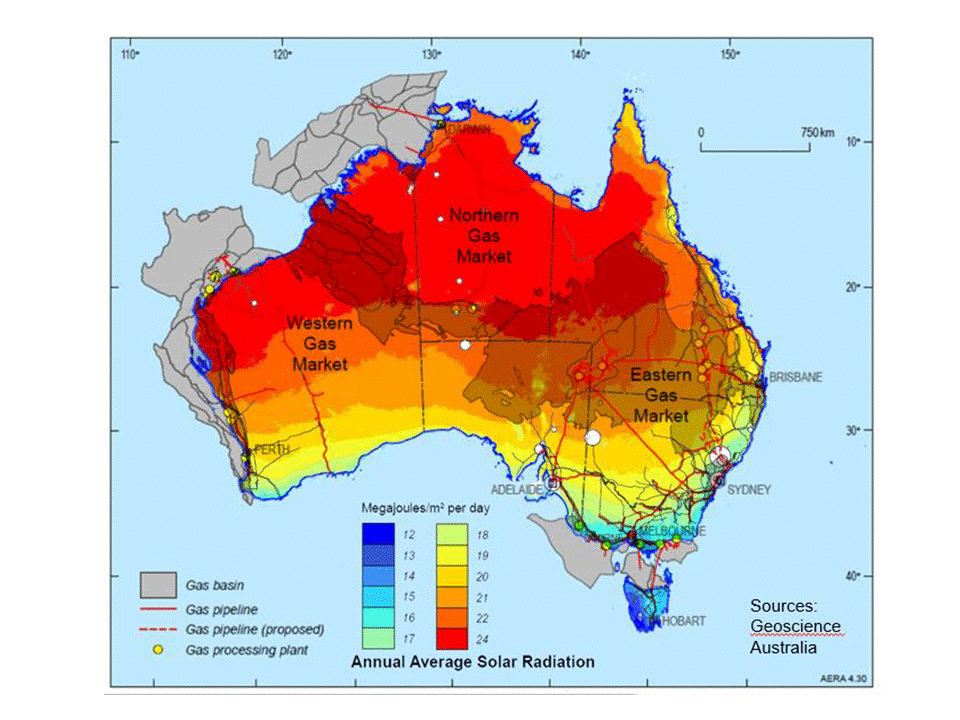
Solar ammonia' could be the key to the sustainable energy economies of two nations. During his talk at the 2016 NH3 Fuel Conference, Keith Lovegrove, Head of Solar Thermal at IT Power Group in Australia, said that Japan and Australia have the opportunity to move their trade in energy onto a climate-friendly foundation. This would involve development of Australia's solar resources in a way that helps Japan ramp up its Strategy for Hydrogen & Fuel Cells in the coming decades.

Ammonia Turbine Power Generation with Reduced NOx
Article

A common concern with ammonia fuel is that NOx emissions will be too high to control. However, in new research from Turkey, USA, and Japan, presented at this year's NH3 Fuel Conference in September 2016, two things became clear. First, NOx emissions can be reduced to less than 10ppm by employing good engineering design and exploiting the chemical properties of ammonia, which plays a dual role as both the fuel and the emissions-cleanup agent. Second, the deployment of ammonia-fueled turbines for power generation is not only feasible, but actively being developed, with demonstration units running today and improved demonstration projects currently in development.

Japan's Fourth Strategic Energy Plan
Article

The Cabinet of the Government of Japan adopted the country’s Fourth Strategic Energy Plan in April 2014. The Plan includes a Strategy for Hydrogen & Fuel Cells which is being executed by the Ministry of Economy, Trade and Industry (METI). The accompanying H2/FC Road Map includes an investigation of three materials that can carry the energy embodied in molecular hydrogen: liquid hydrogen, organic hydrides such as methylcyclohexane, and ammonia.