Site items in: Europe

Power to Ammonia: the Eemshaven case
Article

The Institute for Sustainable Process Technology recently published a feasibility study, Power to Ammonia, looking at the possibility of producing and using ammonia in the renewable power sector. This project is based in The Netherlands and is led by a powerful industrial consortium. I wrote about the feasibility study last month, but it deserves closer attention because it examines three entirely separate business cases for integrating ammonia into a renewable energy economy, centered on three site-specific participants in the study: Nuon at Eemshaven, Stedin at Goeree-Overflakkee, and OCI Nitrogen at Geleen. Over the next few years, the group intends to build pilot projects to develop and demonstrate the necessary technologies. Next month, however, these projects will be an important part of the Power-to-Ammonia Conference, in Rotterdam on May 18-19. This article is the first in a series of three that aims to introduce each business case.
Power to Ammonia feasibility study
Article

The Institute for Sustainable Process Technology has just published a feasibility study that represents a major step toward commercializing renewable ammonia. It examines the "value chains and business cases to produce CO2-free ammonia," analysing the potential for commercial deployment at three companies with existing sites in The Netherlands: Nuon at Eemshaven, Stedin at Goeree-Overflakkee, and OCI Nitrogen at Geleen. The project is called Power to Ammonia.

Bunker Ammonia: carbon-free liquid fuel for ships
Article

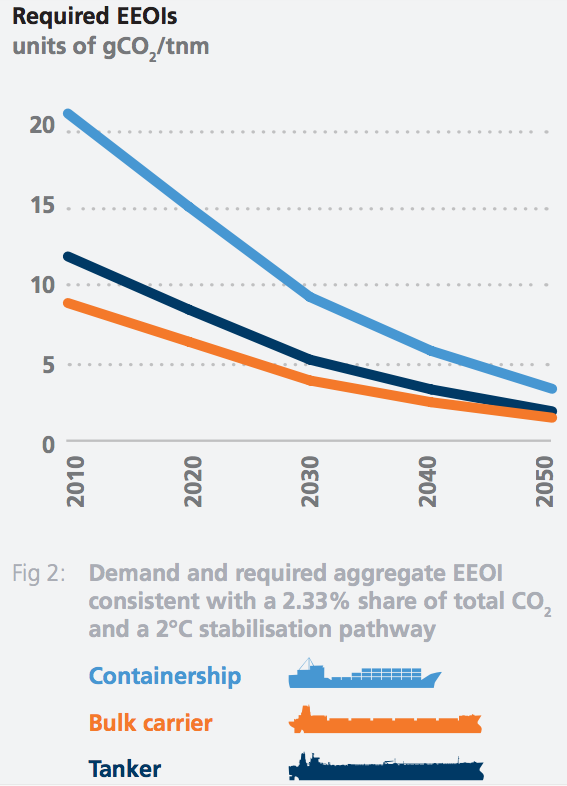
The shipping industry is beginning to evaluate ammonia as a potential "bunker fuel," a carbon-free alternative to the heavy fuel oil (HFO) used in maritime transport. International trade associations are leading the effort to decarbonize the sector, in alignment with targets set by the Paris Climate Agreement. Their immediate challenge is simple to state but hard to solve: "ambitious CO2 reduction objectives will only be achievable with alternative marine fuels which do not yet exist." In the long-term, however researchers recognize that "fuel cell-powered ships are likely to dominate, drawing their energy from fuels such as hydrogen and ammonia."

Ammonia for energy storage: economic and technical analysis
Article

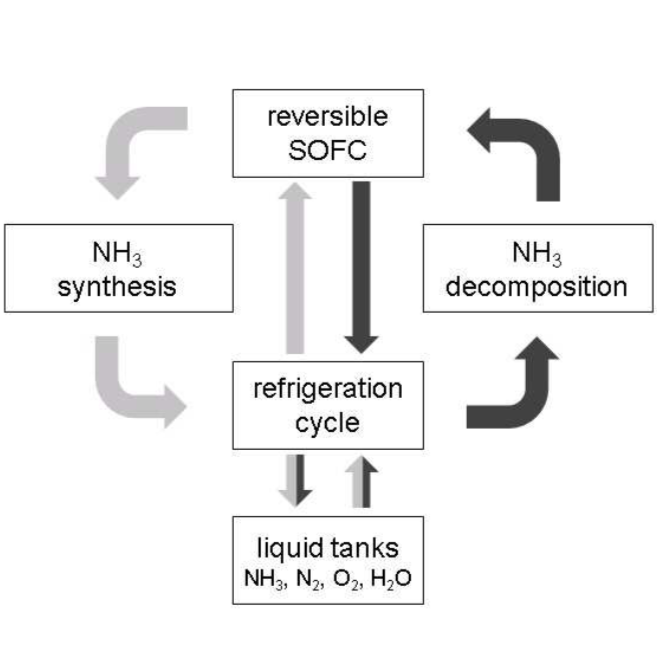
Developers around the world are looking at using ammonia as a form of energy storage, essentially turning an ammonia storage tank into a very large chemical battery. In the UK, Siemens is building an "all electric ammonia synthesis and energy storage system." In the Netherlands, Nuon is studying the feasibility of using Power-to-Ammonia "to convert high amounts of excess renewable power into ammonia, store it and burn it when renewable power supply is insufficient." While results from Siemens could be available in 2018, it might be 2021 before we see results from Nuon, whose "demonstration facility is planned to be completed in five years." But, while we wait for these real-world industrial data, the academic literature has just been updated with a significant new study on the design and performance of a grid-scale ammonia energy storage system.

On the Ground in Germany
Article

Yet another national laboratory is developing technology for renewable ammonia, this time in Germany at the DLR, the German Aerospace Center. At the Institute of Thermodynamic Engineering, the DLR is developing a method for electrochemical ammonia synthesis at ambient conditions.

International R&D on sustainable ammonia synthesis technologies
Article

Over the last few weeks, I've written extensively about sustainable ammonia synthesis projects funded by the US Department of Energy (DOE). While these projects are important, the US has no monopoly on technology development. Indeed, given the current uncertainty regarding energy policy under the Trump administration, the US may be at risk of stepping away from its assumed role as an industry leader in this area. This article introduces seven international projects, representing research coming out of eight countries spread across four continents. These projects span the breadth of next-generation ammonia synthesis research, from nanotechnology and electrocatalysis to plasmas and ionic liquids.

Comparative studies of ammonia production, combining renewable hydrogen with Haber-Bosch
Article

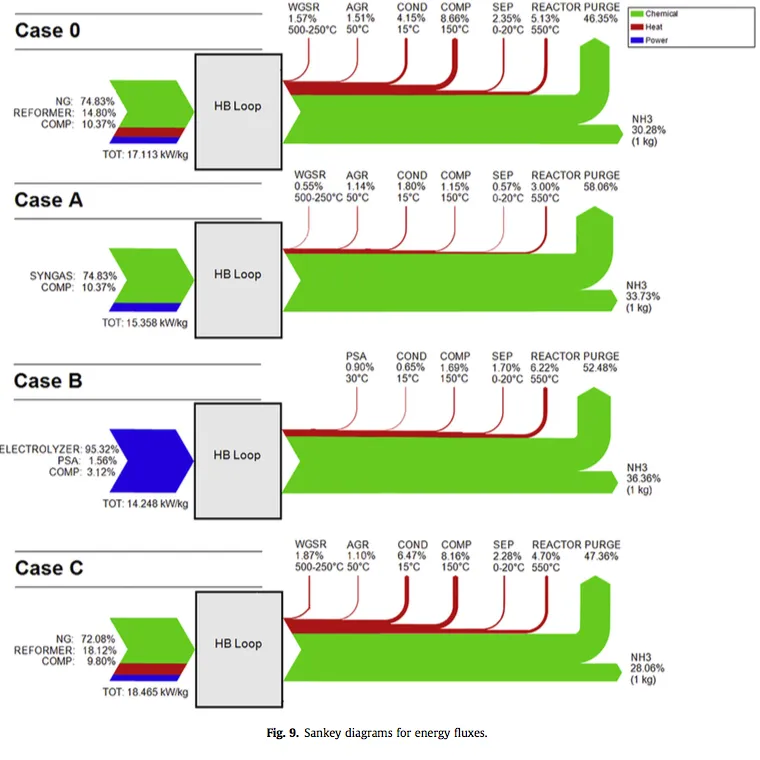
In recent months, research teams from both Canada and Italy have published comparative analyses of sustainable ammonia production pathways. These projects aim to quantify the costs and benefits of combining Haber-Bosch with a renewable hydrogen feedstock. Both projects examine the carbon intensity of ammonia production but, while the Canadian study broadens its remit to a full life cycle analysis, including global warming potential, human toxicity, and abiotic depletion, the Italian study focuses primarily on energy efficiency.