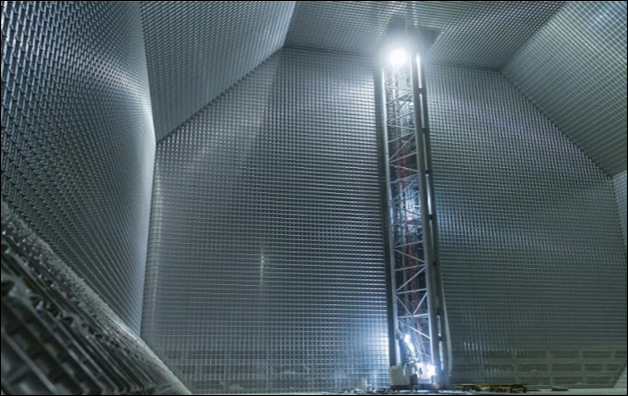
Last month brought news of "the world’s first ammonia ready vessel.” According to an American Bureau of Shipping (ABS) press release, the vessel, currently under construction in China, will comply “with the ABS Ammonia Ready Level 1 requirements, indicating it is designed to be converted to run on ammonia in the future.” When completed, the 274-meter ship (and possibly two others of identical design) will join the fleet of Avin International.
Asia


Article
Hydrogen Council publishes Life-Cycle Analysis of Decarbonization Pathways
The Hydrogen Council has published a valuable report with a rigorous life-cycle assessment (LCA) of greenhouse gas emissions from various hydrogen applications. It illustrates the report with eight specific examples, two of which focus on ammonia. With green hydrogen as an input to ammonia used in fertilizer production, we could deliver a 96% reduction in emissions. With blue hydrogen exported and combusted as ammonia for electric power generation, we could deliver an 84% reduction in emissions. As the report states at the start: “Life-cycle emissions are coming into focus with scaling-up of hydrogen … To deliver on the sustainability promise, it is … not only important to make it economically viable, but also maximize its decarbonization potential.”

Article
Japan, UAE to Cooperate on Ammonia Energy
Japan has forged an agreement with the United Arab Emirates under which the two countries will “accelerate the bilateral cooperation in the fields of fuel ammonia and carbon recycling.”
Article
Ammonia infrastructure: panel wrap-up from the 2020 Ammonia Energy Conference
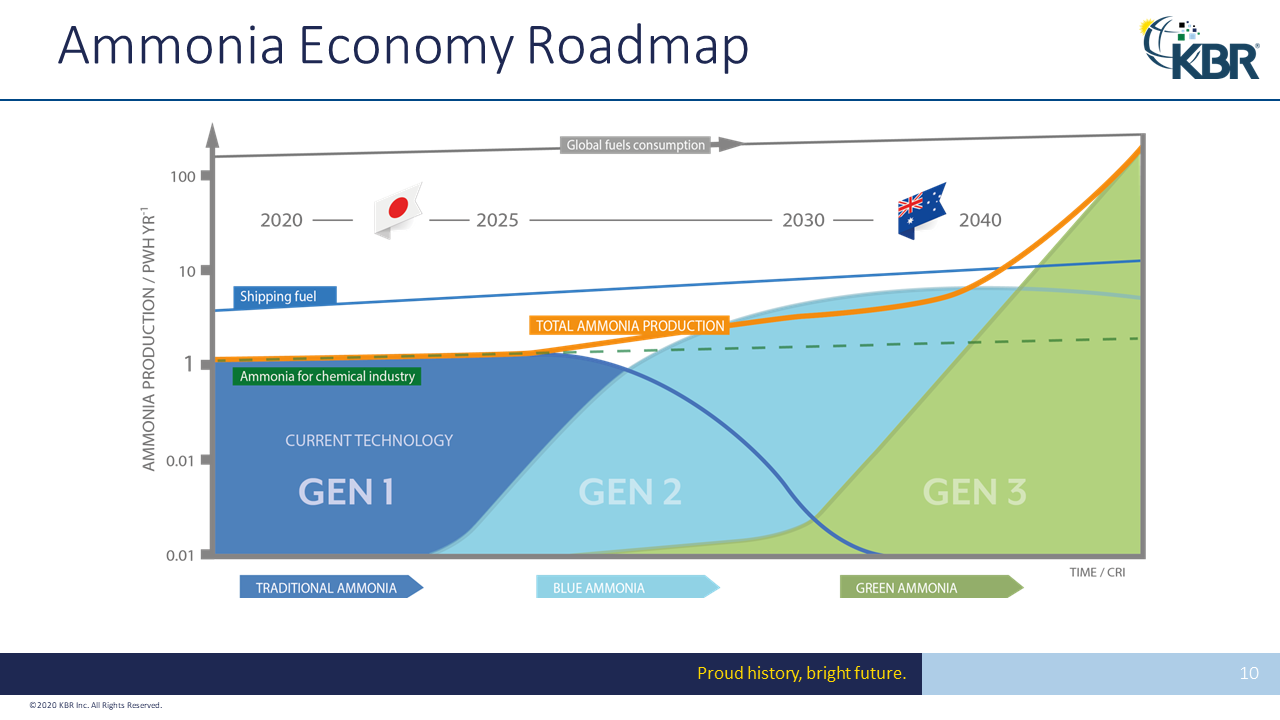
Infrastructure is key to realising the full potential of ammonia energy, enabling new markets and expanding the existing ones. By 2050 the hydrogen (and by extension, ammonia) market could be 20 times larger than it is today. What future possibilities are there to expand global ammonia production (currently 180 million tonnes per year) or trade volumes across the world’s oceans (currently 18 million tonnes per year)? On November 18, 2020, the Ammonia Energy Association (AEA) hosted a panel discussion moderated by Daniel Morris from KBR, as well as panel members Anthony Teo from DNV GL, Oliver Hatfield from Argus Media, and Michael Goff from Black & Veatch as part of the recent Ammonia Energy Conference. The panel’s insights from a number of different perspectives - market analytics, ship building and operating, as well as pipeline engineering - demonstrated ammonia's potential to become a low- or zero-carbon fuel of choice for the future. Current infrastructure can be adapted, new infrastructure can be built and operated cheaply, and lessons from previous fuel transitions can be taken on board to make the uptake of ammonia energy as smooth as possible.

Article
Ammonia Featured in Japan's New Green Growth Strategy
Last month Japan’s Ministry of Economy, Trade and Industry (METI) unveiled a policy platform that will help the country realize its goal of achieving carbon-neutrality by 2050. According to a December 25, 2020 METI press release, the “Green Growth Strategy towards 2050 Carbon Neutrality” sets goals for 14 “priority fields” and “formulates action plans covering comprehensive policies in areas such as budgets, taxes, regulation reforms and standardization, and international collaboration.” “Ammonia fuel” and hydrogen are each the focus of a distinct priority field.
Article
Marine Ammonia: panel wrap-up from the 2020 Ammonia Energy Conference
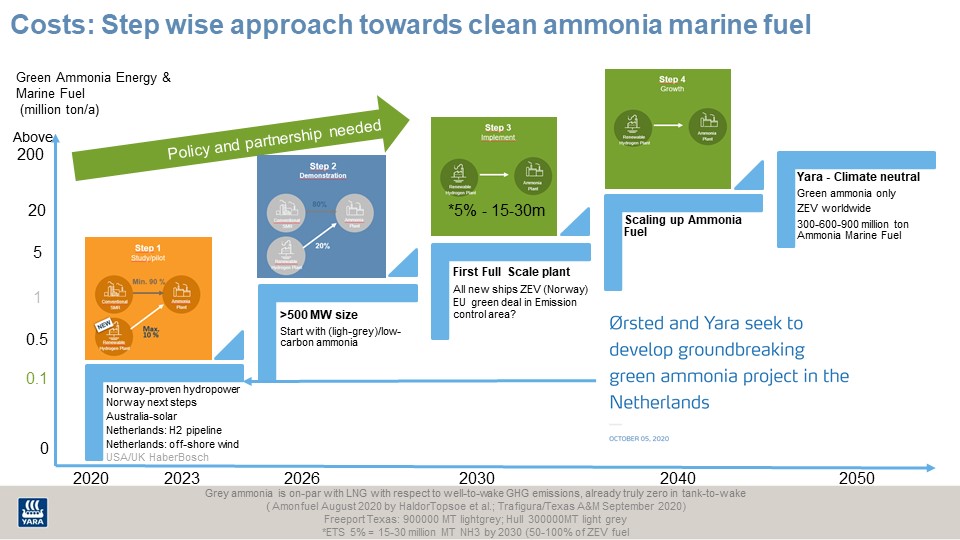
What action is needed to unlock the enormous potential of green ammonia as a marine fuel and get the new generation of ammonia-powered vessels on the water? On November 18, 2020, the Ammonia Energy Association (AEA) hosted a panel discussion moderated by Sofia Fürstenberg Stott from Fürstenberg Maritime Advisory, as well as panel members Tue Johannessen from the Center for Zero Carbon Shipping, Katharine Palmer from Lloyd’s Register, Rob Stevens from Yara International, and Kazumasa Taruishi from NYK Energy Transport.