Site items in: Presentations

Ammonia-to-Hydrogen System for FCEV Refuelling
Presentation

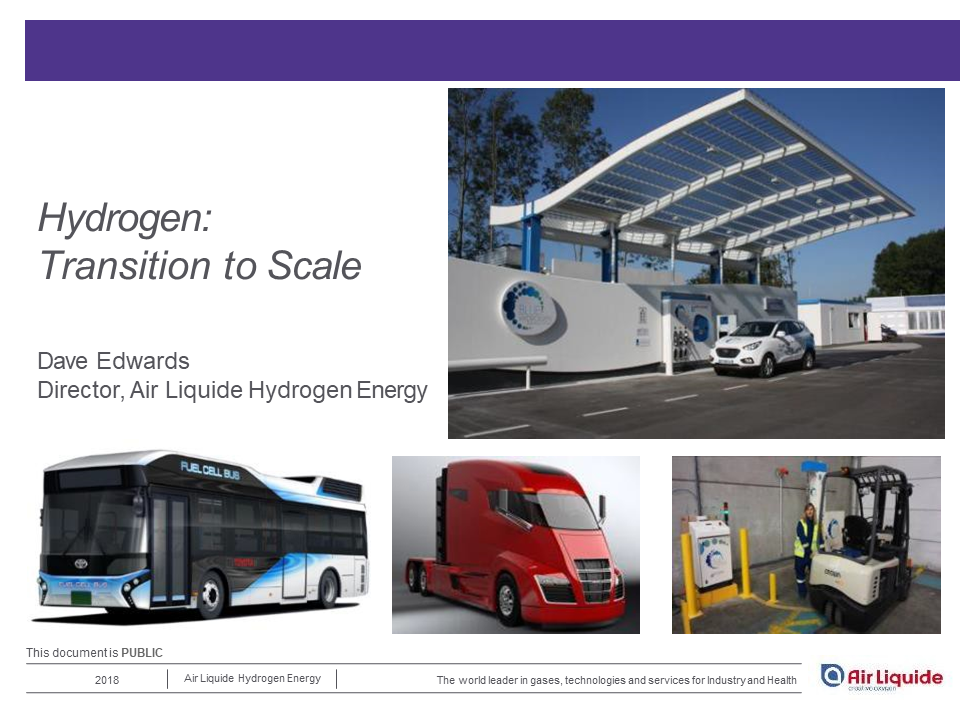
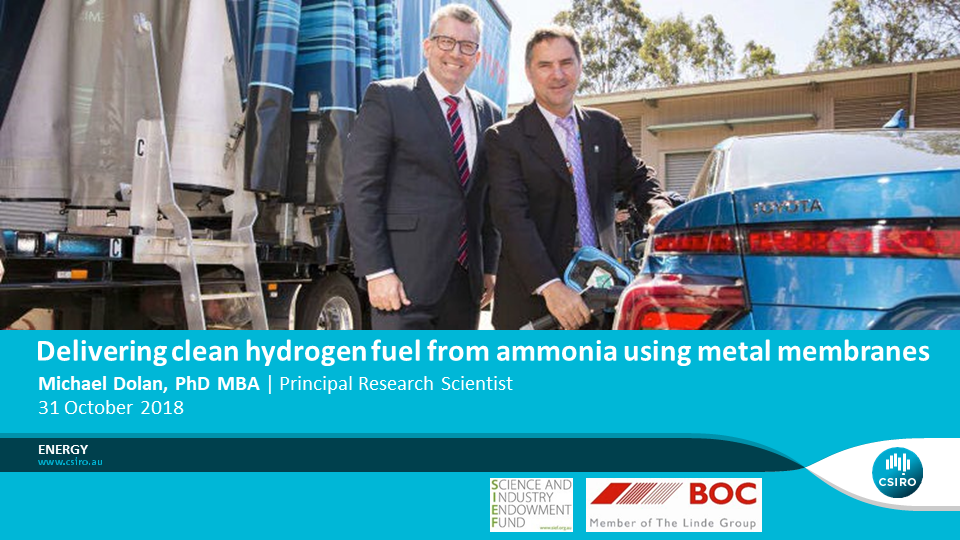
Ammonia can play a significant role in fuelling the world’s growing fuel cell electric vehicle (FCEV) fleet through technologies which allow the decomposition of NH3, and subsequent extraction and purification of H2. CSIRO has recently demonstrated a pilot-scale ammonia-to-hydrogen system, incorporating an ammonia decomposition stage with a subsequent membrane-based hydrogen purification stage, at a rate of several kilograms of H2 per day. Through partnerships with an industrial gas producer and two FCEV manufacturers, the resulting H2 has been compressed and dispensed into FCEVs. System design, materials, performance and strategies for scale-up and demonstration will be discussed.

Evaluation of the Cement Clinker Fired in the Combustion Furnace of Heavy-Oil and NH3
Presentation

In recent years, global warming caused by an increase in CO2 emission released by combustion of fossil fuel has become a big problem. To realize a low-carbon society, active use of renewable energy and promotion of hydrogen energy are necessary. We are participating in “SIP (Strategic Innovation Promotion Program) energy carriers”, developing technology to replace 30% fossil fuel with ammonia (NH3) on the calorie basis. Assuming that NH3 is used as a thermal energy for a cement kiln, we conducted the following two basic experiments. First, we fired the clinker in the atmosphere-controlled electric furnace, calculated the reaction rate of…

Design Optimization of an Ammonia-Based Distributed Sustainable Agricultural Energy System
Presentation

Small-scale, distributed production of ammonia better enables the use of renewable energy for its synthesis than the current paradigm of large-scale, centralized production. Pursuant to this idea, a small-scale Haber-Bosch process has been installed at the West Central Research and Outreach Center (WCROC) in Morris, MN [1] and there is ongoing work on an absorbent-enhanced process at the University of Minnesota [2], [3]. Using renewables to make ammonia would greatly improve the sustainability of fertilizer production, which currently accounts for 1% of total global energy consumption [4]. The promise of renewable-powered, distributed ammonia production for sustainability is in fact not…