Site items in: Content by Author Stephen H. Crolius

Ammonia in the Mix as an Industrial Energy Source
Article

ANNUAL REVIEW 2019: The generation of heat for industrial processes accounts for approximately 10% of global greenhouse gas emissions – which means that finding ways to eliminate this climate footprint is among the pressing technology tasks on our societal to-do list. Developments over the last 12 months suggest that ammonia could play an important role in meeting this challenge.


Government Investments in Hydrogen: How Does Your Country Compare?
Article

On September 3, the British renewable-energy news portal reNEWS.BIZ ran a story with an intriguing headline: “Scotland launches £3bn green project portfolio.”  At first glance, that number (which equates to USD $3.7 billion) looks out of scale with Scotland’s relatively tiny population of 5.5 million.  Close reading reveals that the £3 billion is not the amount that will be invested by the Scottish government, but rather the value of the “investment portfolio” of green businesses the program is intended to galvanize over the next three years.  But still one wonders, how does £3 billion stack up against other national programs aimed at supporting the sustainability transition?

Israeli Group Develops New Electrolysis Technology
Article

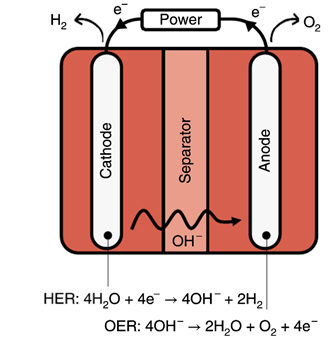
Last month a group of researchers from the Technion Israel Institute of Technology published a paper, “Decoupled hydrogen and oxygen evolution by a two-step electrochemical–chemical cycle for efficient overall water splitting,” in the journal Nature Energy.  The key word in the title is “efficient.”  In a September 15 Technion press release, the researchers state that their technology “facilitates an unprecedented energetic efficiency of 98.7% in the production of hydrogen from water.”  Applied to the appropriate use case, the technology could lead to a major improvement in green ammonia’s ability to compete with brown ammonia and other low-carbon energy carriers.

Ammonia Featured in South Australia's Hydrogen Action Plan
Article

The Australian state of South Australia took another step into the hydrogen future this week when it unveiled its Hydrogen Action Plan at the International Conference on Hydrogen Safety in Adelaide.  The heart of the Action Plan consists of the practical measures that governments undertake in areas such as infrastructure, workforce, and regulatory framework development.  Zoom out, though, and it is clear that fostering a major export position in green hydrogen is first among equals in the Action Plan's priorities.  And this being the case, it is no surprise that ammonia is singled out for special attention.

Hydrogen Prioritized in New ARENA Investment Plan
Article

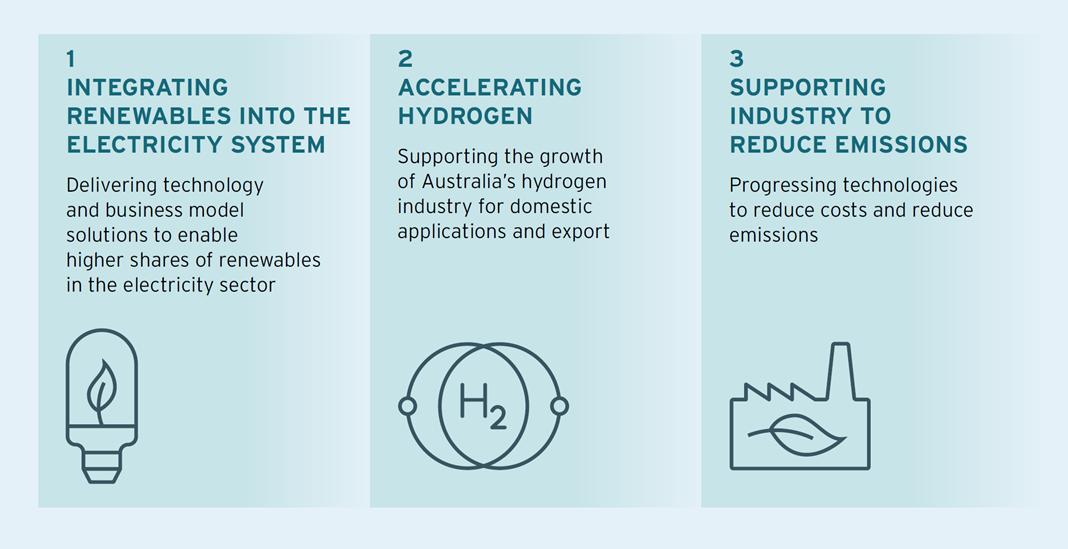
On September 11, the Australian Renewable Energy Agency (ARENA) issued its 2019 Investment Plan. The theme of the accompanying press release is “sharpening our focus,” and indeed the agency articulates just three investment priorities: “integrating renewables into the electricity system;” “accelerating the growth of a hydrogen industry;” and “supporting industry to reduce emissions.” The prioritization of hydrogen – and with it, ammonia as a possible hydrogen carrier – is a new development for ARENA.

IHI Breaks Ground on Hydrogen Research Facility
Article

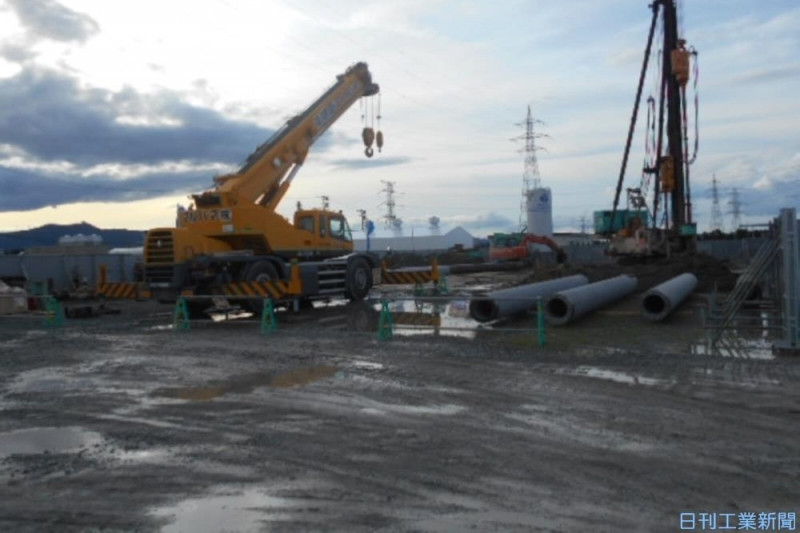
Japanese capital goods manufacturer IHI Corporation announced last month that it has started construction of a 1,000 square-meter hydrogen research facility in Fukushima Prefecture.  The facility will be an addition to IHI’s Green Energy Center in Soma City which was launched in 2018.  One of the Center’s original focuses is the production steps of the green hydrogen supply chain using solar electricity to power developmental electrolyzers.  The new facility will focus on hydrogen carriers, including ammonia and methane (via “methanation” of carbon dioxide), that can be used in the logistics steps of the supply chain.

The Case for Giving Direct Ammonia Fuels Cells a Shot
Article

The Center for Catalytic Science and Technology (CCST) at the University of Delaware has made new strides in the development of a direct ammonia fuel cell (DAFC) suitable for use in transportation applications.  The progress is reported in “An Efficient Direct Ammonia Fuel Cell for Affordable Carbon-Neutral Transportation,” a paper published last month by Yun Zhao and six coauthors in the journal Joule.  The paper gives an impressive account of CCST’s technical advances; and it makes a distinctly compelling case for the relevance of CCST’s work on DAFCs.  In the latter regard, the authors find that ammonia has the “lowest source-to-tank energy cost by a significant margin” relative to other fuels that can be derived from renewably generated electricity.  It is in society’s interest, they strongly imply, to give DAFC technology a chance to compete with hydrogen-based fuel cells in automotive applications.

Safe and Effective?  New Study Evaluates Ammonia as a Marine Fuel
Article

In mid-June the Dutch naval architecture firm C-Job released "Safe and effective application of ammonia as a marine fuel," a thesis written by the firm’s Lead Naval Architect Niels de Vries for the Marine Technology Master of Science program at the Delft University of Technology in the Netherlands. While the thesis delivers an extensive assessment of ammonia's potential effectiveness as a marine fuel, it breaks new ground in its consideration of ammonia's safety in this context.

Japan, U.S., E.U. Agree to Cooperate on Hydrogen
Article

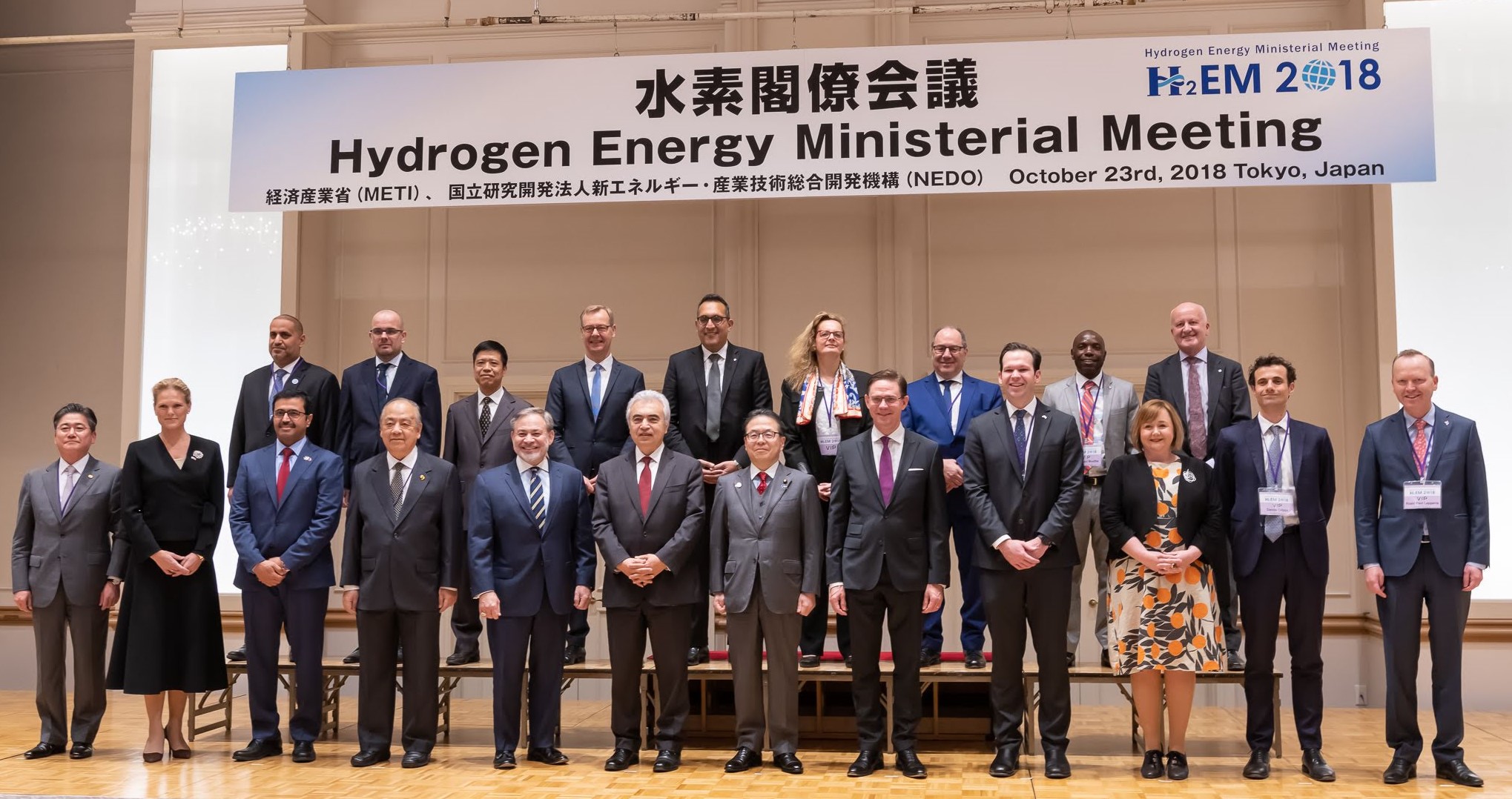
On June 18, Japan, the United States, and the European Union released a joint statement on “future cooperation in hydrogen and fuel cell technologies.”  Represented, respectively, by the Ministry of Energy, Trade, and Industry (METI), the Department of Energy (DoE), and the Directorate-General for Energy (ENER), the jurisdictions pledged “to accelerate the development of sustainable hydrogen and fuel cell technologies in the world.”  A central point of agreement in the statement is “the importance of reducing the cost of hydrogen.”