Site items in: Content by Author Stephen H. Crolius

Great Strides in NH3 Commitment and Progress in Australia
Article

In the last 12 months ... Ammonia Energy has published posts covering pertinent activity in 32 different countries.  In most of them, ammonia’s potential as versatile energy vector has reached the point of avowed interest from relevant institutions.  In a small handful, it has become a part of national policy.  But, as demonstrated in repeated instances throughout the year, nowhere is ammonia energy more robustly embraced than Australia.  The central argument behind this assertion is captured in the phrase, “the complete package,” as in “package of resources, policies, players, partners, and investments.”

Ammonia as a Hydrogen Carrier for Hydrogen Fuel Cells
Article

In the last 12 months ... Consider the attributes that characterize a good hydrogen carrier: liquid state at ambient conditions; high volumetric and gravimetric energy density; low propensity to create lethal hazards when transported, stored, and used.  Now consider that ammonia is superior to hydrogen itself in every one of these areas.  Given this, it stands to reason that proponents of hydrogen fuel cells should embrace ammonia as a valuable enabling technology that can elevate the feasibility and improve the economics of fuel-cell-based systems.  And indeed this embrace became evident over the last year.

Ammonia Is Taken Up by Wide-Circulation Media
Article

In the last 12 months ... If a “meme”, in the definition of British psychology professor Susan Blackmore, “is information copied from person to person, including words, stories, technologies, fashions, and customs,” then clearly there is a meme spectrum that has “esoteric knowledge” at one end and “the common wisdom” at the other.  Where does ammonia energy fall on this spectrum?  “Esoteric knowledge” it may once have been, but this is no longer the case with the concept’s first incursions into mainstream reporting this year.

Ammonia as a Grid-Supporting Energy Storage Solution
Article

In the last 12 months ... We have seen repeated enunciations of a compelling logic chain: electricity generated by wind-based and photovoltaic systems is manifesting ever-more competitive economics; the greater the share of electricity generated by intermittently active resources, the greater will be the need for complementary energy storage systems; chemical forms of “X” in the power-to-X (P2X) stored-electricity construct will surely have a role to play in long-term, large-scale energy storage; ammonia may be the most advantageous chemical for such storage.

ITM Power, Sumitomo Enter Strategic Partnership
Article

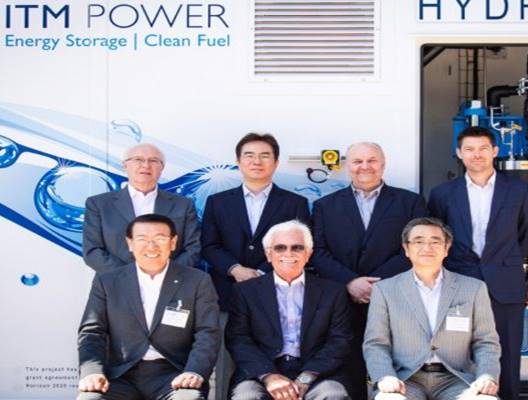
ITM Power and Sumitomo Corporation have entered into a strategic partnership “for the development of multi-megawatt projects in Japan based exclusively on ITM Power’s electrolyser products.”  The two companies will also look for collaborative opportunities outside Japan.  In a July 9 press release, ITM refers to the two companies’ shared vision for “the use of hydrogen to decarbonise heat, transport and industrial processes” as the foundation for the arrangement.

Ammonia Energy Coming on Like Gangbusters in Australia
Article

NH3FA.Oz, the Australian chapter of the NH3 Fuel Association, held a meeting on August 30 in approximate observance of its one-year anniversary.  John Mott, one of the founders of NH3FA.Oz and a member of the NH3 Fuel Association’s Advisory Board, reported that more than two dozen stakeholders from academia, industry, and the public sector participated.  The meeting came on the heels of the rapid-fire release of three significant reports, and preceded by a week the announcement of an important set of research grants.  The meeting, the reports, and the announcement all made clear that ammonia  is fast becoming a fixture in Australian energy policy.

Science Publishes
Article

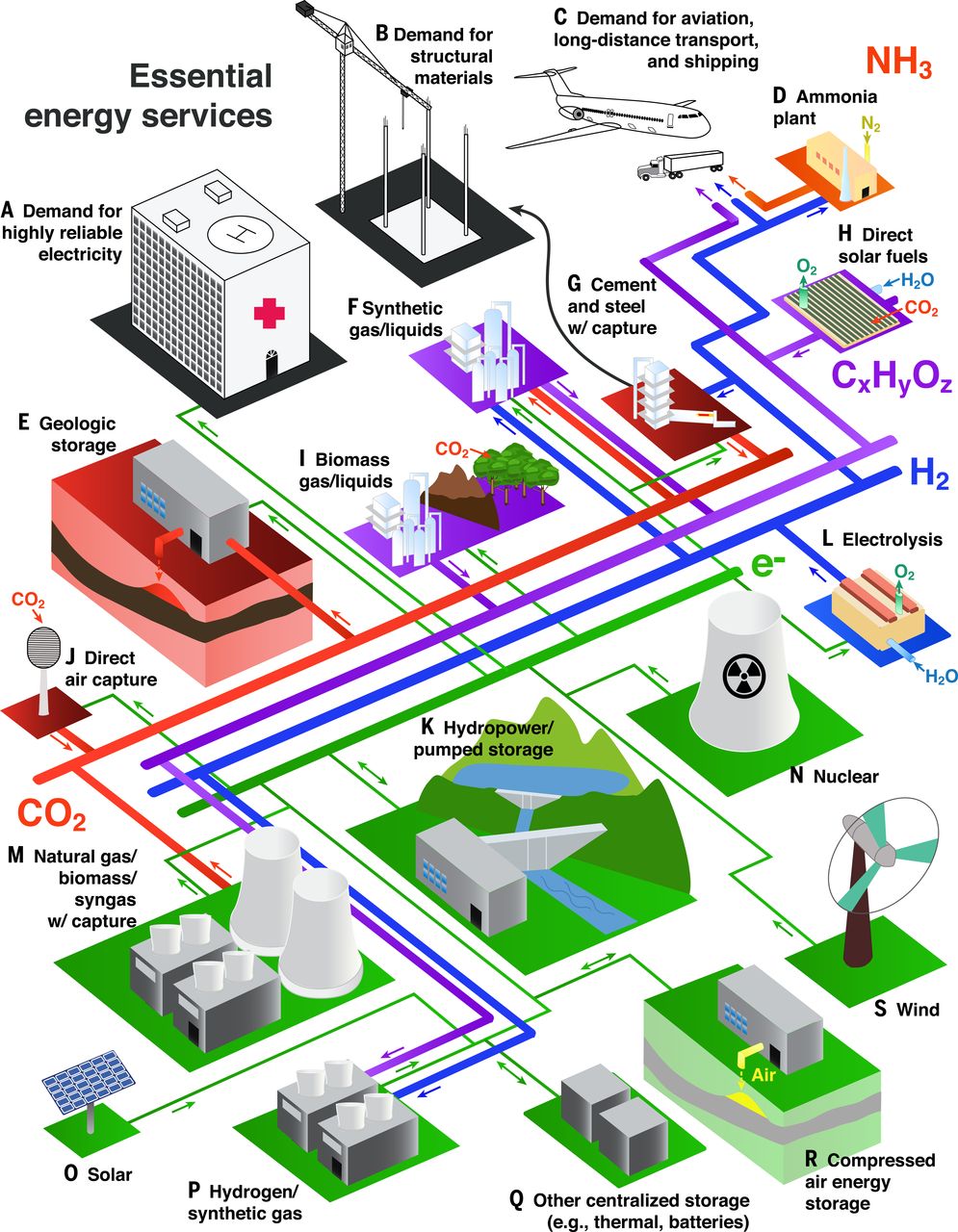
Ammonia energy received prominent mention in a review article published in the June 29, 2018 edition of Science magazine.  Science is the flagship publication of the American Association for the Advancement of Science.  The paper, whose main body is almost 7,000 words long, is entitled “Net zero emissions energy systems.”  While the paper's overall mission is to examine “the special challenges associated with an energy system that does not add any CO2 to the atmosphere,” the specific concerns that set it in motion relate to the idea that “energy services essential to modern civilization entail emissions that are likely to be more difficult to fully eliminate.”  The paper is a detailed investigation of technological solutions that can be applied in these areas.  Ammonia is highlighted as an “energy-dense liquid fuel” that could meet the needs of long-distance transportation services including aviation, long-distance trucking, and shipping.

Ammonia Energy Association Announces 2018 Industry Members
Article

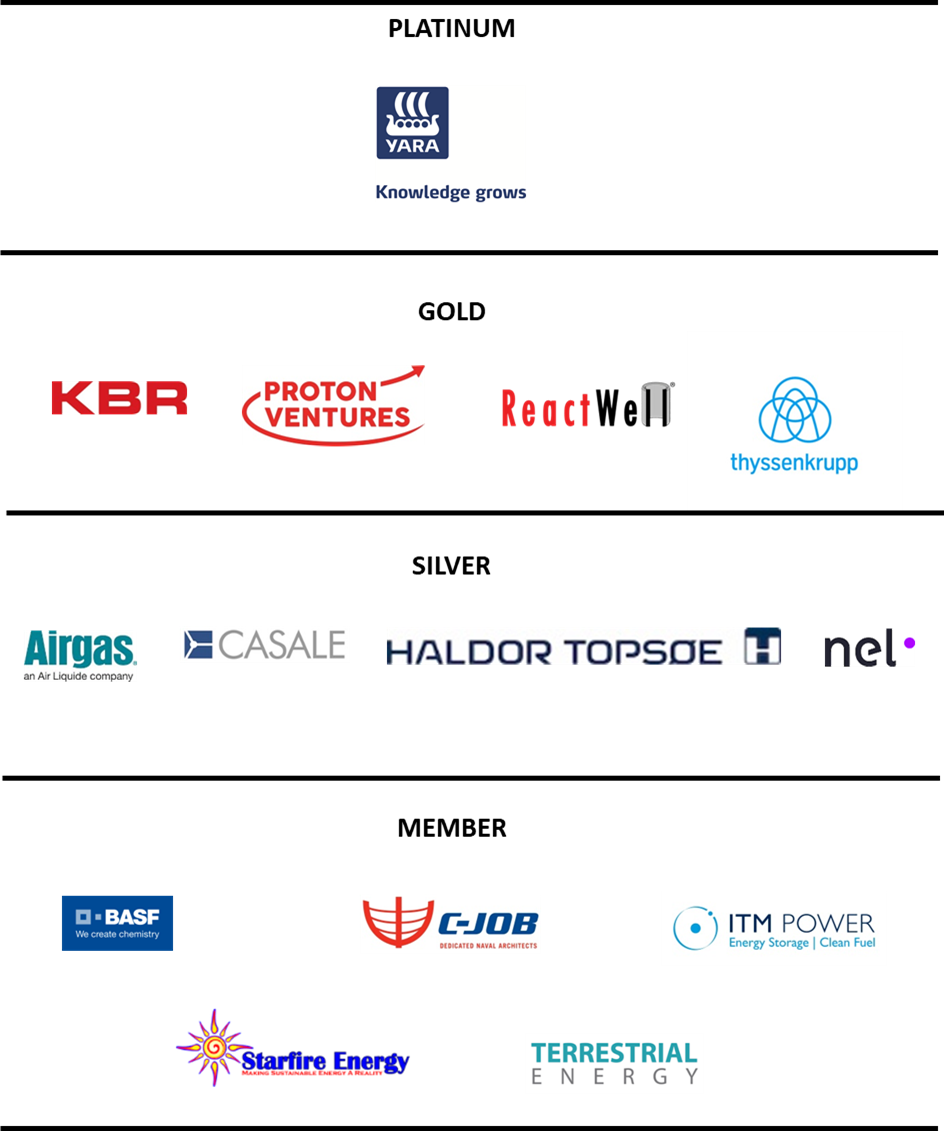
As newly elected President of the Ammonia Energy Association (heretofore the NH3 Fuel Association; a formal name change announcement will be made in the fall), I am very pleased to announce our first class of industry members.  Fourteen companies have joined the Association and thereby made a tangible commitment to ammonia as a clean and affordable staple of the sustainable energy economy of the future.  At the Association’s Annual Meeting on August 15, representatives of the member companies elected eight new Directors to the Board.  Participation on Board committees was also solicited.

Shigeru Muraki to give Keynote Address at the NH3 Energy Implementation Conference
Article

The NH3 Fuel Association has announced that Shigeru Muraki, Director of Japan's SIP Energy Carriers Program and Chairman of the Green Ammonia Consortium, will give the keynote address at the NH3 Energy Implementation Conference, which will take place on November 1, in Pittsburgh, PA. Other details of the Implementation Conference were released at the same time.

CSIRO Demonstrates Ammonia-to-Hydrogen Fueling System
Article

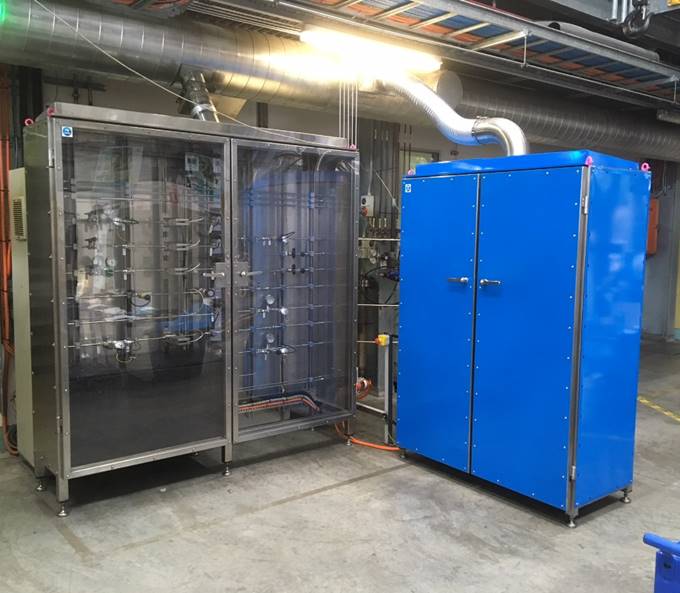
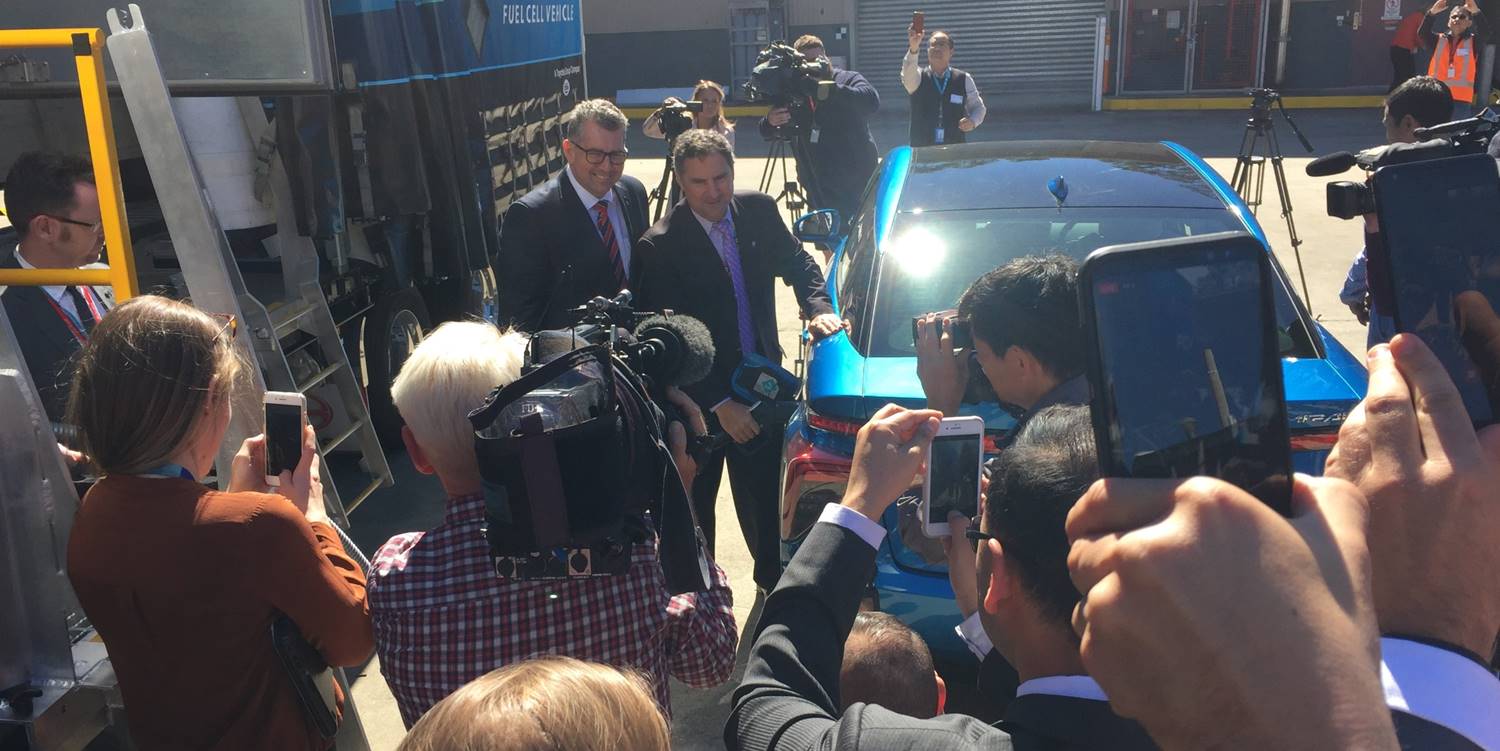
On August 8th Australia’s Commonwealth Scientific and Industrial Research Organization (CSIRO) gave a public demonstration of its newly developed ammonia-to-hydrogen fueling technology.  In an interview this week with Ammonia Energy, Principal Research Scientist Michael Dolan reported that the demonstration drew more media attention than any event in CSIRO’s history – “by a comfortable margin.”  The reporting sounded a set of celebratory themes, summed up by this headline from the Australian Broadcasting Corporation: Hydrogen fuel breakthrough in Queensland could fire up massive new export market.  The stories, in other words, focused on what the demonstration could mean for fuel cell vehicles (FCVs) and the Australian economy.  They did not penetrate to the heart of the matter which involved a practical development whose importance can be uniquely appreciated by the ammonia energy community.