Site items in: Content by Author Julian Atchison

The Ammonia Wrap: EU ambitions, new tankers, and GW scale green ammonia in Denmark, Norway, and Chile
Article

Welcome to the Ammonia Wrap: a summary of all the latest announcements, news items and publications about ammonia energy. In this week's wrap: HyDeal Ambition, new marine tankers, fuel forecasts & SOFC developments, a new technical briefing on power generation, UNSW leads research in P2X, GWs of green ammonia in Denmark, Norway and Chile, green ammonia in the Orkneys, new government focus on ammonia in South Africa, and India to make green ammonia production mandatory?

Cracking Ammonia: panel wrap-up from the Ammonia Energy Conference
Article

When should we be cracking ammonia? How much should we be cracking? How could better cracking technologies open up new end uses? What are the critical challenges still to be overcome for cracking ammonia? On November 17, 2020, the Ammonia Energy Association (AEA) hosted a panel discussion moderated by Bill David from Science and Technology Facilities Council (STFC), as well as panel members Josh Makepeace from the University of Birmingham, Joe Beach from Starfire Energy, Gennadi Finkelshtain from GenCell Energy, Camel Makhloufi from ENGIE, and Michael Dolan from Fortescue as part of the recent Ammonia Energy Conference. All panelists agreed that cracking technology as it stands has a number of key areas to be optimised, particularly catalyst improvements and energy efficiency. But, successful demonstrations of modular, targeted cracking solutions are accelerating the conversation forward.

Yara’s green ammonia project YURI gets further boosts
Article

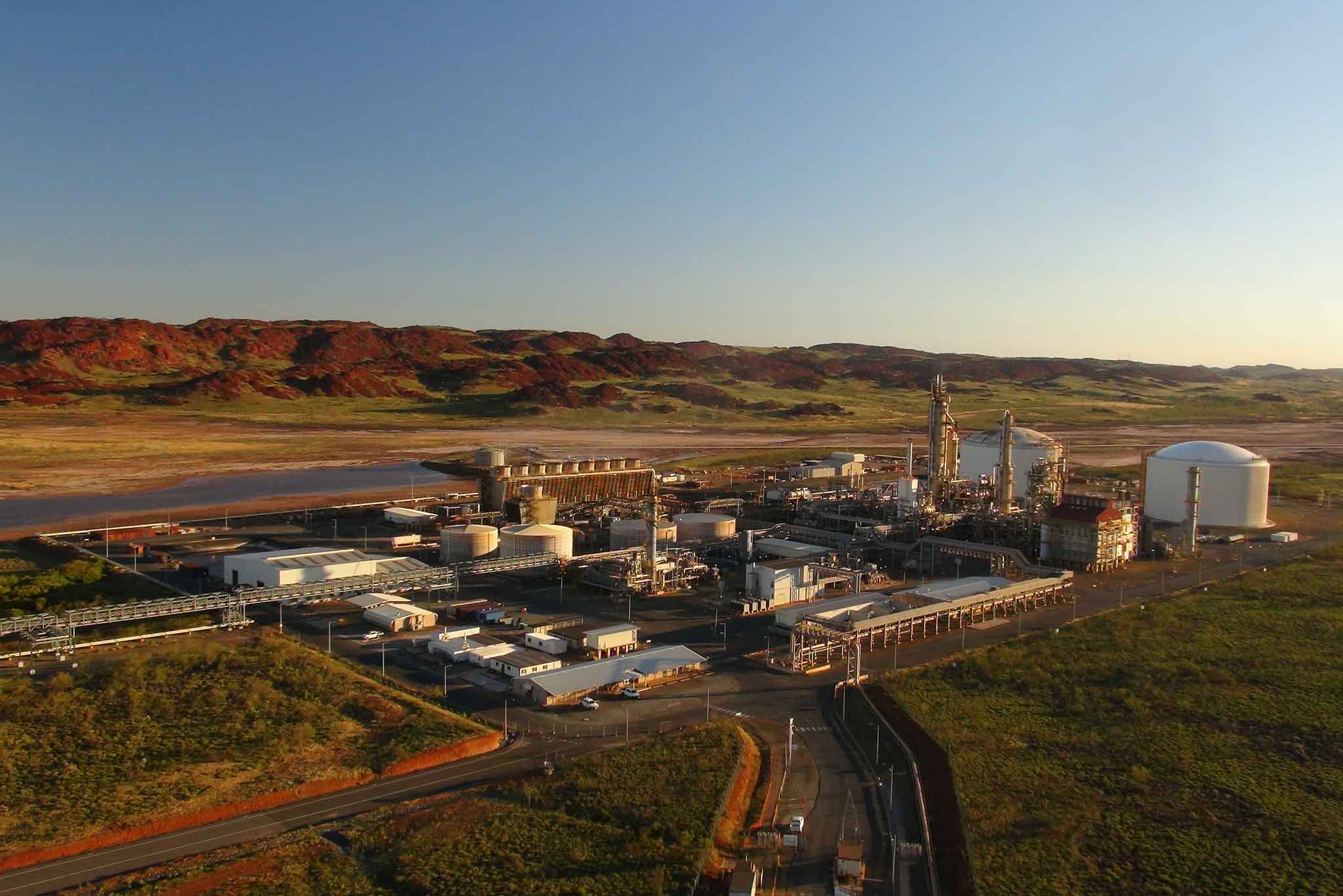
There were two new funding announcements last week concerning Yara’s YURI renewable ammonia project, to be built next to their Pilbara fertiliser plant in Western Australia. The Pilbara ammonia plant is an ideal demonstration site for green hydrogen and green ammonia at an industrial scale. This export-oriented plant has an annual capacity of 850,000 tons per year of ammonia, representing about 5% of the world’s merchant ammonia supply, and while the current site uses natural gas as fuel and feedstock it is situated adjacent to rich solar and wind energy resources. These announcements show that interest in YURI is strong from Australian local, state, and federal governments, with more funding opportunities in the pipeline.

Certification of low-carbon ammonia: panel wrap-up from the 2020 Ammonia Energy Conference
Article

What are the key considerations that need to be worked through so we can design and implement a certification scheme for low-carbon ammonia that works for a diverse range of stakeholders? On November 17, 2020, the Ammonia Energy Association (AEA) hosted a panel discussion on the topic as part of the recent Ammonia Energy Conference. Not only was it valuable to find out what important players in the ammonia industry want to see in any future certification scheme, but the panel also kicked off a consultation process among AEA members. An audience of around one hundred and fifty producers, end users and researchers all gave their thoughts on what they would like to see in a future scheme, providing a terrific launching point for the AEA Certification Committee to draft, develop and debut a low-carbon ammonia certification scheme.

Ammonia infrastructure: panel wrap-up from the 2020 Ammonia Energy Conference
Article

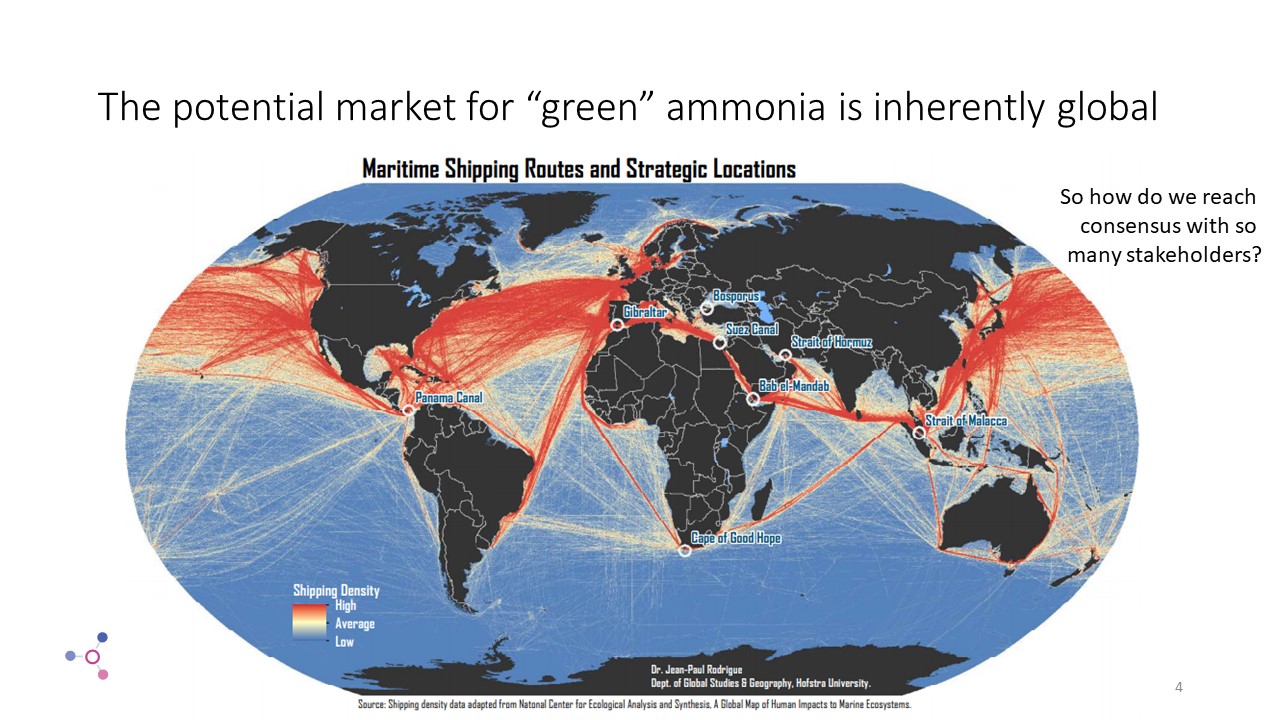
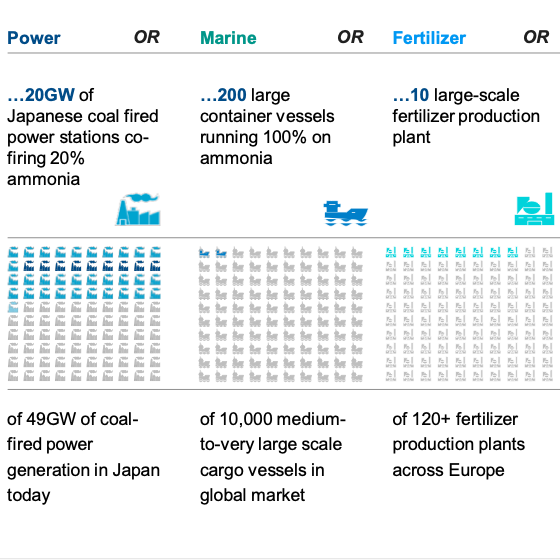
Infrastructure is key to realising the full potential of ammonia energy, enabling new markets and expanding the existing ones. By 2050 the hydrogen (and by extension, ammonia) market could be 20 times larger than it is today. What future possibilities are there to expand global ammonia production (currently 180 million tonnes per year) or trade volumes across the world’s oceans (currently 18 million tonnes per year)? On November 18, 2020, the Ammonia Energy Association (AEA) hosted a panel discussion moderated by Daniel Morris from KBR, as well as panel members Anthony Teo from DNV GL, Oliver Hatfield from Argus Media, and Michael Goff from Black & Veatch as part of the recent Ammonia Energy Conference. The panel’s insights from a number of different perspectives - market analytics, ship building and operating, as well as pipeline engineering - demonstrated ammonia's potential to become a low- or zero-carbon fuel of choice for the future. Current infrastructure can be adapted, new infrastructure can be built and operated cheaply, and lessons from previous fuel transitions can be taken on board to make the uptake of ammonia energy as smooth as possible.
Marine Ammonia: panel wrap-up from the 2020 Ammonia Energy Conference
Article

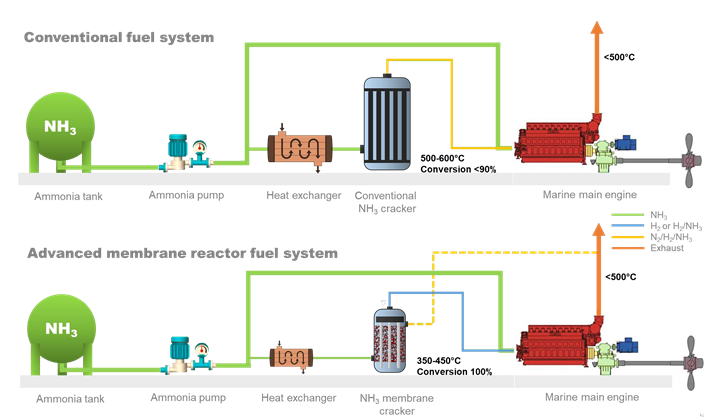
What action is needed to unlock the enormous potential of green ammonia as a marine fuel and get the new generation of ammonia-powered vessels on the water? On November 18, 2020, the Ammonia Energy Association (AEA) hosted a panel discussion moderated by Sofia Fürstenberg Stott from Fürstenberg Maritime Advisory, as well as panel members Tue Johannessen from the Center for Zero Carbon Shipping, Katharine Palmer from Lloyd’s Register, Rob Stevens from Yara International, and Kazumasa Taruishi from NYK Energy Transport.

A Fuel Standard for Ammonia: panel wrap-up from the Ammonia Energy Conference 2020
Article

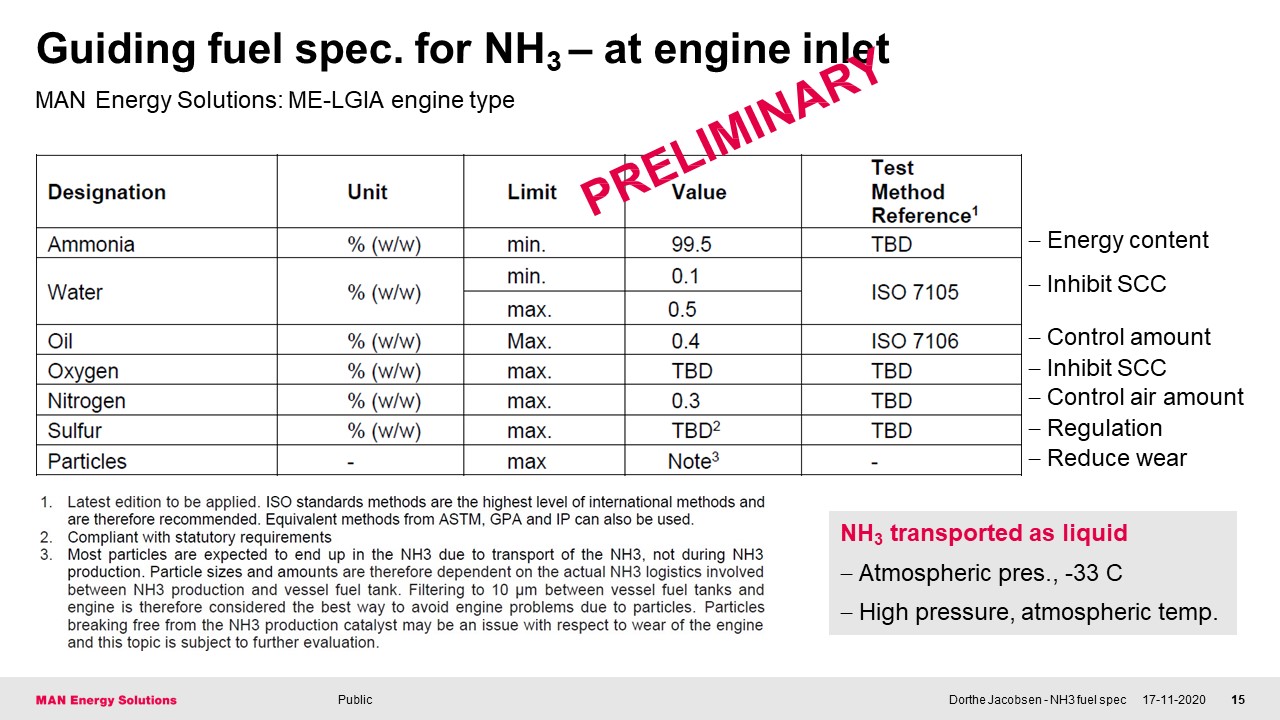
What are the key considerations for a future Ammonia Fuel Standard? On November 17, 2020, the Ammonia Energy Association (AEA) hosted a panel discussion moderated by Ron Stanis from GTI (Gas Technology Institute), as well as panel members David Richardson from Airgas, Rob Steele from EPRI (Electric Power Research Institute), Eric Smith from IIAR (International Institute of Ammonia Refrigeration), and Dorthe Jacobsen from MAN Energy Solutions at the recent Ammonia Energy Conference. The AEA Fuel Standard Committee has been developing a draft product specification that will facilitate the acceptance of ammonia as a fuel. The overall message from panelists came through loud and clear: the draft standard is ready for stakeholder comments, and the Fuel Standard Committee welcomes your input.

Green Ammonia at Oil and Gas Scale: Ammonia Energy Conference 2020 Keynote
Article

What does green ammonia look like at oil and gas scale? To open the Ammonia Energy Conference 2020 - and give us some insights into this question - we were thrilled to welcome Alex Tancock, Managing Director of InterContinental Energy (ICE). Since 2014 ICE has been in the business of identifying the new generation of “Green Supergiants”: green hydrogen and green ammonia fusion projects based on large-scale renewable energy. Alex was excited to pass on the key lessons learnt from the development of ICE’s first publicized project - the Asian Renewable Energy Hub (AREH) in north-western Australia.

NH3: The Optimal Alternative Fuel (2017)
Presentation

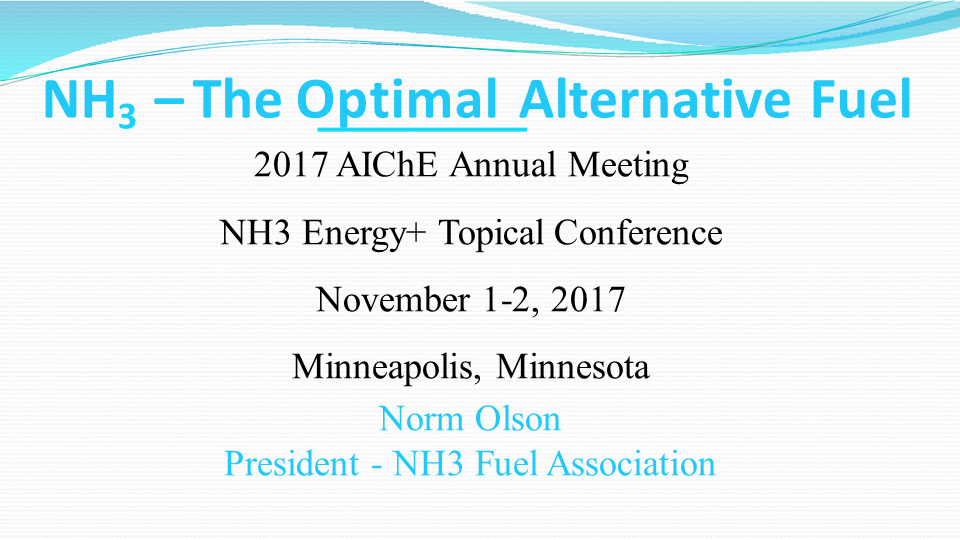
Unlike some technology areas where “all of the above” has significant advantages, there are tremendous advantages associated with choosing a single, optimized, liquid transportation fuel. The cost, efficiency and environmental benefits associated with choosing an optimized liquid transportation fuel are enormous and merit serious consideration. NH3 most closely meets the criteria for an ideal liquid transportation fuel. It is the most efficient and cost-effective means of delivering hydrogen and has an extensive world-wide delivery system already in place. Using currently available catalytic controls, NH3 emissions can be even cleaner than hydrogen engine emissions. While NH3 can effectively be produced using…