Site items in: Articles

IEA calls for renewable hydrogen and carbon-free ammonia
Article

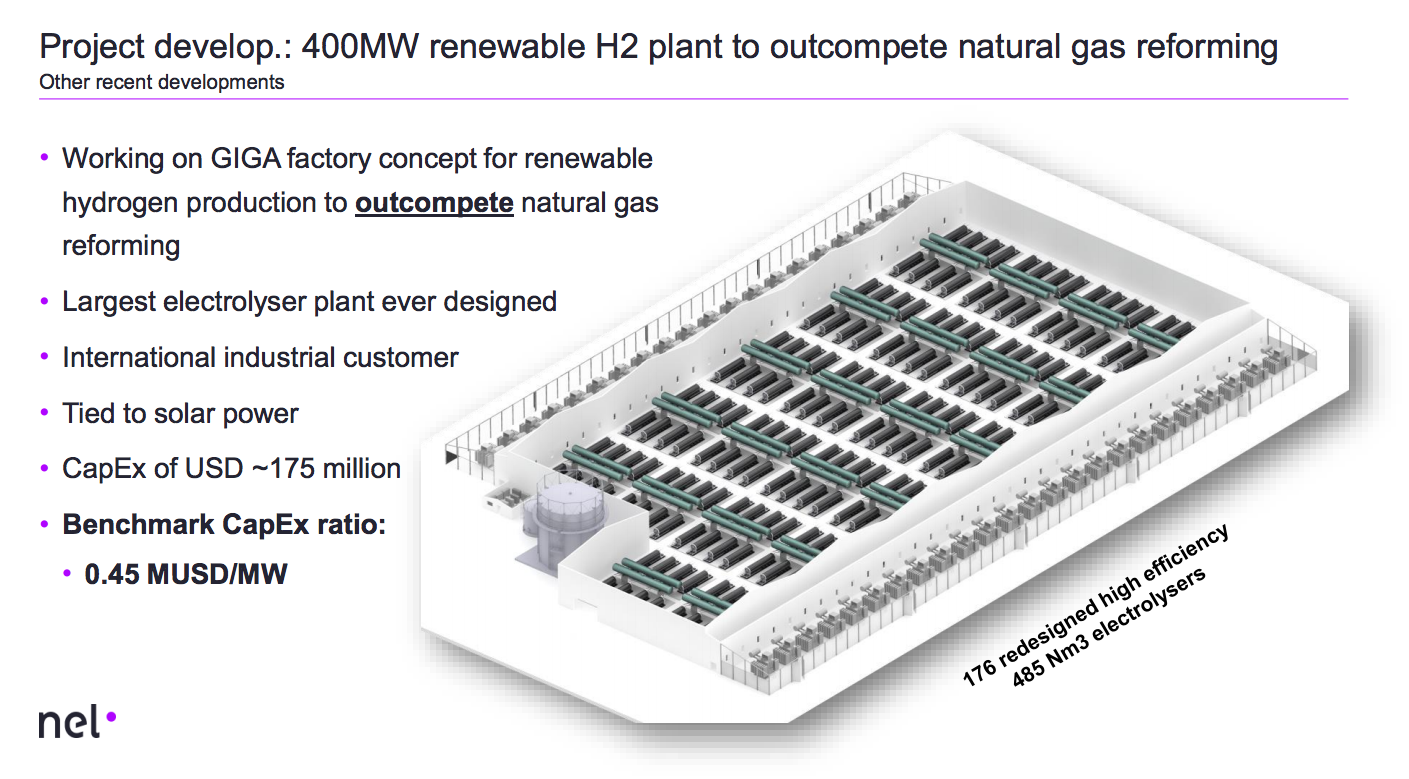
This week, an important new voice joined the chorus of support for renewable ammonia and its potential use as an energy vector - the International Energy Agency (IEA). In his article, Producing industrial hydrogen from renewable energy, Cédric Philibert, Senior Energy Analyst at the IEA, identifies a major problem with the hydrogen economy: hydrogen is currently made from fossil fuels. But his argument for producing hydrogen from renewable energy leads almost inevitably to ammonia: "In some not-too-distant future, ammonia could be used on its own as a carbon-free fuel or as an energy carrier to store and transport energy conveniently."

Ammonia – and Other Nitrogen-Based Fuels
Article

Next month the print edition of Fuel Processing Technology will feature a paper entitled “Auto-ignition of a carbon-free aqueous ammonia/ammonium nitrate monofuel: a thermal and barometric analysis.” This title is provocative. First, what is this idea of a fuel composed of a mixture of ammonia and ammonium nitrate (AN)? If ammonia is a good fuel, is it made better with the addition of ammonium nitrate? Second, why is it aqueous? Is the presence of water a feature or a bug? Third, what is a monofuel and why is this term used when the fuel is a mixture of two molecular species? And finally, why is the paper ultimately about auto-ignition?

On the Ground in Japan: LH2 and MCH Hydrogen Fueling Stations
Article

While Japan’s Cross-Ministerial Strategic Innovation Promotion Program (SIP) continues to evaluate liquid hydrogen (LH2), methylcyclohexane (MCH), and ammonia as hydrogen energy carriers, Japanese press reports show that the backers of liquid hydrogen and MCH are building an early lead over ammonia with hydrogen fueling stations based on their favored commodities.

The new generation of fuel cells: fast, furious, and flexible
Article

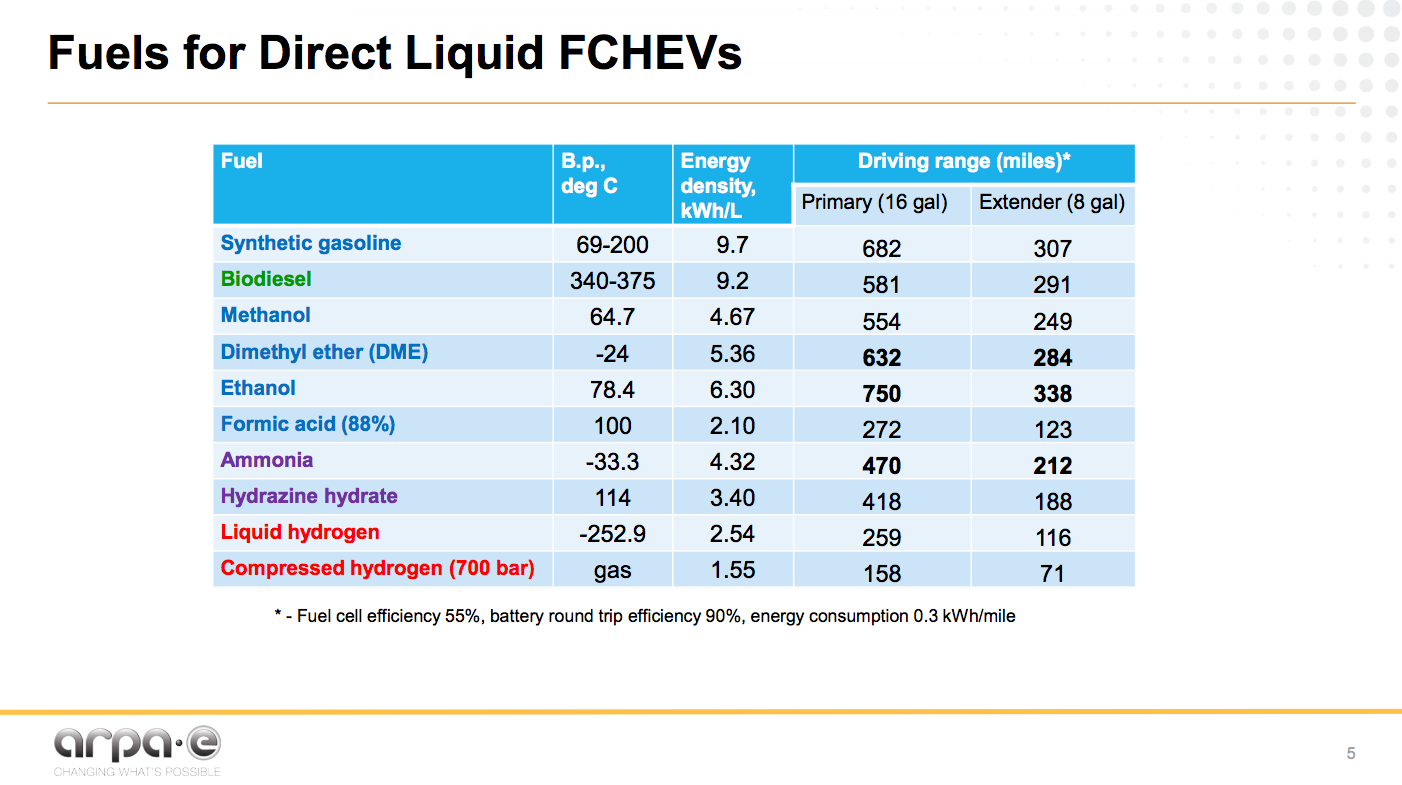
At ARPA-E's recent Energy Innovation Summit in Washington, DC, Program Director Grigorii Soloveichik presented his vision for the future of transportation: hybrid electric vehicles that combine the advantages of both plug-in battery and fuel cell technologies. This "optimal solution" will require a new generation of fuel cell that is "fast, furious, and flexible." Fast, in terms of start-up / shut-down time. Furious, in terms of energy density. And flexible, in terms of fuel choice - specifically sustainable liquid fuels, like ammonia.

NH3 Energy+: Topical Conference at AIChE Annual Meeting
Article

“Ammonia Energy Arrives on World Stage.” This could have been the headline for today's story about the 2017 NH3 Fuel Conference that will be staged in conjunction with the American Institute of Chemical Engineers (AIChE). But that would be hyperbolic and would also single out just one step of ammonia energy's rise to global prominence. Nonetheless, the full-day event, officially entitled, “NH3 Energy+: Enabling Optimized, Sustainable Energy and Agriculture,” is unquestionably a milestone on the journey.

Solar-Bio-GMO-Ammonia, powered by the 'Bionic Leaf'
Article

There will be many ways to make ammonia in the future and, regardless of breakthroughs in chemical catalysts and engineering design, genetically modified organisms will play an increasingly important role. At this week's American Chemical Society meeting, Daniel Nocera from Harvard University introduced his new ammonia synthesis technology. It builds on his "artificial leaf" that produces and stores hydrogen using power from sunlight. Nocera's latest innovation is to couple this system with a microbe that naturally contains nitrogenase, the enzyme that fixes atmospheric nitrogen into ammonia. The end result - a robust population of nitrogen fertilizer-emitting microbes - can be delivered to the soil simply by watering the plants.

Power to Ammonia feasibility study
Article

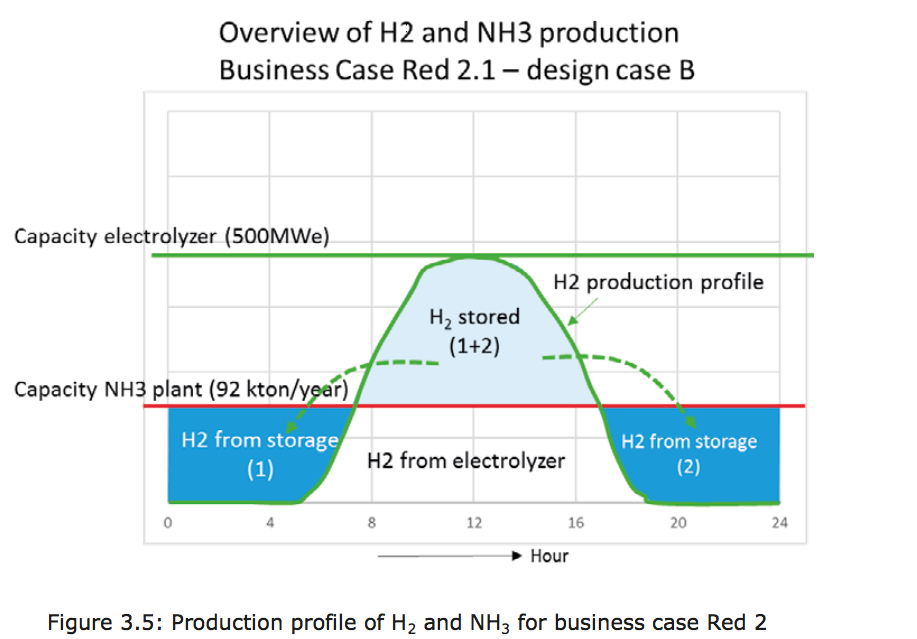
The Institute for Sustainable Process Technology has just published a feasibility study that represents a major step toward commercializing renewable ammonia. It examines the "value chains and business cases to produce CO2-free ammonia," analysing the potential for commercial deployment at three companies with existing sites in The Netherlands: Nuon at Eemshaven, Stedin at Goeree-Overflakkee, and OCI Nitrogen at Geleen. The project is called Power to Ammonia.

New Technology for Generating Hydrogen from Ammonia
Article

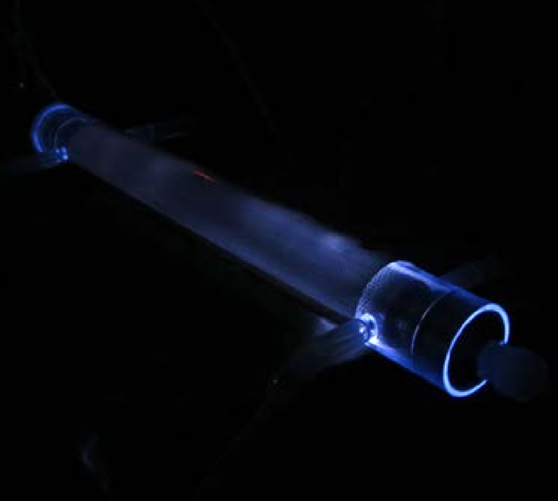
On March 21, Gifu University in Japan announced a breakthrough in technology for generating hydrogen from ammonia. A press release from the Gifu Prefectural Association Press Club stated that Professor Shinji Kambara, Director of the Next Generation Research Center within the Environmental Energy Systems Department at the Gifu University Graduate School of Engineering, has developed a "plasma membrane reactor" that is capable of evolving hydrogen with a purity of 99.999 percent from an ammonia feedstock. This surpasses the 99.97 percent purity announced last July by a research group centered at Hiroshima University with a hydrogen generation device based on a different technology.

ACS
Article

The deadline for abstracts for the Ammonia Economy session at the American Chemical Society (ACS) National Meeting in August has been extended to April 3. This was reported in an interview yesterday with Martin Owen Jones, Energy Materials Coordinator for the ISIS neutron spallation facility at the Rutherford Appleton Laboratory in the United Kingdom. Jones is the co-organizer of the session along with Michael Mock, a Catalysis Scientist at Pacific Northwest National Laboratory (PNNL) in the U.S. The session will be the most prominent treatment of ammonia energy to date at a scientific conference held by an organization of global stature.

Bunker Ammonia: carbon-free liquid fuel for ships
Article

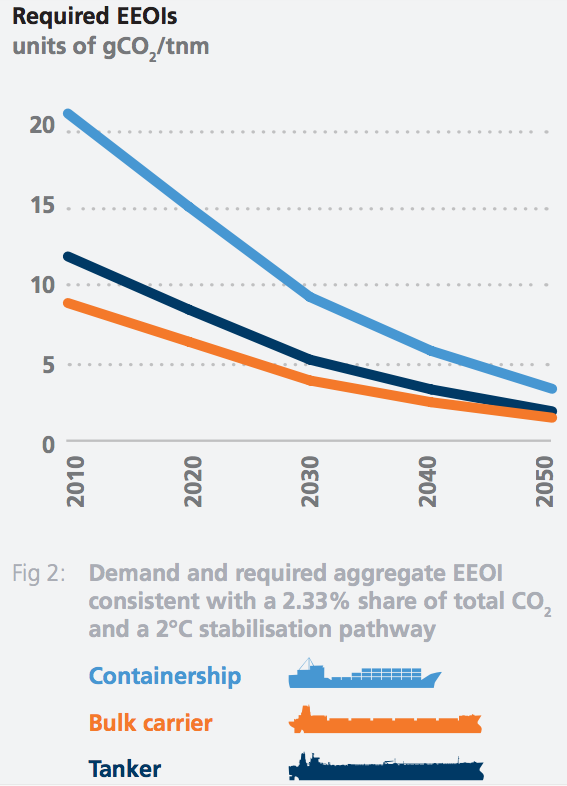
The shipping industry is beginning to evaluate ammonia as a potential "bunker fuel," a carbon-free alternative to the heavy fuel oil (HFO) used in maritime transport. International trade associations are leading the effort to decarbonize the sector, in alignment with targets set by the Paris Climate Agreement. Their immediate challenge is simple to state but hard to solve: "ambitious CO2 reduction objectives will only be achievable with alternative marine fuels which do not yet exist." In the long-term, however researchers recognize that "fuel cell-powered ships are likely to dominate, drawing their energy from fuels such as hydrogen and ammonia."